
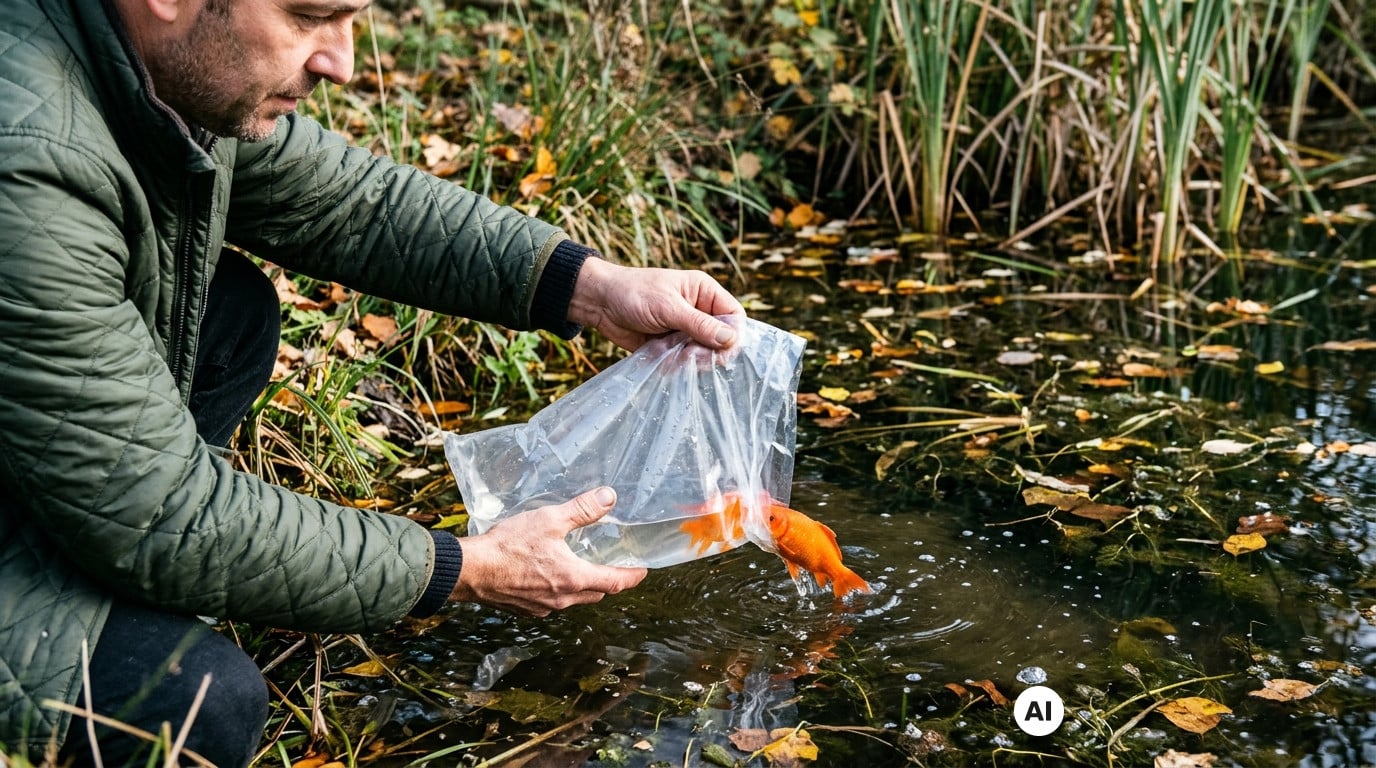
The French Office for Biodiversity (OFB) warns about the consequences of releasing exotic species into the wild, a behavior that, far from aiding the animal, can permanently destabilize natural ecosystems. Between good intentions and ecological reality, there is a real gap that must be explored.
Why releasing a goldfish into the wild is not a harmless act
The impulse may seem logical: rather than letting a goldfish end its life in an aquarium, why not give it a large natural space? This is precisely the line of thinking highlighted by OFB. The goldfish is an exotic species that has no natural place in these environments. Releasing an exotic animal into the wild amounts to introducing an external variable into an ecological system.
This action, repeated across many households, eventually becomes a biodiversity issue. It is therefore not an isolated act without consequences, but rather a practice that OFB warns the public about.
What really happens to a goldfish left to its own devices in a pond
Contrary to the image of a flourishing fish reclaiming its freedom, the reality of what happens to a goldfish left to its own devices in a pond is quite different. The goldfish is an exotic species that has no natural place in these habitats.
Its prolonged presence and development in this new environment ultimately transform an individual act into a real problem for the natural environment that was not prepared to host it.
Ecological consequences on local fauna and flora
This is where the heart of the issue raised by OFB lies. The introduction of the goldfish leads to ecological consequences for local fauna and flora. By settling in a pond, it can disrupt the aquatic ecosystem concerned and destabilize this natural milieu.
That is why the French Office for Biodiversity stresses the importance of prevention. What may look like a release gesture for the animal becomes, in reality, a source of imbalance for an entire ecosystem, with major ecological repercussions.
Health risks and the spread of diseases related to exotic species
Beyond ecological imbalance, the introduction of exotic species into nature also carries other threats. The OFB highlights health risks and the spread of diseases associated with exotic species.
This health risk adds to the purely ecological dimension of the problem. An individual gesture can thus become a vector for the spread of diseases across an entire ecosystem.
Responsible alternatives to getting rid of a goldfish you no longer want
In light of this, the question naturally arises: what should you do when you no longer want to take care of a goldfish or any other exotic animal? The OFB reminds us that there are responsible alternatives to disposing of a goldfish you no longer want and that these should be preferred to releasing it into the wild.
These alternatives help avoid the ecological and health consequences linked to a wild release. This is one of the messages carried by the OFB: encouraging everyone to adopt responsible behaviors toward exotic species, reminding that a gesture perceived as generous can actually disrupt an ecosystem.
Source: Can I release my goldfish into nature?, French Goldfish Association
Article prepared with the help of AI · Our method
