
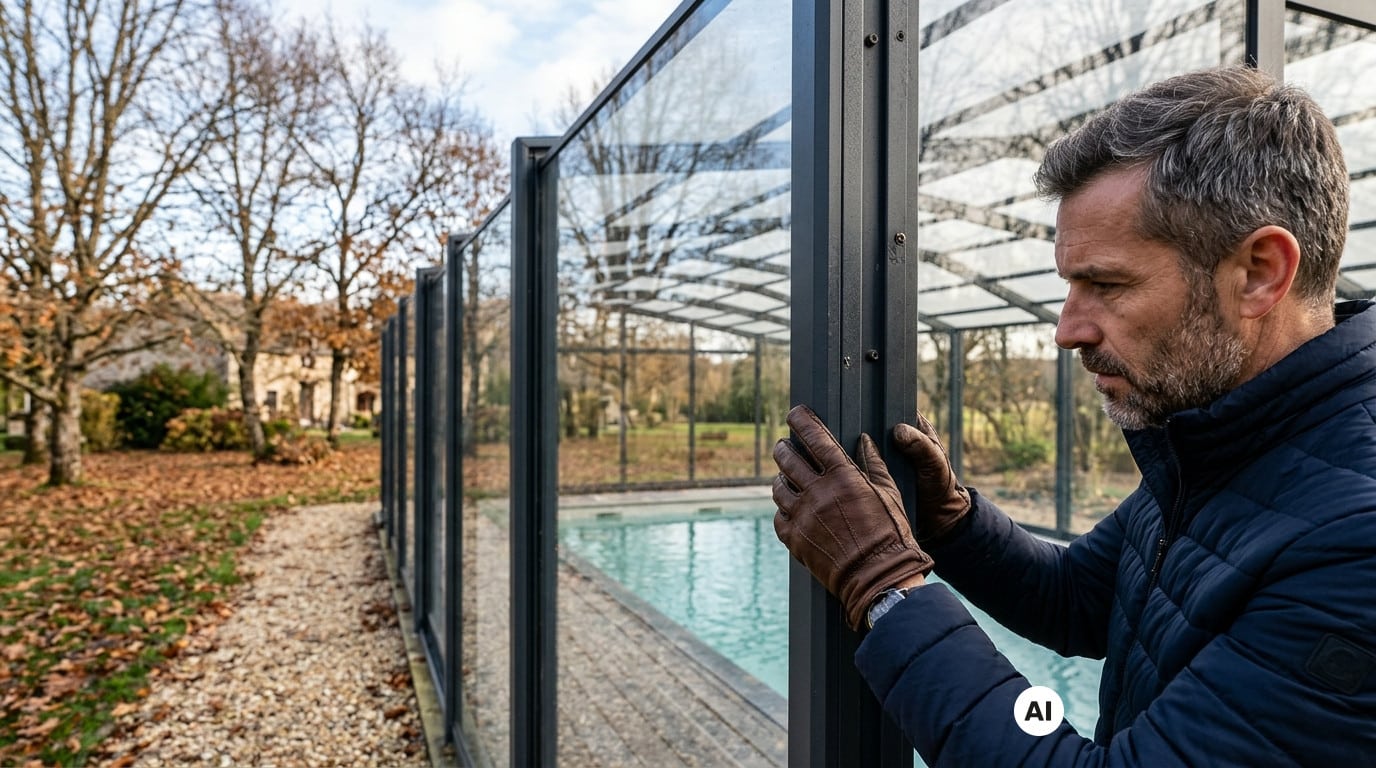
An improperly declared pool shelter can turn a modest comfort project into a genuine administrative headache, with unwelcome surprises at the end. As winter settles in and many homeowners take advantage of this quiet period to equip their pool, one technical detail often slips through the cracks: the height of the structure. This seemingly minor figure actually governs all steps to take before even driving in the first screw. Between planning authorization, development tax, and good-faith mistakes that can be costly, here is what to check before starting the work.
- A pool shelter taller than 1.80 metres changes status and requires mandatory urban planning authorization.
- Even a lightweight structure can generate a development tax if it creates a taxable surface (footprint or enclosed and covered area).
- It is essential to verify the exact height and contact the urban planning service before ordering the shelter, to avoid any post-installation regularization.
- Why your pool shelter height changes everything
- Urban planning procedures to anticipate according to the size of the project
- Impact on development tax and taxable surfaces
- Common mistakes to avoid before starting winter works
Why your pool shelter height changes everything
In popular imagination, a pool shelter is just a shield against fallen leaves and cooling water. In reality, from the admin’s point of view, it is a full-fledged construction, subject to the same rules as any outdoor modification. And that is where height becomes decisive: a shelter exceeding 1.80 metres dramatically changes its status and requires urban planning authorization, whose precise nature then depends on the scale and nature of the project.
This threshold is not arbitrary. It separates low-profile structures, often discreet and hardly noticeable from the street, from tall shelters that truly alter the landscape and the volume built on the lot. In short, the higher your shelter, the greater its regulatory impact. A point to verify before even choosing the model, because it conditions everything that follows in the file.
The urban planning procedures to anticipate according to the size of the project
Once the height is identified, the question becomes which procedure to pursue. The general rule is that the more imposing the shelter, the denser the formalities. A low shelter, below the famous 1.80-metre threshold, usually escapes the heaviest steps. But as soon as that threshold is crossed, authorization becomes mandatory, and its type varies with the scope of the project.
It is therefore essential to check in advance with the competent urban planning services before ordering and installing the structure. Many owners discover the need for authorization only once work has begun, which greatly complicates the regularization of the file. It is wiser to spend a few days verifying this point rather than risk an unpleasant surprise for a shelter just installed.
Impact on development tax and taxable surfaces
Beyond the authorization itself, a pool shelter can also trigger a development tax if it creates a taxable surface. This point often surprises owners, who imagine that only a closed and habitable building can be taxed. Yet, as soon as the structure generates a footprint or a closed and covered surface that meets a certain threshold, it can fall under the tax calculation.
Concretely, this means that a tall shelter, comparable to a built volume, is more likely to be taxed than a low and lightweight structure. Vigilance is therefore essential from the design phase: the model choice, its height, and its closing method directly influence the potential tax bill that could follow installation. A detail worth anticipating rather than discovering with a surprise the following year.
Common mistakes to avoid before starting winter works
Winter, with its favorable conditions for exterior work since the pool is not in use, pushes many owners to rush. It is precisely in this haste that the most common errors hide. Among them, notably relying only on the dimensions provided by the manufacturer without verifying their compliance with the regulatory threshold, or thinking that a pool shelter remains a simple temporary protection escaping any formalities.
- Failing to verify the exact height of the shelter before placing the order
- Neglecting to contact the competent urban planning service before starting the works
- Overlooking that the development tax can apply even to a lightweight structure if it creates a taxable surface
- Assuming a pool shelter automatically escapes the rules that apply to other constructions
These oversights, often made in good faith, can nevertheless lead to delicate situations, ranging from simple administrative regularization to more burdensome consequences. Taking the time to verify each point before signing a quote remains the best protection against unpleasant surprises.
Before turning your pool into a covered basin for winter, a detour through the planning rules is therefore essential. A quick call or a visit to the relevant services is often enough to avoid weeks of complications and to enjoy your shelter calmly again when the better days return.
