
Key takeaways
- An oceanic point has been discovered where no coastline exists for at least 2,688 kilometers — but why did this precise calculation captivate scientists?
- Space is literally closer to this point than dry land — and astronauts regularly fly over this void without realizing it
- Hundreds of pieces of space debris lie quietly at the bottom of these waters, turning the planet’s loneliest spot into an submerged museum of humanity’s space conquest
An Oceanic Void Named in Honor of a Fictional Captain
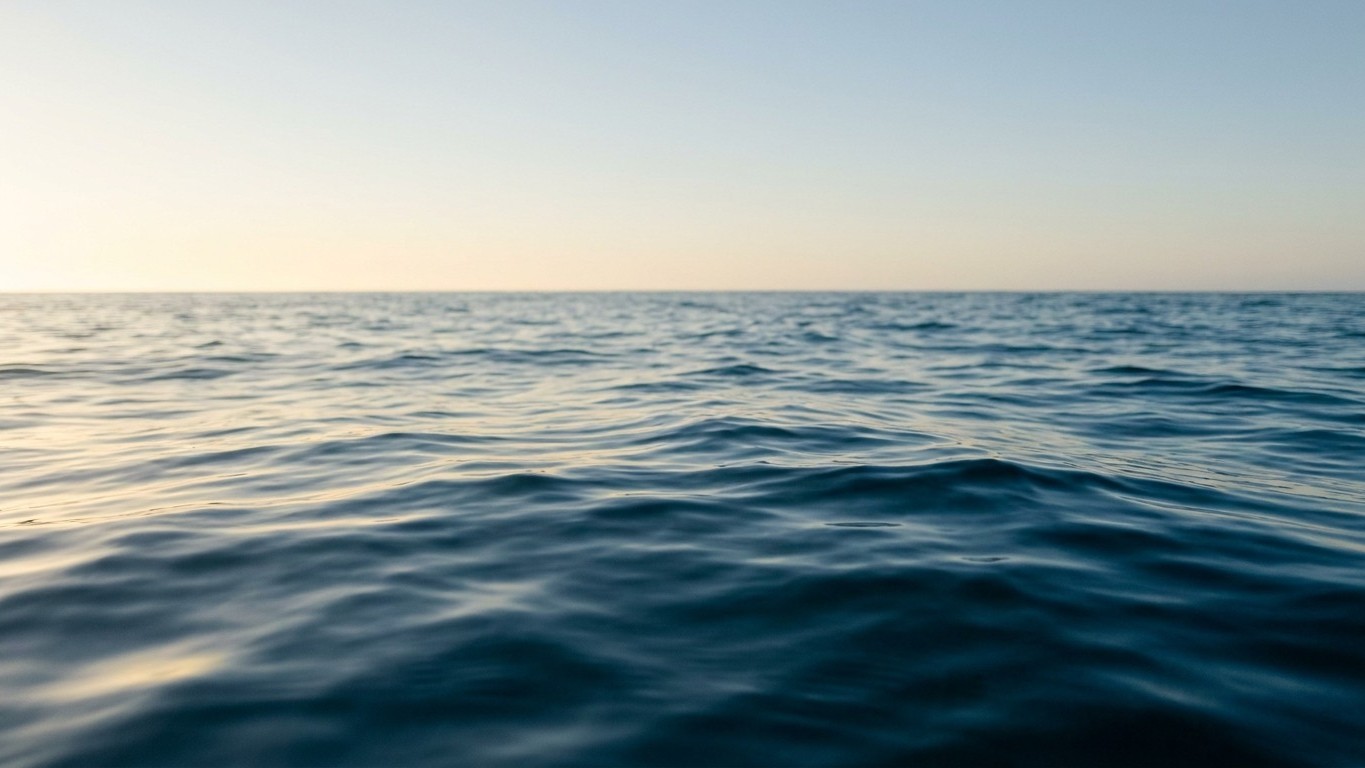
In the middle of the South Pacific rests a point 2,688 kilometers from any coastline: the nearest humans circling about 400 kilometers above it, aboard the International Space Station. This place bears a name that sounds like an invitation to travel, even though it is the exact opposite. The name “Nemo” comes from the famous captain imagined by Jules Verne in Twenty Thousand Leagues Under the Sea. In Latin, “Nemo” means “no one,” an ideal reference to a region where no one lives and where nothing seems to exist.
The calculation of this point is not a legend handed down through generations of sailors. Discovered in 1992 by Hrvoje Lukatela, a Canadian-Croat engineer, the point lies 2,688 kilometers from the nearest landmasses: Ducie Atoll to the north, Motu Nui near Easter Island to the northeast, and Maher Island to the south in Antarctica. Three specks of land, equidistant, surround a void that stretches across millions of square kilometers of saltwater. And these islands themselves are uninhabited, making this zone almost inaccessible from any civilized location.
Closer to Space than to Dry Land
Here lies the paradox that makes Nemo Point as fascinating as it is absurd. Nemo Point is so isolated that its “inhabitants” are not on land. They are astronauts aboard the International Space Station, which orbits roughly 400 kilometers above Earth’s surface. A number to juxtapose with the other: 2,688 kilometers to the nearest inhabited coastline, versus 400 kilometers to low Earth orbit. Space is literally closer than the ground.
This paradox is not a mere coincidence. It underscores the extreme remoteness of the region: even people living in space are closer to Nemo than those on solid ground. Some calculations go further, suggesting that ISS occupants sometimes find themselves several times nearer to Nemo than any human on land. A sailor adrift on a distant sea route remains, nonetheless, farther from Nemo than a speeding astronaut at 400 kilometers altitude.
Picture the inverted scene: through the station’s porthole, the crew regularly flies over this expanse of water without paying particular attention, a point among many in an orbit that circles the globe every ~90 minutes. During this brief passage, the world’s most solitary spot technically has company. A company that travels at several kilometers per second, never stopping.
What Lies at the Bottom, Between Rust and Silence
Below the surface, at around four kilometers deep, another story unfolds. The total absence of human activity and sea traffic has made Nemo Point, for decades, the ideal junkyard for space agencies around the world. Because of its isolation, Nemo Point has become a strategic site for space missions. It serves as a “space cemetery” for aging spacecraft. More than 250 to 300 vehicles, including the Soviet space station Mir in 2001 and China’s Tiangong-1 in 2018, now rest there.
The undisputed standout of this underwater cemetery remains the former pride of the Soviet space program. Its controlled reentry in March 2001 stands as one of the most spectacular examples of a managed atmospheric entry. The site also hosts dozens of Russian Progress supply vessels, along with European freighters like the Jules Verne, whose atmospheric reentry on September 29, 2009 was observed from aircraft chartered specifically for the occasion.
A detail that underscores this isolation: according to Steven D’Hondt, an oceanographer at the University of Rhode Island, it is “the biologically least active region in the world.” Few nutrient currents, little marine life, a practically perfect liquid desert. A paradoxical boon for space engineers: here, a fall of debris poses no threat to fragile ecosystems or nearby populations.
A Regular Rendezvous for Future Debris
This practice of controlled deorbiting is not a relic of the past. It continues to shape the work of space agencies, which methodically plan the end of life for their largest craft to steer them toward this precise patch of the South Pacific. Each scheduled reentry toward Nemo Point demands meticulous trajectory calculations, with the aim of guiding surviving debris to fall into this emptiness rather than onto a populated area.
Thus Nemo Point continues to welcome, year after year, new relics of humanity’s space exploration. Beneath its dark, silent waters at four kilometers depth lie today the fragments of decades of orbital exploration, an underwater museum that no one will ever visit—except through satellite imagery and the trajectory calculations of engineers who, from their desks, keep aiming at this improbable point at the edge of the world.
Sources: brut.media | fr.9unknownfacts.com
