
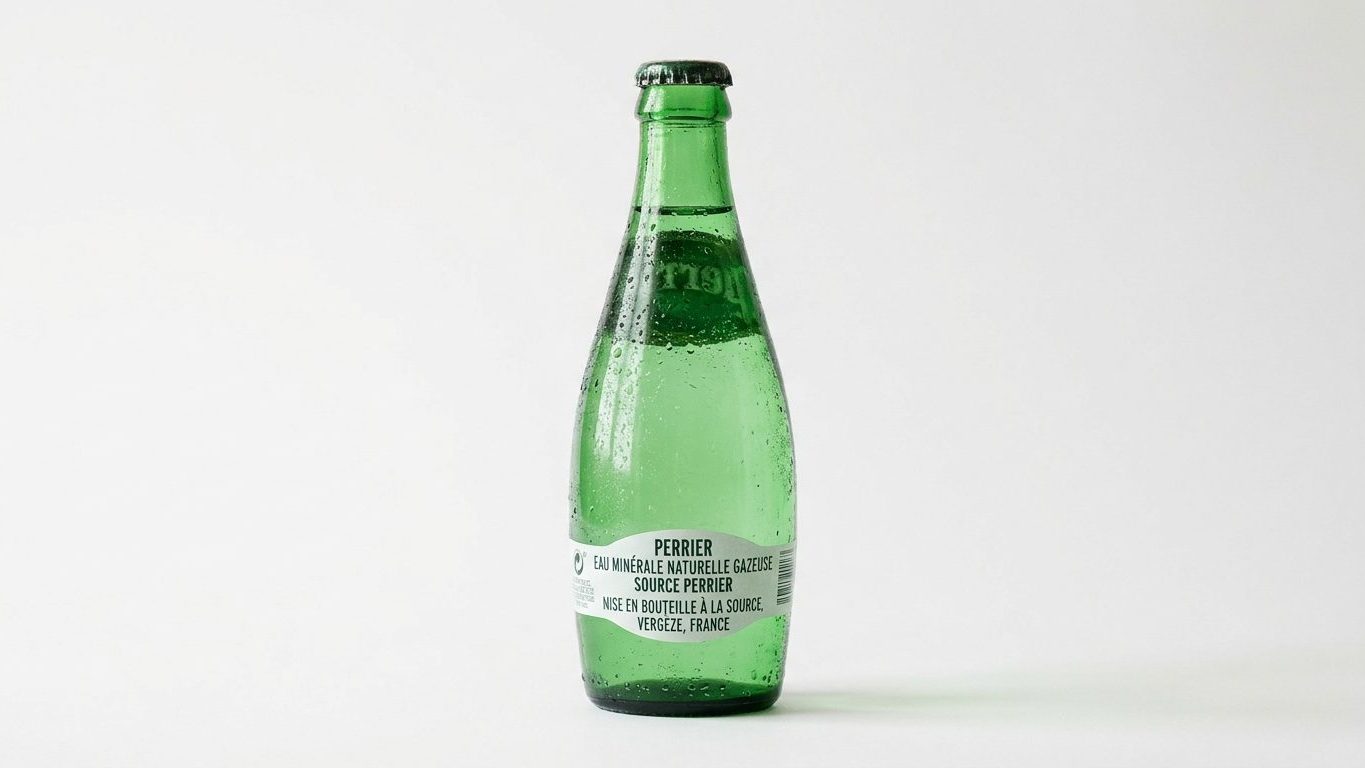
Perrier and Hépar had been sold for years under the label “natural mineral water” even as their factories employed treatments strictly prohibited for that status. The chronic use of prohibited purification treatments, UV lamps, activated carbon, and micro-filtration up to 0.2 micron, was revealed in January 2024 across the Perrier, Vittel, Contrex, and Hépar brands, all owned by Nestlé Waters. The product itself was not dangerous to drink. It was the label that lied.
- Nestlé Waters used activated carbon filters, UV, and microfiltration at 0.2 micron on Perrier, Hépar, Vittel, and Contrex, techniques prohibited for the natural mineral water designation.
- The group accumulated an estimated gain of over €3 billion in 15 years from this fraud, selling water 100 to 300 times more expensively than tap water.
- Authorities knew since 2022 that the producer applied these prohibited treatments and that bacterial contaminations on the boreholes occurred, according to the report of the Senate committee.
A designation that forbids any disinfection
The status of natural mineral water rests on a simple principle: the resource must remain intact from the source to the bottle. Of subterranean origin, distinguished by their original purity, these waters must in no way be subjected to disinfection, recalls the Senate in its report. A tolerance exists nevertheless since the early 2000s. The National Agency for Food, Environmental and Occupational Health Safety has authorized since 2001 the filtration of mineral waters with a specific 0.8 micron filter; below this threshold the treatment is considered disinfection.
It is precisely this limit that the Gard and Vosges plants would have breached. The head of Nestlé Waters acknowledged, during a discussion with a ministerial office in 2021, the use in its Vosges and Gard plants of activated carbon filters and ultraviolet treatments, measures described as “strictly prohibited.” The internal motivation cited was not cosmetic. Bacterial or virological contaminations occurred episodically at Perrier boreholes, sources increasingly regularly polluted, partly with fecal matter, according to internal exchanges cited by the Senate.
The economic mechanism, for its part, is clear. Natural mineral water sells for markedly higher prices than water simply made drinkable by treatment, and this price rewards only one thing: the promise of an untouched origin. As soon as a site disinfects, this promise collapses, even if the water remains perfectly drinkable.
Two years of revelations, inspections and a settlement
It all started with a journalistic investigation. The case was revealed at the beginning of 2024 by the newspaper Le Monde and the investigative unit of Radio France. Health authorities then reacted with targeted inspections at the sites concerned.
The reports issued by the national inquiry service of the DGCCRF and the IGAS demonstrated that different brands of the Nestlé Waters group were treating the drawn waters with microfilters, UV, and activated carbon filters—techniques illegal for marketing as natural mineral water. Facing these findings, the company chose the negotiated judicial route rather than going to trial. A criminal settlement of several million euros was concluded with the prosecutor, without formal admission of guilt before a court. The amount remains well below the gains estimated by state services for the period in question.
The judiciary then took over on another front. A judicial investigation was opened on February 13, 2025 against Nestlé Waters, accused of using illegal treatments for its mineral waters. Searches targeted the iconic Vergèze site in the Gard. Perrier, however, may continue to bear its designation. The court ruled in favor of maintaining sales under the label “natural mineral water,” despite the consumer association’s legal challenge seeking withdrawal of the bottles.
What the Senate reproaches the State
A Senate investigative committee took up the case in late 2024. Its report, published in May 2025, does not merely pin the industry. It targets Nestlé Waters in particular, but also mocks the lack of responsiveness of public authorities, informed of the situation for several years. The finding is documented by exchanges of internal correspondence.
Authorities knew, at least since 2022, that the producer had been cheating for years, were aware that this created a distortion of competition with other mineral water brands, and had knowledge of bacterial, even virological, contaminations on some boreholes, the senators write. The report goes further on the regulatory decision itself. “Ultimately, the decision to authorize microfiltration below the 0.8 micron threshold was made at the highest level of the State,” the document notes. The commission also denounces a prolonged locked-down communication. The scandal has become the subject of a “state concealment” tied to “a deliberate strategy,” according to the published conclusions.
The financial scale of the case was also quantified by the lawmakers. The gain generated by the industry at the expense of consumers, Perrier included, could exceed €3 billion over 15 years, according to the Senate report. This figure remains an estimate from state services, contested by the group involved.
The real price of the bottle
The question when filling one’s cart is the price. Natural mineral water is sold on average 100 to 300 times more than tap water, according to an estimate cited by a consumer group. Such a figure is justified only by a promise of purity of origin, not by the chemical composition of the liquid.
Three euros for a 1.5-liter bottle. A few cents for the same volume at the tap. The difference is almost entirely due to a marketing argument: the idea of water that remains intact, emerging from rock protected for millennia. When this argument rests on a hidden treatment, it is indeed the consumer who has funded, unknowingly, the price gap.
The announced inspections across the sector have, so far, not led to the withdrawal of the concerned bottles from shelves. Autumn budget debates on the cost of living regularly bring this question back to the table: paying for an origin rather than for a treatment, provided the promise is true.
Sources: senat.fr | finance.yahoo.com | assemblee-nationale.fr
