
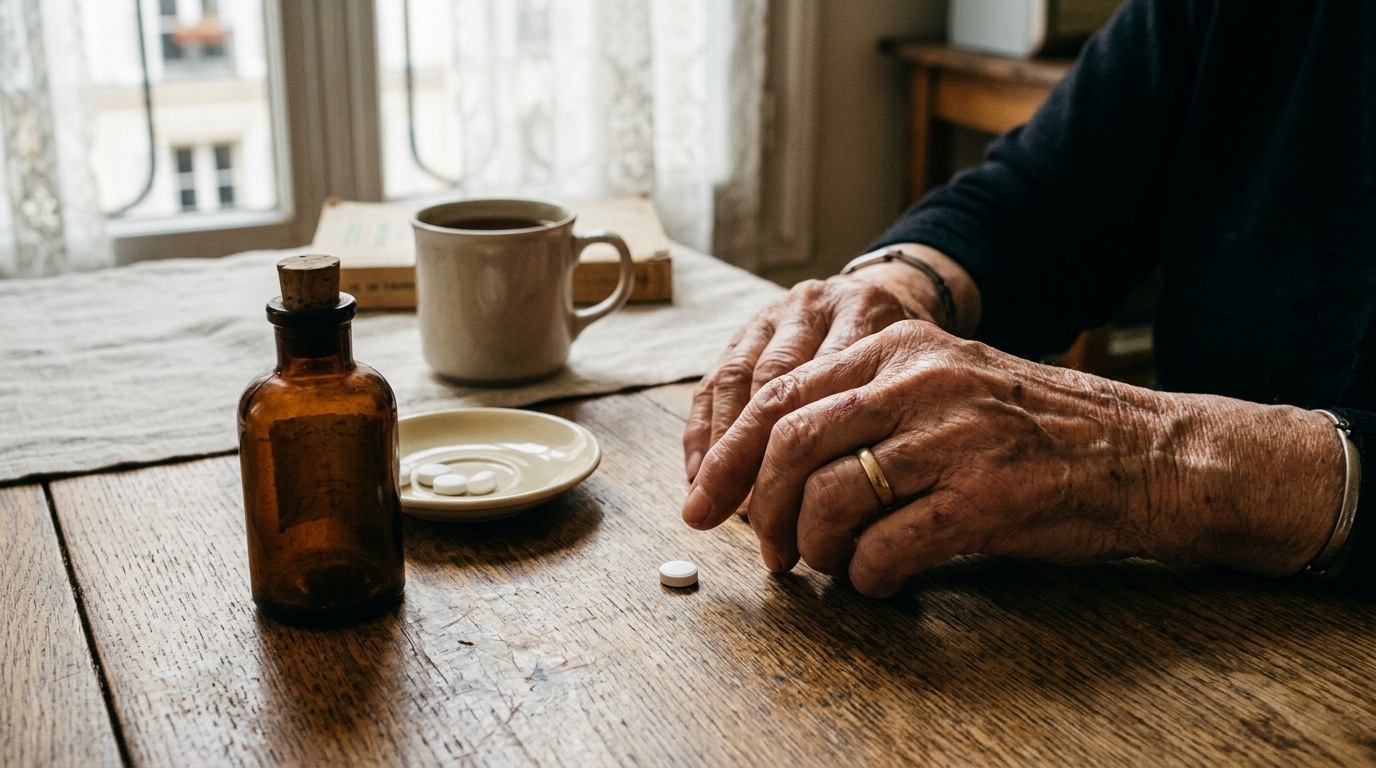
It sits in nearly every medicine cabinet in France. For a headache, a fever spike, or the stubborn pains of osteoarthritis, paracetamol has become the universal reflex—the small white pill swallowed without a second thought. Its reputation? The image of a gentle, safe ally, so accessible that it is nearly considered harmless. Yet, at the University of Nottingham, researchers have just unsettled this confident certainty. By examining the medical records of hundreds of thousands of elderly patients, they have highlighted a reality far more nuanced. And if the drug we thought most reassuring deserved, among those over 65, a bit more caution than we imagined?
The drug people thought to be harmless ends up on the witness stand
Paracetamol holds a special place in our daily lives. For decades recommended as the first-line treatment to relieve chronic pain, particularly osteoarthritis, its popularity rests on one thing: its presumed safety. Whereas other painkillers, such as ibuprofen or aspirin, wear reputations for harming the stomach, paracetamol was seen as the good student of the class.
It is precisely this image that has just been eroded. A large British analysis suggests that, in elderly people, repeated and prolonged use of this medication could be associated with real complications. A shift in perspective that invites us to look at this familiar little tablet in a different light.
What the British figures reveal from nearly 600,000 patients
To reach these conclusions, the researchers did not settle for an anecdotal sample. They analysed twenty years of data drawn from UK general practice, spanning from the late 1990s to the late 2010s. An ant-sized task performed on an impressively large scale.
Concretely, the analysis compared records of 180,483 people over 65 who received paracetamol repeatedly with those of 402,478 age-matched controls. The average age hovered around 75 years. By “repeated use,” they meant at least two prescriptions over a six-month period. When all these elements were cross-checked, a subtle but steady trend emerged as doses accumulated over time.
Ulcers, kidneys, heart: the complications the researchers measured
What do these figures reveal? Among elderly patients exposed to prolonged use, researchers observed an increased risk of several disorders. At the top of the list are gastroduodenal ulcers, lesions of the stomach or duodenum that can lead to perforation and bleeding. This finding is all the more surprising given that paracetamol was precisely thought to spare the digestive system.
But the stomach is not the only organ involved. The analysis also points to a link with heart failure, hypertension, and chronic kidney disease. Even more troubling, researchers identified a dose–response relationship: in other words, the higher the consumption, the more some risks appeared to intensify, particularly for digestive bleeding and kidney injury. It is not a one-off use that is questioned, but the repetition over time.
Why you should not toss your boxes in the trash just yet
Before you discard your medication cabinet in a panic, let us nuance matters. A statistical association is not a definitive verdict: it signals a link to monitor, not an automatic cause. Paracetamol remains a useful, even valuable, drug when used sporadically and appropriately.
What these studies suggest is primarily an invitation to be cautious about long-term self-medication. There is a difference between taking a pill over a rough weekend and consuming several per day, month after month, to ease chronic pain. The difference lies in repetition, and that is precisely where the problem lies.
What to keep in mind before taking a tablet again after 65
The main message of this research is not to demonize paracetamol, but to remind us that no medicine is entirely innocuous, especially when it becomes a daily companion. For people over 65 living with osteoarthritis or other persistent pains, caution is exercised through a few simple habits.
- Do not turn an occasional use into a daily habit without medical advice.
- Regularly discuss chronic pain with your doctor.
- Report any unusual symptom: stomach pain, fatigue, swelling.
- Strictly adhere to the recommended doses.
In short, these studies remind us of a truth we too often forget: the ordinariness of a medicine does not equate to an absence of risk. Paracetamol still has its place in our cabinets, provided we do not treat it as an innocuous candy. And you, when you reach for this familiar little box, do you still pause to ask whether it is truly as harmless as we have been told for so long?
