
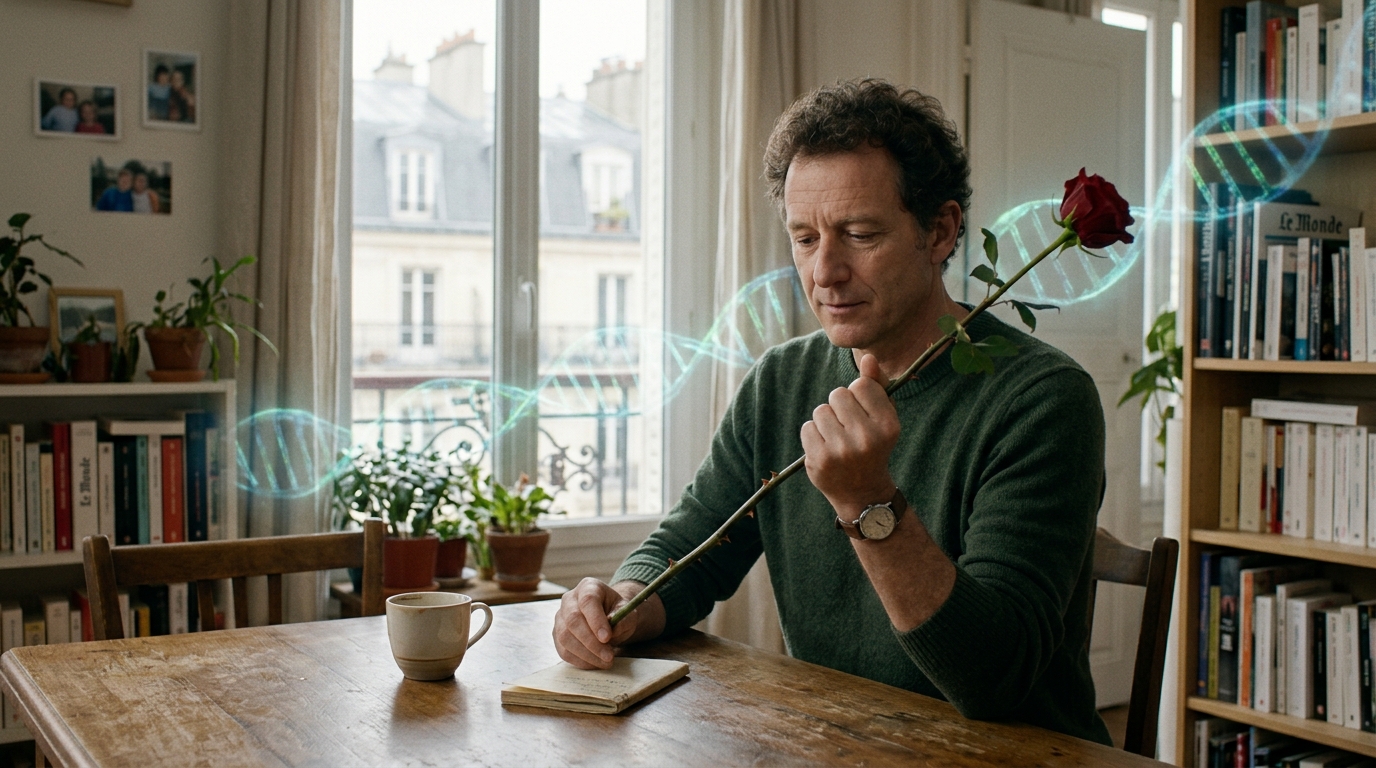
Imagine for a moment: you press your hand onto a burning hot plate with no reflex to withdraw, you break a bone without flinching, you go through life without ever knowing that universal sensation that makes us all recoil, cry out, or shed a tear. For a handful of human beings around the world, this scenario is not science fiction: they are simply insensitive to pain. For a long time regarded as mere medical curiosities, these exceptional individuals intrigue the scientific community today. Because behind their astonishing peculiarity lies a genetic mechanism of fascinating precision, whose understanding could well upend the way we relieve suffering. A plunge into a universe where our genes redefine our most intimate relationship with pain.
These people who never feel pain, nor fear
Pain is our most faithful alarm system. It warns us of danger, forces us to withdraw our hand from the fire, to protect a sprained ankle, to seek medical advice before it’s too late. It would be wrong to think that living without it falls into the realm of a superpower. In reality, the complete absence of pain is a perilous condition. Those affected injure themselves without realizing it, ignore fractures, burns or infections, and accumulate sometimes serious bodily damage without ever receiving the alert signal that would push anyone to react.
What makes some of these cases even more astonishing is that they are sometimes accompanied by an almost total absence of anxiety and fear. These individuals describe a serene existence, free from the stress that usually accompanies risky situations. A calm, almost unperturbed temperament, which is as striking as it is fascinating. How can a simple accident of biology shape a person’s personality and life so profoundly? The answer lies at the heart of our DNA.
FAAH-OUT: the gene that rewrites the pain equation
For a long time, scientists searched for the key to these exceptional cases in genes already known to intervene in the transmission of pain signals. But a major discovery upended the picture: an overlooked gene, named FAAH-OUT. Located in a region of DNA once thought useless, this famous part of the genome sometimes nicknamed “junk DNA,” actually plays the role of a master conductor.
Concretely, a mutation of the FAAH-OUT gene markedly reduces pain perception. To understand how it works, one can imagine a switch that controls another switch. FAAH-OUT regulates the activity of a neighboring gene, FAAH, involved in managing molecules related to well-being and the sensation of pain. When FAAH-OUT is altered, the body is literally flooded with soothing compounds, as if the body constantly produced its own natural analgesic. The pain signal, meanwhile, never quite reaches its destination.
Healing faster: the unexpected bonus of this mutation
If insensitivity to pain were the only effect of this mutation, the story would already be remarkable. But researchers have observed a phenomenon just as surprising: individuals carrying this trait heal faster than average. Their wounds close more quickly, their skin repairs with unusual efficiency, as if their bodies possessed an accelerated repair mode.
This dual property is not a coincidence. The molecules stimulated by the mutation do not merely calm pain: they also participate in tissue regeneration processes and in the management of inflammation. In other words, this same genetic mechanism acts on two fronts at once, providing both protection against suffering and a boost to healing. A biological cocktail whose promises medicine has yet to fully explore.
Toward a new generation of analgesics: what science takes away
That is where the whole stake of these discoveries lies. By understanding precisely how FAAH-OUT works, scientists have a fresh blueprint for designing treatments. The aim is not to eliminate pain completely, a system vital to our survival, but to chemically reproduce, and in a controlled manner, what nature achieves in these rare individuals.
The prospects are immense. We are talking about relieving the millions who live with chronic pain, often poorly managed, or assisting recovery after surgical intervention. At a time when the most powerful analgesics pose serious problems of dependence and side effects, a new generation of medicines inspired by this mutation could represent a quiet revolution. Not to mention the wound-healing aspect, which opens promising avenues for major injuries and the elderly whose skin heals more slowly.
These individuals who never feel pain remind us of a troubling truth: our rarest traits are sometimes the keys to progress that concerns everyone. By deciphering the secret language of our genes, science turns a fascinating anomaly into concrete therapeutic hope. One remainings question remains truly captivating: how far are we willing to shape our relationship with pain, this sensation which, as unpleasant as it is, lies at the very heart of what it means to be human?
