
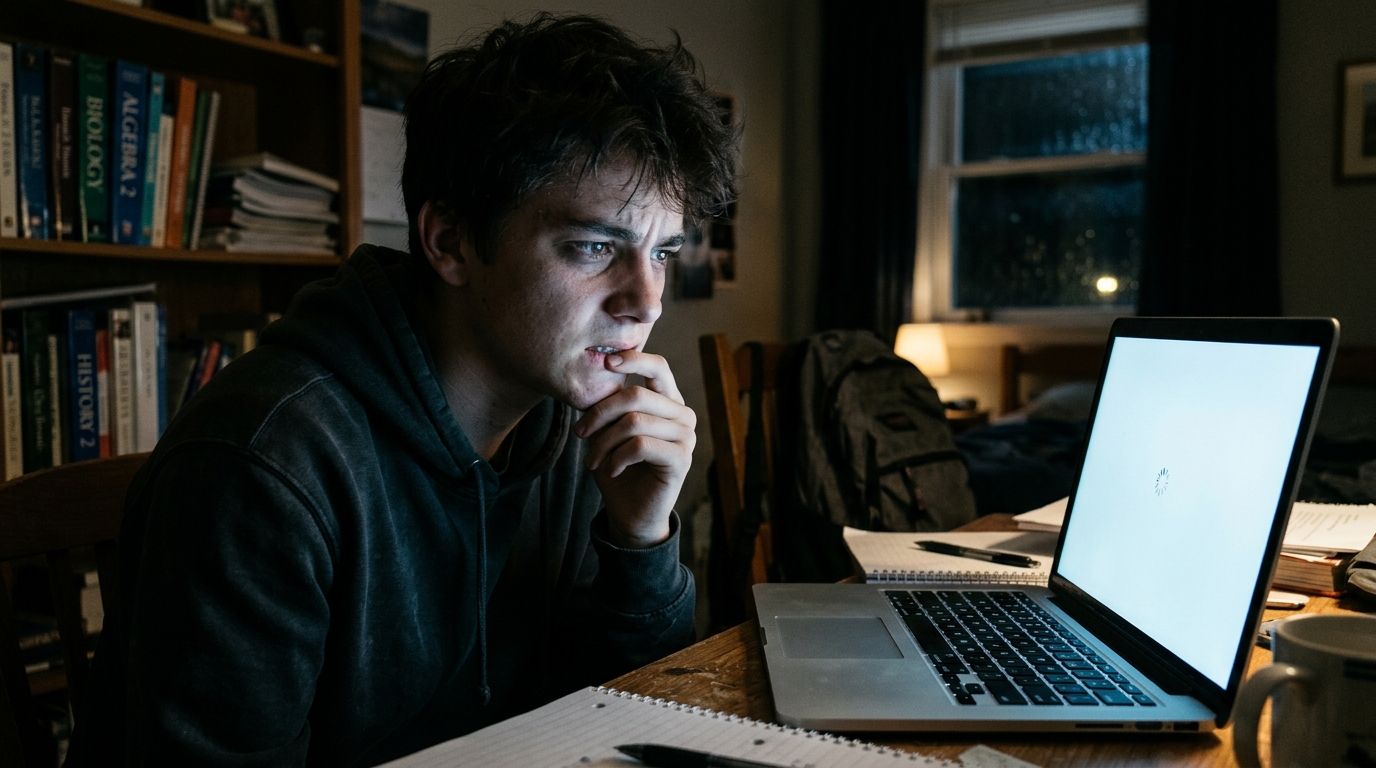
An algorithm in computing is a sequence of instructions that allows solving a problem or making a decision automatically. On paper, the idea shines: to replace the weight of administration and the opacity of the old orientation systems with a tool capable of cross-referencing thousands of wishes and available placements in a matter of seconds. This is precisely the promise that was sold to us with the platform that now shapes the future of hundreds of thousands of high school students every year. Yet, with each new school year, the same scene repeats: anxious families in front of their screens, adolescents without assignments, and a recurring question—the one asking why a system meant to streamline things still leaves so many on the sideline.
Key takeaways
- Each rentrée, more than 100,000 candidates find themselves without any firm offer in higher education.
- The algorithm cannot create extra seats, notably in health, law, or certain general licenses where applications exceed actual capacity.
- Among the proposed avenues are strengthening intake capacity, human guidance through academic commissions, revising the calendar, and improving high school students’ information about career prospects.
Table of contents
- Parcoursup, the promise of an algorithm that was meant to simplify everything
- More than 100,000 candidates left without a solution: what the ministry’s numbers really reveal
- Why the algorithm stalls: the structural flaws of Parcoursup
- What tracks to get thousands of high school students out of the impasse
Parcoursup, the promise of an algorithm that was meant to simplify everything
When this platform replaced its predecessor several years ago, the stated objective was clear: to end the opaque rankings and the endless waiting lists that demoralized candidates. The idea rested on a seductive principle, that of a matching algorithm capable of aligning students’ wishes with the real capacity of training programs, taking into account criteria such as academic results, geographic area, and the number of places available in each specialty.
On paper, the mechanism resembles a vast puzzle where every piece should naturally fit. In practice, the system operates more like a permanent negotiation between supply and demand, where places become available only gradually over the summer, forcing thousands of young people to wait in uncertainty long after the bac exams have ended. This elongated timeline, meant to streamline parcours, ends up creating a form of collective anxiety that begins in spring and sometimes lingers until the start of the school year.
More than 100,000 candidates left without a solution: what the ministry’s numbers really reveal
Behind the institutional communications that highlight the satisfaction rates of the wishes expressed, a harsher reality emerges from the data of the Ministry of National Education. According to these figures, each rentrée sees over 100,000 candidates end up without any firm offer when courses resume in higher education. This figure, substantial at the level of a whole age cohort, is not confined to a handful of isolated cases or exceptionally complex dossiers.
It encompasses profiles as diverse as high school students who submitted aspirations deemed overly ambitious relative to their records, but also candidates with atypical paths, repeaters, or learners from technological and professional tracks, who often struggle to find a place in programs that are already saturated. What strikes most is that this phenomenon does not diminish year after year, despite the successive adjustments made to the platform. The supplementary procedure, intended to give a second chance to those without a response, absorbs only part of this mass, leaving a significant residue of young people in a kind of administrative gray area, sometimes until September.
Why the algorithm stalls: the structural flaws of Parcoursup
The problem does not come from the technology itself so much as from the context in which it operates. An algorithm, no matter how sophisticated, cannot create places that do not exist. Yet, in several highly demanded tracks, notably in health, law, or certain general licenses, the number of applications far exceeds the actual capacity of institutions. The tool then has to manage a structural shortage rather than a mere distribution issue.
Adds to this another, more insidious difficulty: the logic of multiple wishes without strict ranking generates a cascade effect where the same place can be offered and refused several times before being finally allocated. This mechanism, intended to maximize everyone’s chances, actually slows down the entire process and prolongs the wait for candidates at the bottom of the ranking lists. Finally, the algorithm remains heavily dependent on the information provided by institutions about their intake capacities, data that can evolve during the process and undermine the entire edifice.
What tracks to get thousands of high school students out of the impasse
Faced with this recurrent observation, several avenues regularly surface in public debates. The first would be to significantly reinforce intake capacities in the most sought-after fields, which implies substantial investment in infrastructure and teaching staff, far from negligible on the budgetary front.
Another direction under discussion concerns the human support for the most fragile candidates, through academic commissions tasked with reviewing individually the most delicate situations instead of relying solely on automated processing. Some observers also propose rethinking the procedure calendar, moving forward certain steps to shorten the period of uncertainty that currently stretches over several months. Finally, better information in high school about the reality of career outcomes and success rates by field would likely help a portion of applicants formulate more realistic wishes from the start, thereby easing part of the congestion observed each year.
As the rentrée now unfolds in lecture halls and classrooms, the platform continues to undergo regular adjustments, yet no reform has truly resolved this structural knot. Between technological promise and real-world practice, the gap persists, leaving thousands of young people every year suspended between the high school they are leaving and the higher education they have not yet joined. It remains to be seen whether the upcoming adjustments will finally bridge this gap, or if the question will, as too often, be postponed to the next rentrée.
