
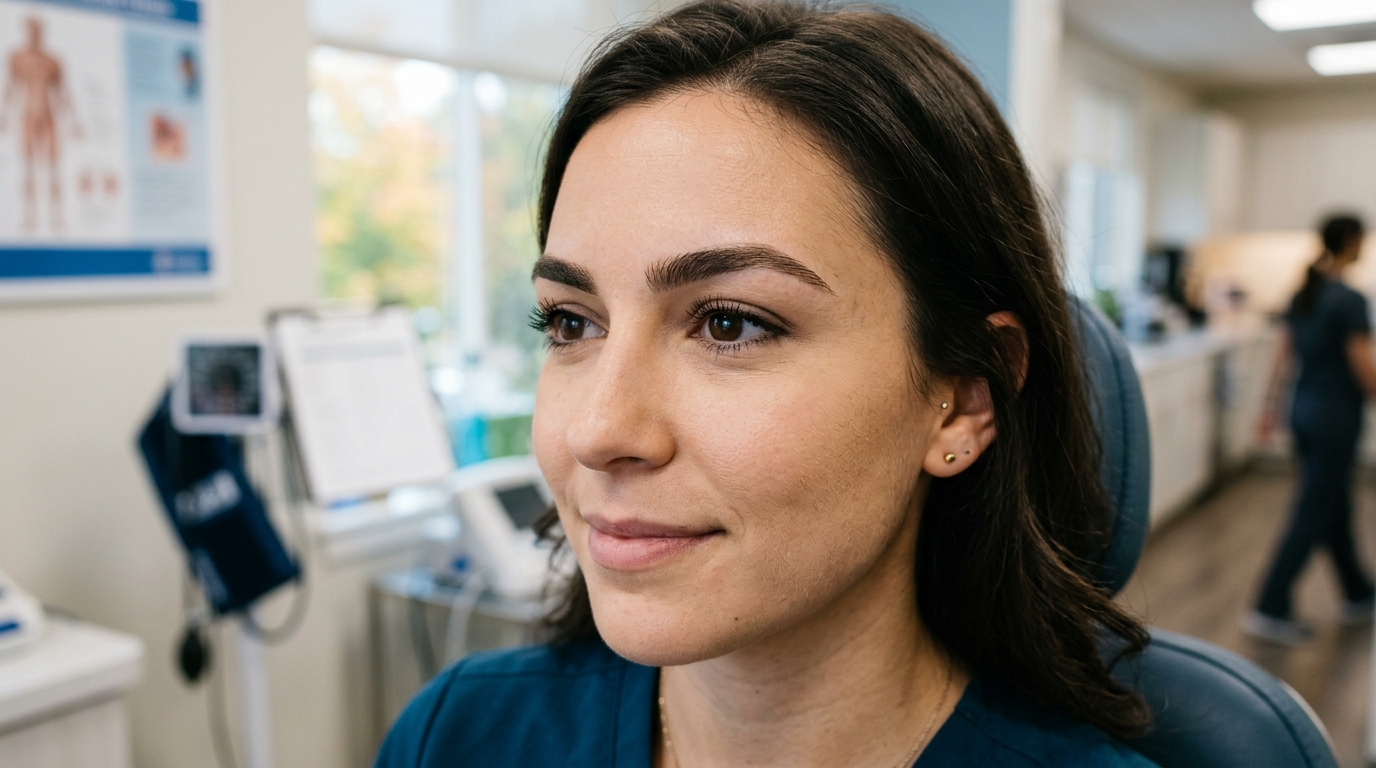
And what if a simple glance in the mirror at the start of the school year reveals far more than a poor night’s sleep? Many women and men notice, while applying makeup or shaving in the morning, that the outer third of their eyebrows looks increasingly sparse. The reflex is often to blame an overly zealous tweezer, the advancing age, or simply the fatigue of late summer. Yet this aesthetic detail, almost seemingly trivial, sits among the very first clues that endocrinologists seek when they suspect a thyroid imbalance. A discreet, quiet sign, but one that deserves attention.
This eyebrow detail that alerts specialists before anything else
Before chronic fatigue, unexplained weight gain, or a constant feeling of cold, it is sometimes the thinning of the eyebrows that pricks up the doctors’ ears. This phenomenon even has a name in medical jargon: the Queen Anne’s sign, named after a historical figure whose portrait showed this trait. Concretely, it is not a generalized hair loss, but a very localized lightening, affecting exclusively the outer third of the eyebrow, the part closest to the temple. This detail, often overlooked by the individuals themselves, nonetheless draws the attention of health professionals from the first consultation, because it frequently precedes the appearance of other more classic symptoms.
Why the thyroid targets this exact area of the eyebrow
This very precise localization is no accident. The thyroid gland, when dysfunctional, disrupts the natural growth cycle of hairs across the body. Moreover, the hair follicles situated in the external part of the eyebrow are reputed to be more sensitive to hormonal fluctuations than those on the rest of the face. When thyroid hormone production slows, what is called an hypothyroidism, cellular metabolism slows down, including at the level of the scalp and hair-bearing zones. The hairs then enter the resting phase more quickly, then fall out without being renewed at the same pace. This is how, progressively, that characteristic lightening line takes shape. A sign that, when combined with drier skin, brittle nails, or persistent fatigue, should prompt an urgent consultation.
The TSH, the simple test that clears up the doubt in a few days
Good news: there is no need for complex or invasive tests to confirm or rule out this hypothesis. A simple blood test allows measuring the level of TSH, the hormone that stimulates the thyroid and the standard marker for detecting an imbalance. An abnormally high level usually points to hypothyroidism, while a level that is too low may suggest the opposite, hyperthyroidism. The results are available in just a few days, enabling quick management if necessary. This test, accessible on a prescription from a general practitioner, remains the most reliable tool to objectify what the mirror had already hinted at. If confirmed, a substitution hormonal therapy, tailored and followed over time, often helps stabilize the situation and limit repercussions, including those affecting the hair.
This detail of thinning eyebrows, however discreet, illustrates how the body can send signals long before heavier symptoms take hold. Nothing replaces, of course, the advice of a health professional, but staying attentive to these small daily changes remains a valuable reflex. So, the next time you look in the mirror, will you take a moment to study your eyebrows a little more closely?
