
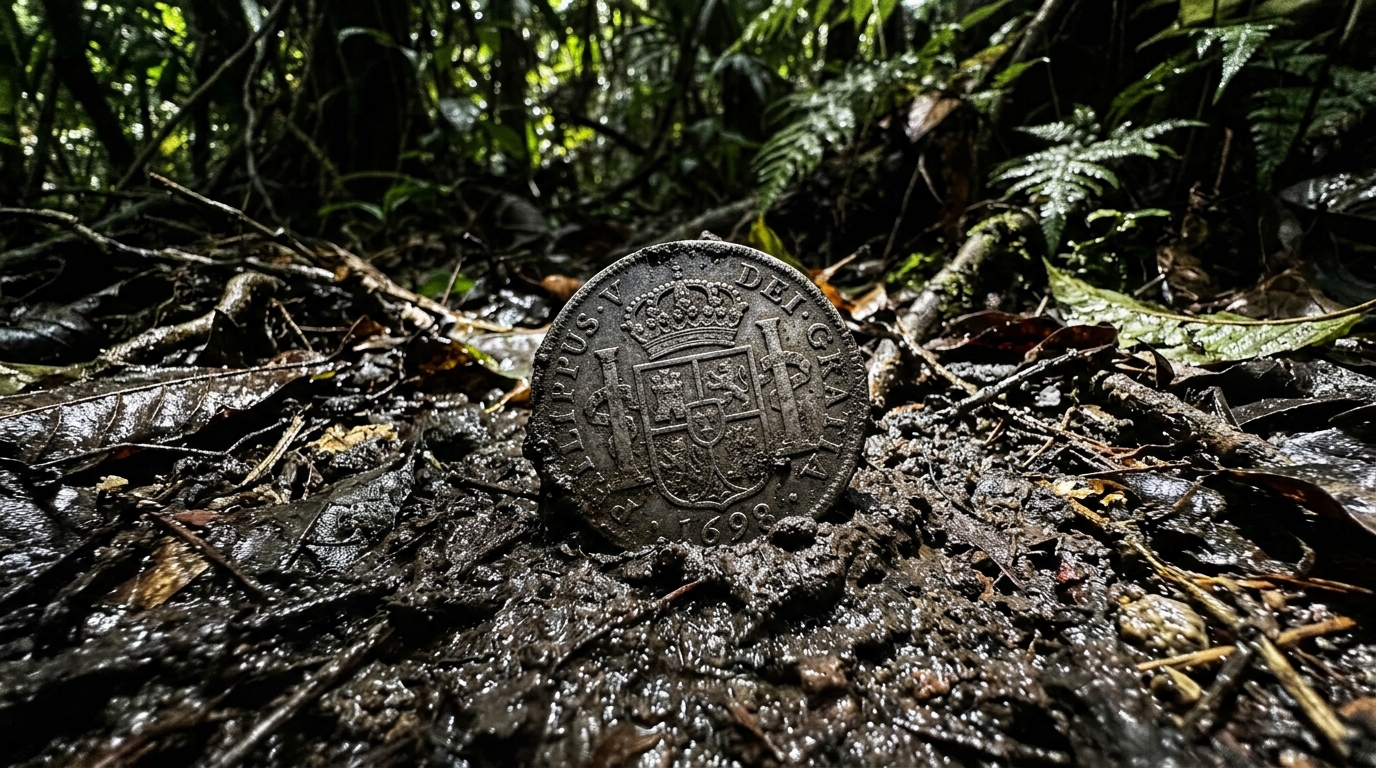
One country bets all of its savings on a single project, and that project collapses in just a few months. That sentence, more than anything, captures the mechanism that propelled Scotland toward one of the most painful decisions in its history. For it was neither cannons nor foreign armies that toppled its independent parliament at the outset of the eighteenth century, but a spectacular bankruptcy born on a swampy strip of land in Panama. The Darién project remains to this day one of the most fascinating yet least known episodes of European history, a nearly caricatured example of how an excessive ambition can tilt the fate of an entire nation.
- In 1698, around 1,400 Scottish investors commit nearly a fifth of the nation’s liquid capital to a commercial colony on the Isthmus of Panama, named New Caledonia
- The tropical climate, famine, and diseases decimate the colonists, leaving only 300 survivors out of the 1,200 who departed, before the project is abandoned in 1699
- Ruined by this failure costing roughly a quarter of Scotland’s available liquid capital, the country votes in 1707 to dissolve Parliament and unite with England in exchange for financial compensation
- A reckless bet: when Scotland stakes its financial survival on Darién
- The tropical paradise that turned into an economic tomb
- Empty coffers and a nation on its knees: the gears of ruin
- Selling independence to erase debts: the birth of the United Kingdom
An insane bet: when Scotland stakes its financial survival on Darién
At the very end of the seventeenth century, Scotland is an independent kingdom, yet economically fragile, squeezed between a powerful England and colonial ambitions that still elude it. In this context, a Scottish financier named William Paterson, already known for helping to found the Bank of England, conceives a plan as audacious as it is risky: to establish a trading colony on the Isthmus of Panama, at the narrowest strip of land separating the Atlantic from the Pacific. The idea immediately captivates public opinion and the Scottish business elite, who see it as a chance to transform their country into a pivotal commercial power, capable of commanding exchanges between two oceans.
The enthusiasm is such that roughly 1,400 individuals—merchants and members of noble families—invest in the venture, so that it is estimated that nearly a fifth of the national liquid capital is sunk into this singular project. On 14 July 1698, five ships leave the port of Leith, near Edinburgh, bearing about 1,200 colonists full of hope, convinced to participate in the birth of a new Scottish Eldorado named New Caledonia.
The tropical paradise that turned into an economic tomb
On paper, the chosen location seemed ideal: a tropical region with strategic positioning capable of attracting global trade. In reality, the colonists encountered a hostile environment far from the idyllic maps used to sell the project. The humid, suffocating climate, soils unsuitable for subsistence farming, and tropical diseases to which the Scots were utterly unprepared rapidly turned the venture into a daily ordeal. Added to this is isolation: the ships intended to resupply the colony struggle to maintain contact with Europe, and the reserves run out far more quickly than anticipated.
In just eight months, the situation becomes untenable. Disease, famine, and despair erode the settlers’ resolve, forcing the abandonment of New Caledonia by July 1699. The human toll is appalling: of the 1,200 people who set out with the initial convoy, only 300 survive, and a single ship manages to reach the Scottish shores. This maritime disaster foreshadows the financial wreck to come, which will strike the country as a whole, far beyond the families directly involved in the expedition.
Desperate coffers and a nation on its knees: the gears of ruin
The Darién failure is not merely a human tragedy in a distant jungle. It swiftly becomes a national economic catastrophe. Shareholders from all levels of Scottish society lose nearly all of their investments, and the entire kingdom’s financial system wobbles. It is estimated that this debacle cost Scotland about a quarter of its available liquid capital at the time—a staggering figure for a country whose economy already rested on fragile foundations.
The consequences are felt at every social stratum. The great aristocratic families, who had poured money in to bolster their prestige, find themselves stripped bare. Trade slows, trust in Scottish financial institutions collapses, and the country is left unable to support its own economic functioning. This crisis is not merely an unfortunate episode; it remains, even today, one of the most frequently cited examples of how a sovereign kingdom could, in a handful of years, lose the means to govern itself.
Selling independence to erase debts: the birth of the United Kingdom
This is where the story shifts toward its political dimension. Weakened, indebted, and unable to recover alone, Scotland faces a stark choice. England, its powerful neighbor and financially stable partner, proposes a rescue-style compromise: the Act of Union of 1707. In exchange for Scotland joining a new United Kingdom, the losses borne by Scottish Darién shareholders are partially compensated, and the country receives a financial settlement.
Only seven years after the Darién disaster, the Scottish Parliament votes to dissolve itself—not under duress of arms, but under the relentless pressure of numbers and economic necessity. This union, forged in financial urgency rather than political zeal, continues to feed identity debates and nationalist claims that regularly surface in contemporary Scottish discourse. Indeed, it is hard to forget that a substantial share of the independence lost originated from a failed colonial gamble on a tropical strip of land thousands of miles away from Edinburgh.
Three centuries later, the Darién episode remains a strikingly relevant lesson on the fragility of economic balances and on how a single financial decision can redraw the political borders of a continent. As debates over Scottish independence periodically reappear on the public stage, it is hard not to recall that Panamanian jungle where, without a single battle being fought, the disappearance of a sovereign parliament was set in motion.
