
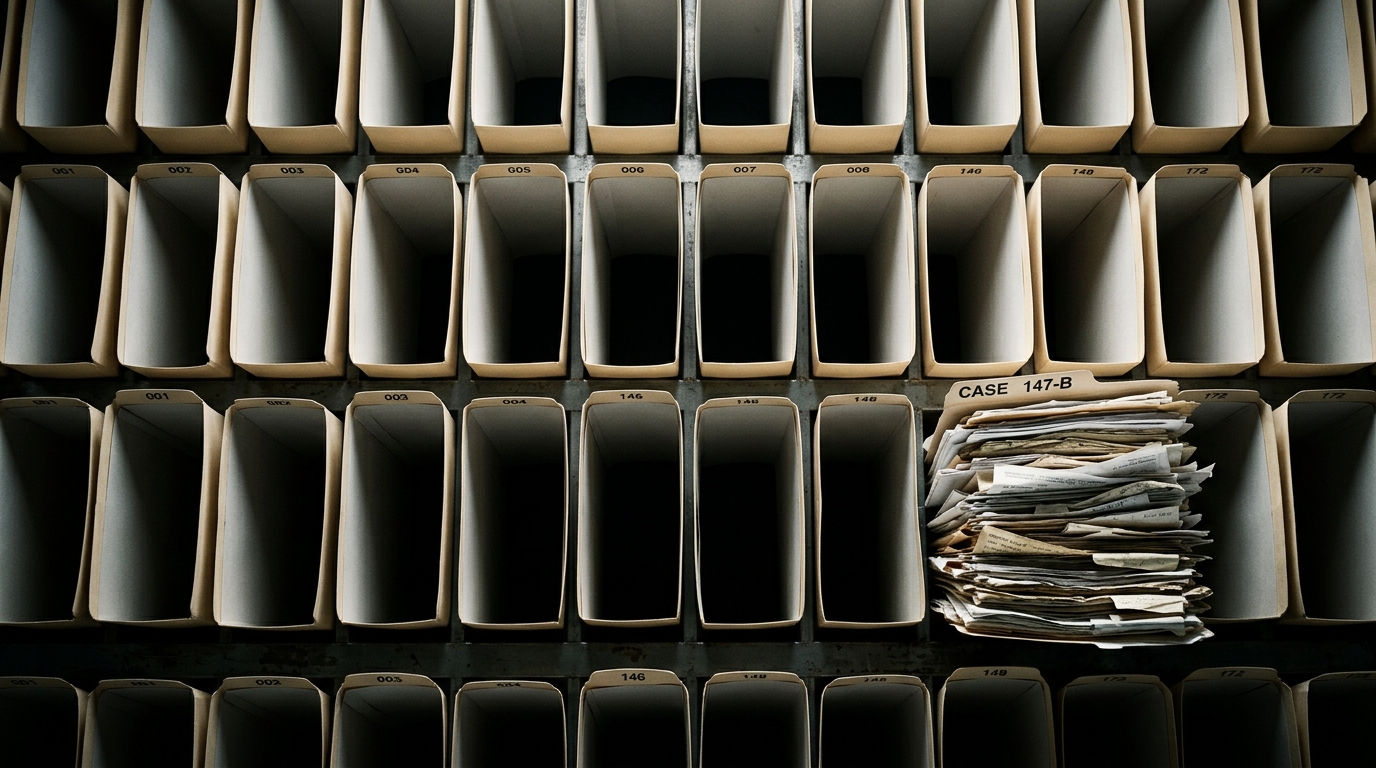
Opening a digital health record and leaving it blank for years: that, in essence, is the story of one of the most ambitious and most disappointing endeavors of the French administration. For more than twenty years, France has been trying to provide every citizen with an online medical file capable of centralizing medical history, prescriptions, and test results. On paper, the concept pleases both patients and the health insurance funds. In reality, this major digital project more resembles a vast archives hall, with almost every shelf stubbornly empty. How could a tool meant to simplify our medical tracking become, for so long, a symbol of administrative waste? Let us dive behind the scenes of this medical file which, in many respects, still looks like an empty shell.
- Out of about 40 million digital medical records opened, more than nine in ten have never been populated by a health professional.
- Launched in 2004, the Personal Medical File consumed at least €210 million for only 158,000 records opened, half of which were empty, before being suspended in 2012.
- This fiasco stems from the absence of shared objectives between patients and caregivers, doctors’ time constraints, and the French distrust, despite the relaunch in 2017 and later through Mon espace santé.
- Forty million records, almost all empty
- Half a billion euros for a notebook that stays closed
- Why doctors balk at the shared medical record
- Reviving the DMP: pathways to escape the impasse
- What to take away from this digital fiasco
Forty million records, almost all empty
The figure is striking: today, around forty million French citizens have a digital medical record opened in their name. At first glance, this score resembles a victory for connected health. Yet behind this façade lies a far more embarrassing reality. According to analyses by the Court of Accounts, more than nine records out of ten have never been populated by a health professional. In other words, these digital notebooks exist, but are as silent as a drawer never opened. No consultation report, no test result, no prescription: nothing fills what was meant to become the patient’s medical memory. This paradox alone sums up the fiasco of a project launched with the best intentions, but which collided with a real-world field that was much more complex than expected.
Half a billion euros for a notebook that remains closed
Back then: in May 2004 the health minister of the time, Philippe Douste-Blazy, presented the Personal Medical File as a revolution. The ambition was clear: generate 3.5 billion euros in annual savings for the health insurance system by avoiding redundant exams and smoothing the care pathway. Eight years later, the audit by the Court of Accounts hit like a verdict. €210 million had been spent for barely 158,000 records opened, more than half of which were completely empty. And this figure, the financial magistrates note, is only a floor—the budgetary tracking of the system proved particularly leaky. Including the hospital patient records computerized systems that were supposed to talk with the DMP, the real bill would exceed even half a billion euros, with no precise tally possible due to unreliable accounting. At one point, the official count showed only 418,247 opened records, barely 8% of the initial objective. A failure so stinging that the project was simply suspended in 2012.
Why doctors balk at the shared medical record
Although the program was relaunched in 2017, with encouraging results in nine pilot departments and up to ten thousand new records created each week, the underlying problem never truly disappeared: doctors were not populating these records. Why such reluctance? The answer lies less in the technology than in the organization of the project itself. Institutional evaluations point to the absence of shared objectives between patients and health professionals, as well as a glaring lack of overarching governance for health data development. Concretely, a very busy general practitioner, between two appointments, has neither the time nor always the desire to fill an extra digital tool whose practical usefulness remains unclear. Add to that a certain mistrust among the French toward the centralization of their medical data, and you obtain a cocktail that explains why this notebook, intended to revolutionize everything, remained for so long a mere administrative shell.
Reviving the DMP: paths to escape the impasse
In light of this assessment, the state tried to turn the page by transforming the historic device into Mon espace santé, presented as the digital successor to the original DMP. The idea remains the same, but the approach seeks to fix the past mistakes: simplify the interface, broaden its use among professionals, and above all restore meaning to the exercise by showing each actor concretely what they stand to gain. Because the success or failure of such a tool hinges here: without patient trust and without genuine buy-in from caregivers, even the best interface in the world would remain a hollow shell. Rebuilding this trust, by involving users and practitioners more closely from the design stage of digital health tools, now seems the sine qua non condition to avoid repeating the same errors.
What to take away from this digital fiasco
Twenty years after its launch, the gap between the original 2004 ambition—an exclusive health notebook for every patient—and the reality of its use remains striking. This file is still, to this day, meticulously tracked by public finance watchdogs, proof that the matter is far from settled. It contains all the ingredients of a digital project that aged badly: overblown ambitions, unclear governance, astronomical sums swallowed, and above all a glaring lack of dialogue with those who were supposed to use it daily.
This fiasco of the shared medical record recalls a simple, but often forgotten, lesson in major public digital projects: technology, even promising, is worth little without the uses it is meant to serve. As Mon espace santé today tries to pick up the baton, a question remains: will we manage this time to persuade patients and doctors to finally fill this digital notebook, or will it continue to gather dust in a corner of our smartphones?
