
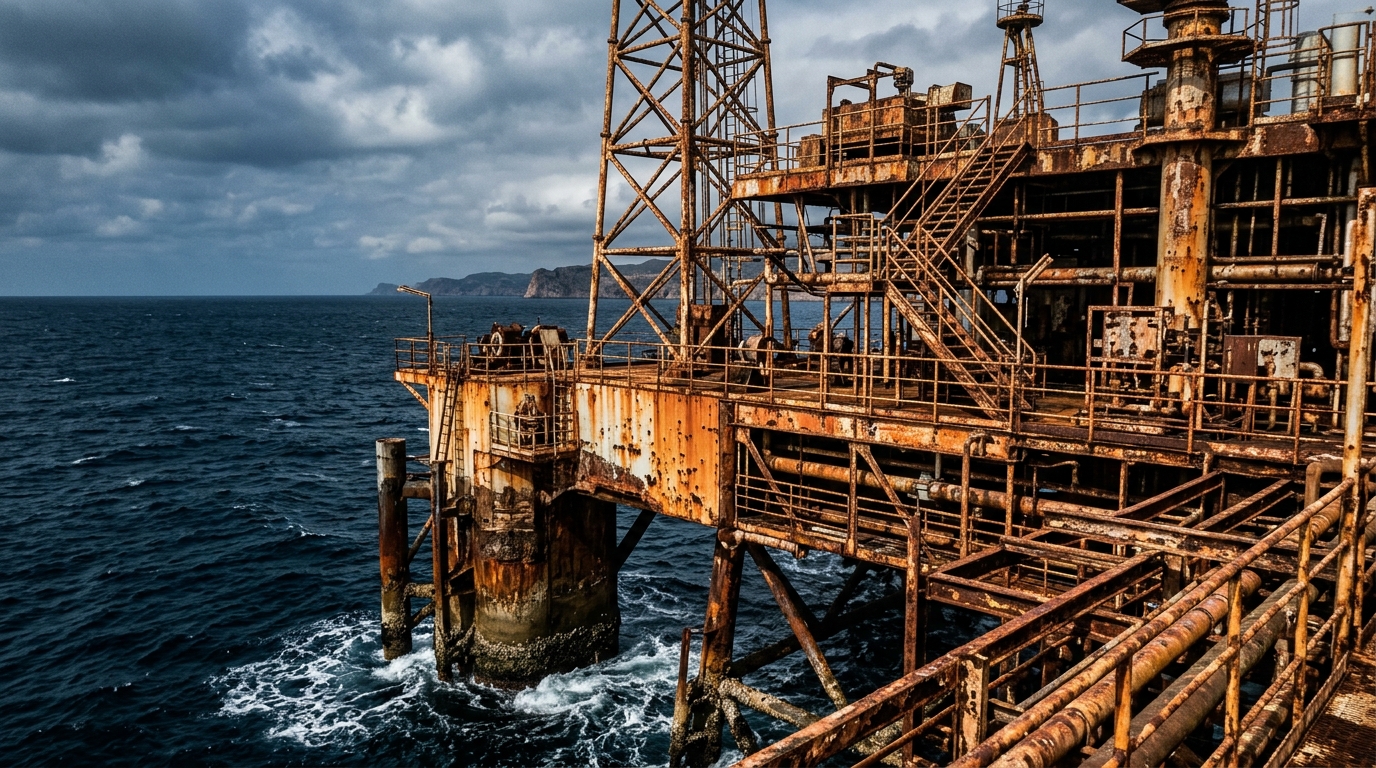
One and a half billion euros for a gas tap that was never opened. The Castor offshore gas storage project, off the coast of Spain, reads like an industrial case study: a colossal construction site, hundreds of seismic jolts, and a public bill that continues to swell more than ten years after the project was halted.
- The Castor project, an offshore gas storage facility off Vinaròs, triggered more than 500 microseisms from the initial injections, leading to its suspension in 2013 and ultimately the definitive abandonment of any reopening in 2017
- The Spanish state paid 1.35 billion euros in compensation to the concessionaire Escal UGS, a cost eventually shifted to Enagás and passed through to consumers’ gas bills over 30 years
- A Supreme Court ruling in December 2025 added about 250 million euros of additional compensation, bringing the project’s total bill to nearly 1.7 billion euros
- An offshore reservoir turned into a geological time bomb
- 500 tremors later, the project collapses before it even began
- The record-breaking bill for a project that never stored a single cubic meter of gas
There are engineering projects that go wrong. And then there is Castor, which managed the feat of costing a fortune without ever delivering the slightest service. The site, located off Vinaròs in the Gulf of Valencia, was to convert an exhausted oil field into a gigantic natural gas reservoir. On paper, the idea seemed solid. In the Mediterranean’s geological reality, it proved to be far more explosive than anticipated.
An offshore reservoir turned into a geological time bomb
The Castor concept rested on a relatively common logic in the energy sector. Take an old oil reservoir, emptied of its hydrocarbons after decades of production, and repurpose it as a storage space for natural gas. The target reservoir lay about 1.7 kilometers beneath the sea, a depth that seemed to guarantee a good seal for the gas injections.
The gas would then rise to the surface through dedicated infrastructure, before being piped to the national Spanish network. A project of scale, credible enough to win the European Investment Bank’s financial backing in 2013, with a 200 million euro guarantee and another 300 million in bonds.
But injecting gas under pressure into rock that had not moved for millions of years is never entirely harmless. Engineers know that disturbing the underground balance of a geological fault can wake dormant mechanical stresses. That is exactly what happened off the Spanish coast, with consequences no one anticipated on this scale.
500 tremors later, the project collapses before it even began
From the outset of the first gas injections, the area began to tremble. Literally. In a matter of weeks, more than 200 minor earthquakes were recorded by geologists, a phenomenon quickly attributed to the storage site’s activity. Spanish authorities eventually suspended operations in September 2013, unable to ignore what increasingly looked like a geological chain reaction.
The final tally was dizzying: more than 500 microseisms were ultimately recorded in the region, while the installation never actually operated at full capacity. In other words, Castor shook an entire coastal area without ever fulfilling its primary role of storing gas for the Spanish network.
A study conducted jointly by MIT and Harvard later confirmed what many already feared: researchers found that a fault near the eastern coast of Spain had been directly stressed by the gas injections. Their conclusion was unequivocal: any restart of activity could wake the seismic tremors. In 2017, Spain’s Ministry of Energy permanently ruled out reopening the site.
The record-breaking bill for a project that never stored a single cubic meter of gas
By a decree dated October 3, 2014, the Spanish state granted 1.35 billion euros in compensation to the Escal UGS consortium, the Castor project’s concessionaire, which was definitively closed after triggering those coastal microseisms without ever being put into service. The payout was rushed: the royal decree approving the concession abandonment was signed the following day, and the amount was to be paid within 35 working days, by mid-November 2014.
This express compensation mechanism, however, did not withstand legal scrutiny. Spain’s Constitutional Court eventually declared several articles of the decree-law null and unconstitutional, finding that the process of halting storage and the recognition of compensation raised legal issues. The financial burden was ultimately shifted to the gas company Enagás, via its subsidiary Enagás Transporte, with repayments spread over thirty years directly reflected in Spanish consumers’ gas bills.
Yet the bill continued to mount. A Supreme Court ruling issued in early December 2025 recognized Enagás Transporte’s right to compensation, obliging the Spanish state to pay about 250 million euros more for maintenance and dismantling of the site, now located off Alcanar. With these new costs, estimated at 330 million euros in total for dismantling and the debt to Enagás, the Castor project’s total bill now approaches 1.7 billion euros.
Few things better symbolize the gulf between the ambition of an energy project and the reality of the subsurface it seeks to master. Castor will remain the example of an expensive infrastructure never operated, yet whose bill, indeed, continues to run.
