
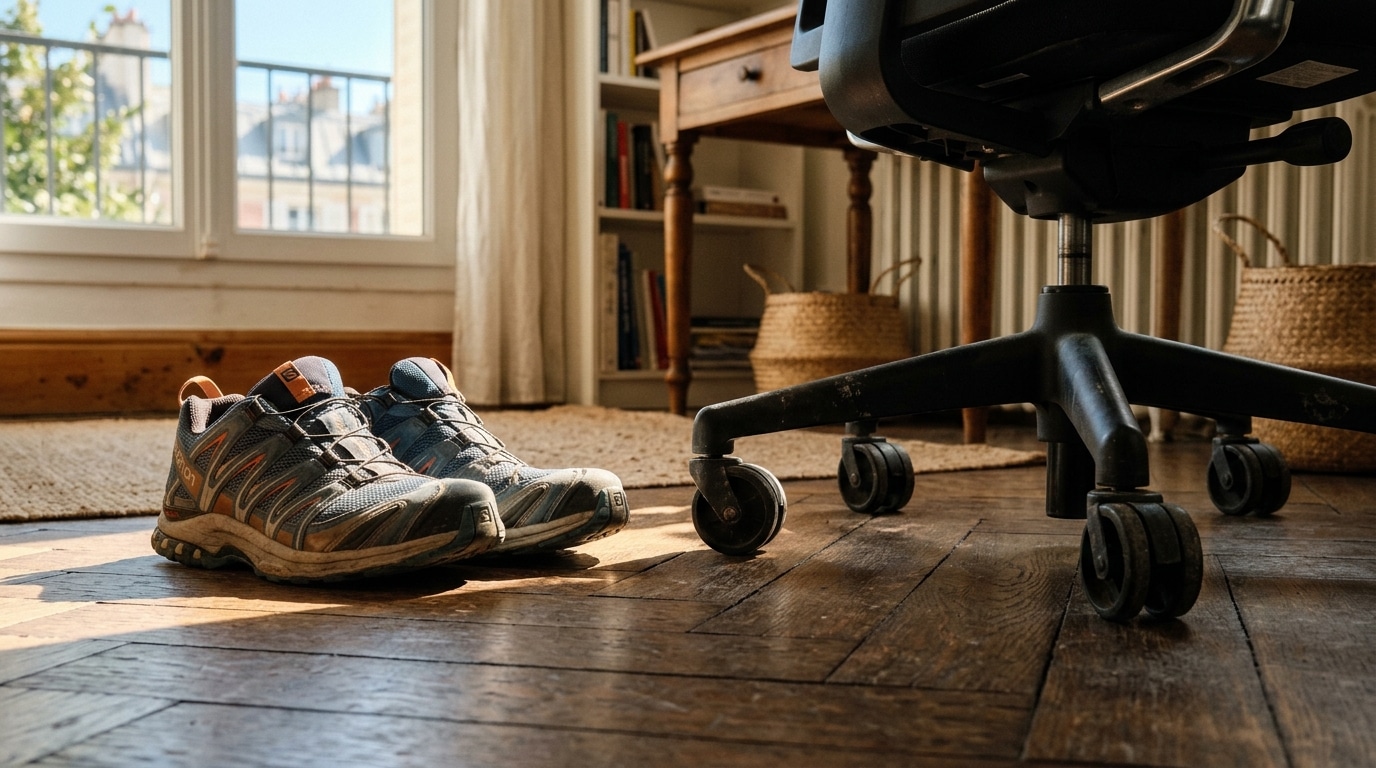
You diligently rack up your 6,000 daily steps, your app congratulates you, and yet your heart, it seems, isn’t done with the conversation. A chilling figure recently shook the field of cardiology: among thousands of adults followed for years, a lifestyle that was too static was linked to a 35% increase in cardiovascular risk, even though these people walked every day. The blame has long been placed on a lack of exercise, but a decisive part of the problem plays out elsewhere, in those long hours when the body stays still. In these summer months, as many take vacations to move more, it’s time to understand why the step counter tells only half the story.
The figure that shatters the myth of the step quota
For a long time, the equation seemed straightforward: reach your daily step target, and you buy yourself heart-health. Yet recent data challenge this reassuring belief. In a large cohort of adults equipped with motion sensors, researchers observed that simply walking did not suffice to erase the deleterious effects of prolonged sitting. In other words, you can check the “physical activity” box and still face a markedly higher risk.
This paradox is puzzling. It means the body does not operate on a simple ledger where good points cancel out the bad. Sedentariness isn’t merely the absence of exercise: it is a distinct state with its own consequences. Walking for half an hour and then sitting for eight hours straight does not, for the body, equal a day that is overall more mobile.
Why sitting cancels part of your efforts
Picture an open faucet you try to compensate for by scooping water with a teaspoon. Your daily steps are those few spoonfuls, while the long hours of stillness keep the faucet wide open. The benefit exists, but it does not fill the deficit. Analyses show that, at equal step counts, people who spend less time seated display a notably lower cardiovascular risk than those who accumulate hours of static time.
The nuance is crucial: it’s not only how much you move, but also how much you stay still. Two people walking the same number of steps can have very different health trajectories depending on how the rest of their day unfolds. Prolonged immobility acts like a silent tax that gnaws away the gains earned on the treadmill or during the evening stroll.
What science calls the chair metabolism
When we sit for long stretches, a subtle yet real phenomenon takes hold. The large muscles in the legs, the main energy users, go into a state of dormancy. This slumber slows the processing of sugars and fats in the bloodstream, fostering their accumulation. This is what one might call the chair metabolism: a metabolic slowdown that quietly sets in, hour after hour, with no obvious alarm signal.
The good news is that this mechanism is reversible. Research suggests that replacing part of sitting time with walking, standing, or any light activity already yields a beneficial effect. The body does not demand athletic performance: it simply asks to be reactivated regularly, like an engine that is kept from stalling.
Moving differently: concrete levers that shift the balance
Reconfiguring your day doesn’t require overturning your life. A few simple, repeatable gestures are enough to break the spiral of immobility. Here are practical paths accessible to most of us:
- Stand up for a few minutes every half hour, even just to walk to the window.
- Prefer standing or walking during phone calls.
- Break up your trips rather than clustering everything into a single outing.
- Aim for realistic progress: a few thousand additional steps per day already make a measurable difference.
- Take advantage of the summer and the long evenings to add a post-meal walk.
Data indicate that the lowest mortality risk sits around 9,000 to 10,500 steps per day, but the core isn’t chasing a perfect number. It’s the distribution of movement throughout the day that matters. Thirty to forty minutes of somewhat brisk activity can already substantially mitigate the effects of a day spent too sedentary.
Ultimately, the message boils down to a simple yet liberating idea: moving more and sitting less are two complementary goals, not interchangeable. Your 6,000 steps remain valuable, but they become more effective when paired with a careful hunt for long stretches of immobility. And instead of staring at the counter on your app, why not start by asking yourself how many hours today your body was truly in motion?
