
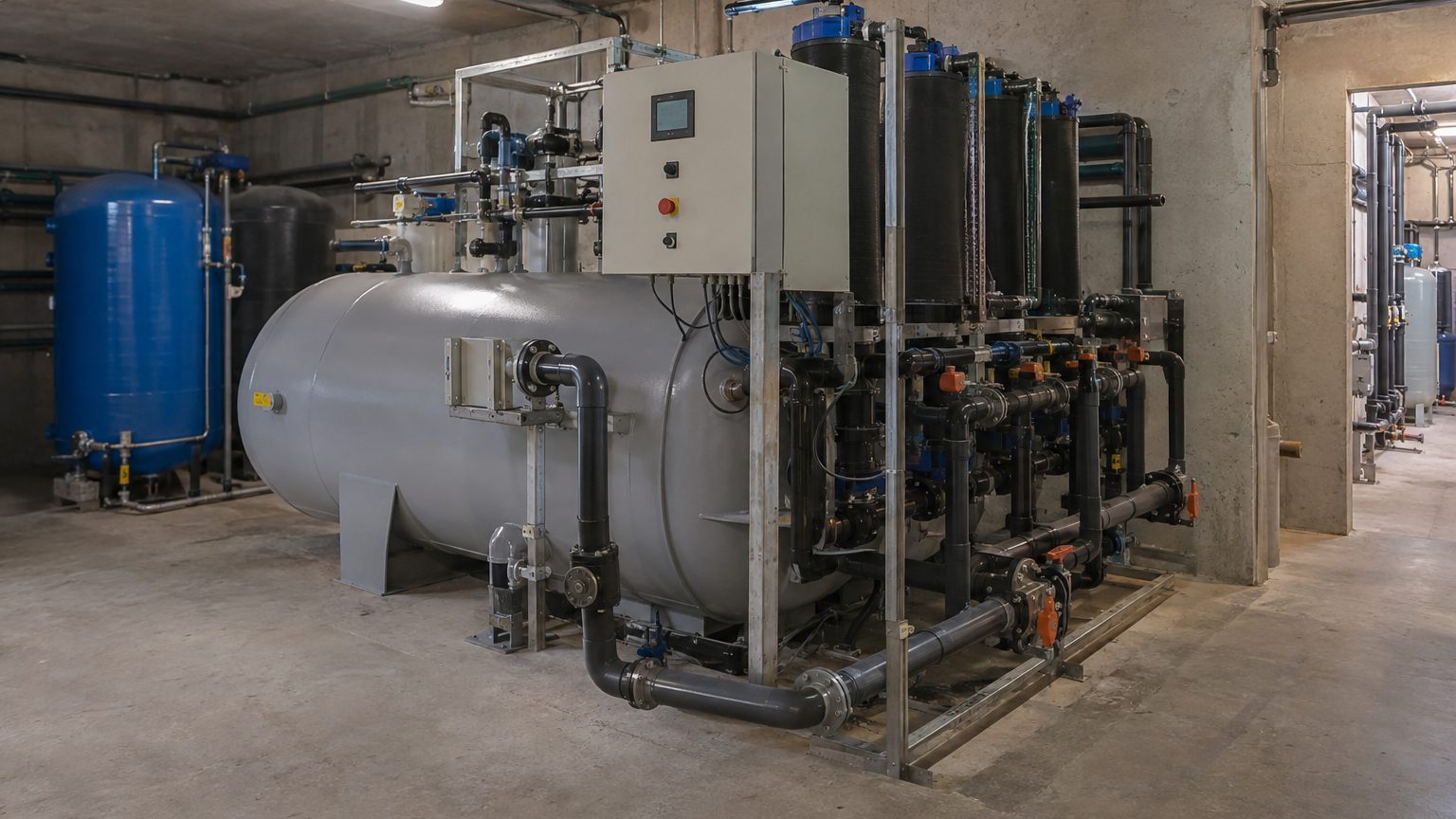
Just under one million euros. That is the amount the public company that operates the Balaruc-les-Bains baths, France’s leading spa in terms of the number of visitors, spent on a process named “hyperionisation.” This water-treatment device for the spa waters has never been put into operation. The finding is clearly stated in the definitive observations report published on September 17, 2026 by the Occitanie Regional Court of Audit (CRC) on SPLETH, the local public company responsible for managing the baths.
- SPLETH spent €904,680 on hyperionisation equipment that stayed in basements for three years without being activated
- The essential sanitary authorisations were never obtained before the purchase of the equipment in 2022-2023
- An employee who participated in the technical project is the son of a SPLETH administrator, revealing governance gaps
A paid-for equipment, never activated
The exact amount cited by the financial magistrates is €904,680 for equipment that was never brought into service. The acquisition of these water-hyperionisation devices intended for the baths occurred in 2022 and 2023. Three years later, the equipment remains idle in the basements of the baths.
The failure stems from a missing administrative checkbox. The device would never have been commissioned in the baths because the essential sanitary authorisations were never obtained for this water-treatment technology. The CRC’s accompanying statement is unequivocal on this point: “in the absence of obtaining the essential sanitary authorisations upstream, this device was ultimately not commissioned.”
A million euros resting in a basement.
The CRC notes a methodological anomaly upstream of the purchase. No formal search for alternative technical solutions had preceded a procurement process with no publicity or competitive bidding. No one compared this method with other technologies before signing the check. The magistrates also note that the need had been defined using technology already tested by the company operating the baths, which steered the specifications toward a specific supplier from the outset.
Family ties that raise questions
The file takes a more sensitive turn with the issue of conflicts of interest. According to the CRC, an SPLETH employee, the son of an assistant to the mayor and an SPLETH administrator, participated in the technical preparation of the project carried out by the supplier selected by the magistrates, referred to as “Company X.” This is not a minor detail: the same person who prepared the technical aspects of the purchase has a direct familial link with a councillor who sits on the board of the company that will validate the expenditure.
The municipality and SPLETH stated that they were unaware of these links highlighted by the magistrates. Yet the decision-making chain, according to the Court, was not sufficiently safeguarded. The magistrates point to an “insufficiently safeguarded decision chain” and an “inadequate safeguarding of the definition of the need” for a stake that was far from trivial.
This is not the first time this dossier has made headlines. The CRC’s points align with what a local media outlet had already revealed in April 2025. The Court refers to “Company X”; the trade press had already identified the technology and its promoter the year before.
Sound finances, but governance clarification needed
The dossier’s paradox lies in this contrast. SPLETH is not a company in distress. In 2024, SPLETH reported €39.5 million in turnover, up from €34.1 million in 2019. Its net result reached €3.3 million, and its available cash stood at €20.5 million. In other words, the €905,000 loss tied to the hyperionisation process does not threaten the company’s balance. Yet the financial argument cannot erase the governance issues raised by the magistrates.
The spa remains a heavyweight in French thermalism. The station welcomed 50,265 spa-goers in 2024, accounting for 10.7% of national thermal spa attendance. This activity directly funds the municipality’s finances: the town, which owns the equipment and is the SPLETH’s majority shareholder, collected around €7.6 million in royalties in 2024, plus €1.7 million in dividends, representing nearly 21% of SPLETH’s revenue.
Governance, however, remains a focus for the CRC. The magistrates note a concentration of executive functions and a limited strategic role for the boards, as well as gaps or absences in conflict-of-interest prevention. Several hires for sensitive positions appear to have occurred without transparent procedures, some with close familial ties to local elected officials.
The CRC recommends clarifying the governance of the company. It remains to be seen whether the hyperionisation equipment, still installed but unused, will ever obtain the missing sanitary authorisations, or whether it will endure as a symbol of a rapid decision to invest in an unproven technology at this scale in a French spa establishment.
Sources: shango.media | assemblee-nationale.fr | news.google.com
