
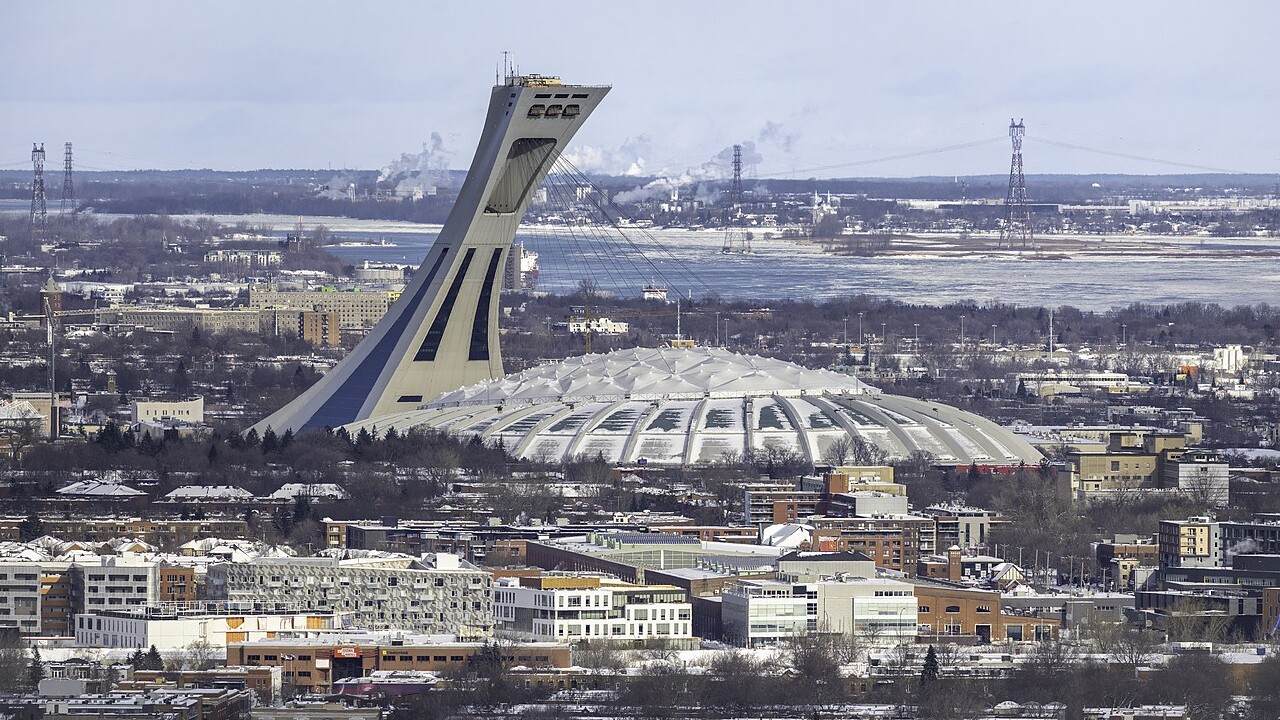
On November 14, 2006, a civil servant from Quebec’s Ministry of Finance signs off on a final transfer. Thirty years, almost to the day, after the opening of the 1976 Summer Olympics, the debt incurred to build the Montreal stadium is finally paid off. The cost of the Olympic Park, estimated at CAD 1.35 billion in 1976 with interest, was paid in full on November 14, 2006, that is 30 years after the Games, notably thanks to a portion of tobacco tax revenues allocated to repaying the Olympic debt since June 1976. Two weeks of athletic competition. Three decades of repayment. The equation earned the building a nickname that has never left it since: the “Big Owe” (a bitter pun on its official name, the “Big O”).
Key takeaways
- How could a bill of 1.35 billion dollars be incurred for only two weeks of events?
- Why did the Quebec government choose to tax tobacco for three consecutive decades?
- Which French architect turned a bold vision into a budgeting nightmare?
An Unfinished Project Delivered
The stadium wasn’t even finished on opening day. Built in haste, the Olympic Stadium was inaugurated just in time for the Games, but the leaning tower wasn’t completed and no roof covered the playing area. The French architect Roger Taillibert had, however, imagined a spectacular architectural gesture: a retractable canopy suspended from a leaning tower, able to cover or uncover the field as needed. The concept gave him his reputation. It also sent costs and timelines spiraling. In 1978, the Quebec government chose to push ahead with the architect’s plan to cover the new stadium, namely a retractable canopy inside the tower. On paper, the idea was elegant. In practice, it would take more than a decade to realize, and it would never function as intended.
Exact figures for the final bill vary by source and scope, whether it covers the stadium alone, the tower costs, the Olympic Village, or the velodrome. What is certain is the scale of the overruns: the stadium and its tower accounted for nearly 70% of the total cost, i.e., 57% for the stadium and 12% for the tower. The overruns were so large that the edifice became the second-most expensive stadium ever built, after Wembley in London. It would only be surpassed by much more recent venues in the United States, such as Yankee Stadium or MetLife Stadium.
A Debt That Spanned a Generation
How does one repay such a bill? Quebec chose a method as original as it was ruthless: taxing tobacco. The mechanism, put in place in the summer of 1976, operated for three decades, with a few scheduling hiccups. Officials had initially hoped to close the file earlier, but external events disrupted the timetable. According to the Canadian public broadcaster CBC, officials had estimated the debt would be wiped out by September 2006, but the smoking ban introduced in May slowed tobacco sales in the province. An Olympic stadium delayed by a public health law: history does not lack irony.
While Quebec slowly drained the debt, the stadium’s primary tenant had already left. By the time the province signed the last cheque in 2006, the Montreal Expos, who had moved into the concrete edifice after the Games, had already become the Washington Nationals for two years. The stadium was still paying its founders even as the team for which it chiefly served as home played under another banner, in another city.
Three Roofs, One Certainty: The Tear
The fate of the roof alone captures the chaotic destiny of the building. The Olympic Stadium opened in time for the 1976 Games, but the mast needed to support the removable roof was only completed in 1987, the year the first Kevlar fabric was installed. The respite was brief. Worn by long storage, the fabric tore in two places in August 1988 during a storm with winds of 80 km/h, and tore again the following month during a maneuver. Additional tears followed in 1991, so that in 1993 the Olympic Facilities Board abandoned the idea of retractability and the fabric became fixed until its replacement in May 1998 by a new Birdair version. This one fared little better: on January 18, 1999, a snow collapse left a gaping hole in the stadium’s roof fabric.
The tally of repairs is dizzying. Before the government’s first decision to dismantle the roof, in 2017, almost 7,500 tears had to be repaired since the building’s construction. The figure would keep climbing: on the eve of the replacement project launched in the 2020s, the old fabric counted more than 20,000 tears. A roof designed to open and close on command ended up symbolizing, more than anything else, the original project’s failure to live up to its technical promises.
The Bill Never Really Stopped
Repayment of the Olympic debt, long as it was, did not put an end to expenses. Once the debt was wiped out, the building continued to cost a great deal to operate. The Quebec government subsidy, of CAD 20 million in 2005-2006, accounted for 54% of the stadium’s total revenues that year. A project meant to be a source of city pride became, year after year, a recurring line item in Quebec taxpayers’ budgets, long after the last installment had been paid.
The most recent project bears witness to this. In February 2024, Quebec approved a new fixed and rigid roof project, this time designed to last, with a technical ring rebuilt anew. The construction of the new structure, with a useful life of about fifty years, should take approximately four years, with completion of the roof targeted in 2027. Fifty years after the opening ceremony of the 1976 Games, that anniversary falls this very year, and Montreal’s Olympic Stadium continues to write its budgeting history, one roof after another.
Sources: ici.radio-canada.ca | teamfrance-export.fr | lapresse.ca
