
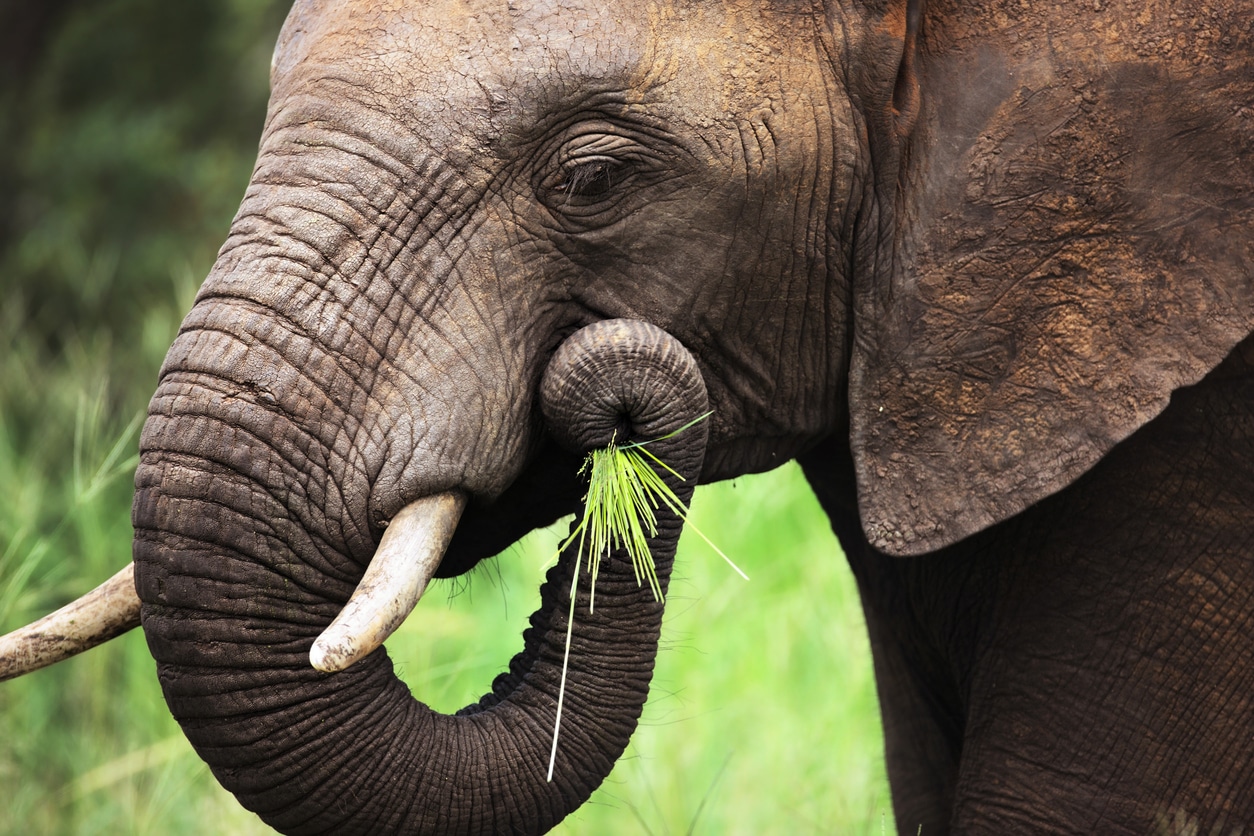
Humans are split between right-handed and left-handed, but they are not the only ones. Cats, dolphins, bees… In the past, studies have shown that animals too have a preference. Or, according to a new study, elephants also show a preference for the side of their trunk they use. And according to scientists, it is even possible to determine the lateralization of an elephant’s trunk simply by looking at its folds. However, this is just one of the many revelations made by the team about trunks and their ridges that crease in a manner that is neither random nor age-related.
Let us remember that an elephant’s trunk is a marvel of nature. It serves both as a tool, a nose, and a supremely powerful muscle. “The trunk is an incredible, astonishing, and prehensile organ that is very unusual. [It] has more muscles than any other bodily structure among mammals,” exclaims Dr. Michael Brecht, co-author of the study from Humboldt University in Berlin. “The only thing that comes close is the hand.” In fact, an elephant’s trunk contains even more than 46,000 muscles compared to 600–700 in the human body.
Moreover, it belongs to a special class of muscular structures known as hydrostats, which are found in creatures such as octopuses and snails. Yet, unlike these other animals, the elephant’s trunk is covered with thick, wrinkled skin that provides both protection and versatility. Now, we know even more about these appendages that were already considered extraordinary and that concealed fascinating secrets.
A notable difference between Asian and African elephants
Published on October 9, 2024 in the journal Royal Society Open Science, Dr. Brecht and his colleagues report what they consider the most comprehensive study to date of the development of trunk wrinkles throughout life in Asian and African elephants. To do so, the team notably studied the appendages of deceased specimens as well as photographs of living individuals, which already allowed them to observe that the distance between wrinkles on adult elephants’ trunks decreases from the base toward the tip.
This also allowed them to discover that Asian elephants had many more wrinkles on the top side of their trunk than the African specimens. Science had long believed that these deep grooves made the trunk more flexible, somewhat like an accordion. Yet this theory could ultimately help explain why Asian elephants have more wrinkles on their trunk. Indeed, African elephants have two finger-like structures at the end of their trunk that they use to grasp objects, while Asian elephants have only one. As a result, they must more frequently wrap their trunk around objects to seize them. “For this wrapping, the trunk must be more flexible, and we think that is why they have many more wrinkles,” explains Brecht.
Left- or right-handed trunk? We now have the answer.
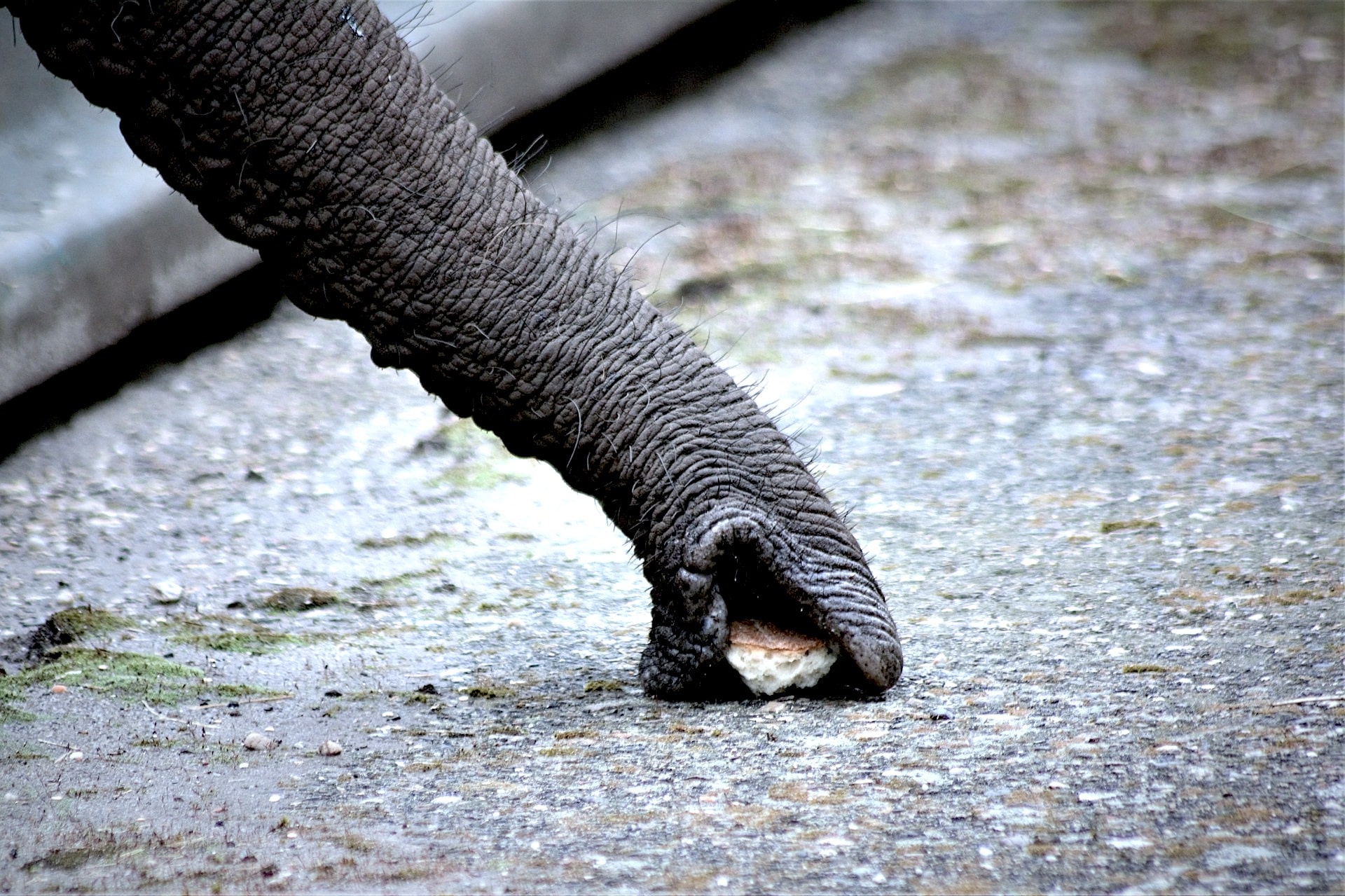
While, overall, elephants show an almost even 50:50 distribution in how they bend their trunks, scientists have found that it is possible to determine an individual adult’s preference.
The team indeed states that a left-trunked elephant (which picks up objects on the left side of its body) has more wrinkles and longer whiskers on the left side of its trunk, while the whiskers on the right side show more wear associated with more frequent contact with the ground. “The difference in whisker length is striking and notable,” says Dr. Brecht. “The effect of wrinkles is more subtle, but still significant. It indicates that these patterns are at least partially linked to usage.”
“We found a 10% difference in the number of wrinkles between the left and right sides of the trunk, in correlation with the individual’s ‘lateralization’,” also notes the paper. “We had a case of ambidextrous African elephant without any difference in whiskers or wrinkles, which reinforces our theory that the pattern of these markings is altered according to experience of use.”
Other fascinating discoveries
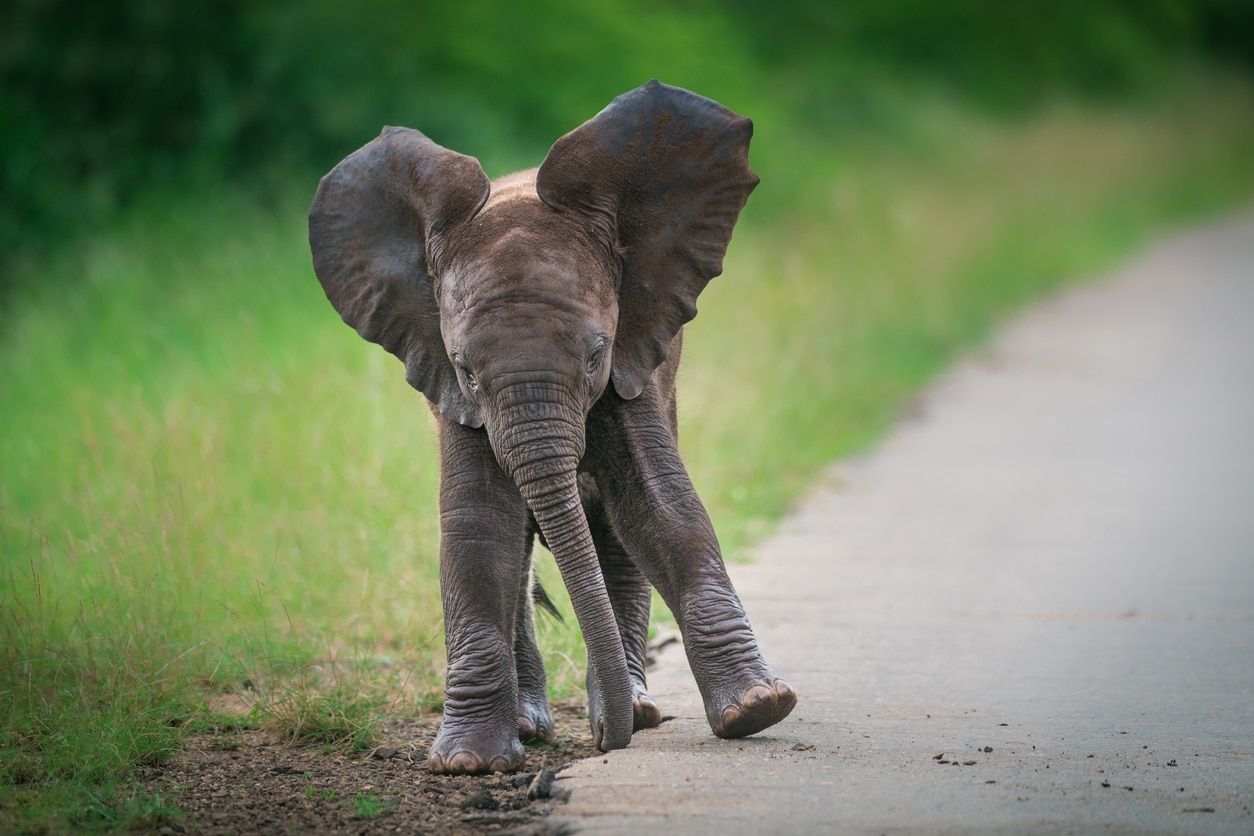
Although we know that elephants are born with trunk wrinkles, this study sheds light on how they form in the womb. According to these findings, the folding process actually begins before the calf is born. To determine this, researchers tracked their development in elephant fetuses during early stages of development using microtomographic imaging (microCT).
They also discovered that between days 80 and 150 of gestation, their number roughly doubles every twenty days before slowing down considerably. At birth, an elephant’s trunk thus already bears the seeds of its wrinkled pattern, which will continue to develop as the animal ages and uses its trunk. “Later wrinkles form slowly, but at a faster rate in Asian elephants than in African elephants,” the researchers add in their study.
The scientists finally add that these ridges are mapped onto neurons in the animal’s brainstem, which makes these features even more fascinating.
Find the full study here.
