
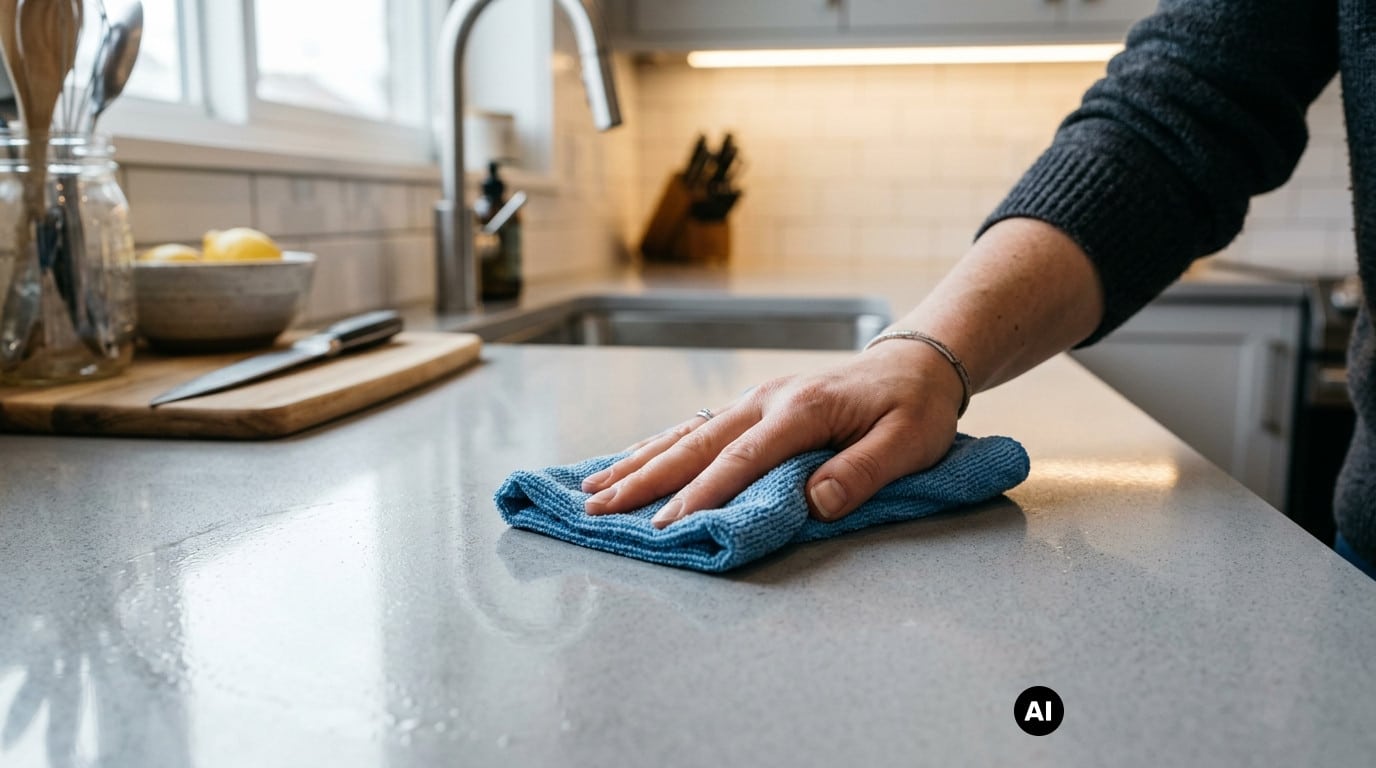
On October 28, 2026, Anses presented research showing a link between repeated use of disinfectants and the emergence of bacteria more resistant to an antibiotic. A reason for those who reach for the antibacterial wipe at the slightest spill on a work surface to pause. In the kitchen, the disinfectant spray has become an almost daily reflex for many households, promising impeccable hygiene at hand. Yet this recent study invites a step back from a habit once considered harmless. Do we really need to rethink our domestic cleaning habits in light of these results? Here is what to take away, without sensationalism or minimization.
What the Anses study on biocides and bacterial resistance reveals
Researchers at the Fougères Laboratory, affiliated with Anses, tackled a question both simple and troubling: can repeated exposure to disinfectants make bacteria more resistant to antibiotics? The study, coordinated by Arnaud Bridier as part of Raphaël Charron’s PhD, involved daily exposure of Escherichia coli biofilms to four active ingredients found in disinfectants commonly used in industrial agro‑food settings, for a month. The bacteria were then challenged with an antibiotic, rifampicin, to observe their level of resistance.
The outcome is decisive for two of the four substances tested: the exposed bacteria developed increased resistance to rifampicin compared with those that had been treated only with water. TMN, a biocide widely used to disinfect surfaces, stood out as particularly capable of promoting this resistance. The study was published in May 2026 in the journal NPJ Antimicrobials and Resistance.
Genetic mechanisms that bring biocides and antibiotics closer together
What makes these findings especially interesting is the illumination of a shared mechanism linking resistance to biocides and resistance to antibiotics. The researchers identified genetic mutations in genes responsible for the synthesis of lipopolysaccharides, essential components of the bacterial membrane. These mutations render the membrane more robust and increase the production of a protective mucus around the biofilm, a kind of natural shield for the bacteria.
This is not the first time such a phenomenon has been observed. A prior study, published in 2023 in Frontiers in Cellular and Infection Microbiology, had already shown that exposure to polyhexamethylene biguanide, another biocide frequently used in the agro-food industry, increased resistance to an antibiotic, gentamicin. This time, no genetic mutation had been identified, and the resistance disappeared when exposure ended, suggesting a different, non-genetic mechanism. So two distinct pathways, but the same conclusion: disinfectants can influence how bacteria respond to antibiotics.
Why these results do not directly translate to the risk in our homes
Before tossing all the disinfectant sprays from your pantry, it is important to contextualize these results. The experiments conducted by Anses involved laboratory bacterial communities and products used in industrial agro‑food settings, an environment far removed from our home kitchens. It is therefore not a direct measure of the actual risk faced in households.
The exposure conditions studied—daily and prolonged use over a month—do not necessarily reflect typical domestic cleaning habits, which are often more intermittent. While these works pose essential scientific questions about resistance mechanisms, they do not, as of now, allow a conclusion that cleaning one’s kitchen with a disinfectant directly exposes households to a danger comparable to what is observed in the lab.
Disinfecting your kitchen every day: a habit worth questioning
That said, the study invites reflection on a reflex that has become widespread: systematically disinfecting the work surface, table, or sink every day, without distinction. This habit, often seen as a guarantee of impeccable cleanliness, is usually unnecessary in a home where no one is ill and no particular situation justifies it.
A traditional cleaning is typically enough to remove grime and limit bacterial proliferation. Reserving disinfectant products for more targeted uses would not only reduce repeated exposure to biocides but also help preserve their effectiveness for times when they are truly needed.
Good hygiene practices without relying systematically on antibacterial products
Adopting effective kitchen hygiene doesn’t necessarily mean multiplying specialized products. Regular and proper cleaning is sufficient to limit bacterial spread on a daily basis. These simple habits, applied consistently, help maintain a clean kitchen without routinely resorting to antibacterial wipes and sprays.
When disinfection remains justified in a home
There are, however, situations where using a disinfectant still makes sense. This is the case when a household member is ill, to limit the spread of pathogens on frequently touched surfaces. The presence of a particular circumstance in the home can also justify increased vigilance and occasional use of these products.
In these specific contexts, disinfection complements regular cleaning without turning into a daily reflex applied to all surfaces in the house.
Adopting more rational domestic hygiene in light of bacterial resistance concerns
Anses’ work reminds us of a broader reality: antibiotic resistance is a public health issue that goes beyond the misuse of medical treatments. Repeated exposure to biocidal products, even in contexts very different from the family home, has become one of the avenues researchers are exploring to understand how bacteria become more resistant.
Article prepared with the help of AI · Our method
