
One morning like any other, a bottle to prepare, a tin of formula opened a few days earlier. Then that notification that changes everything: the product is part of an official recall list. For thousands of French families, this scene has repeated itself in recent weeks, turning a routine gesture into a source of anxiety. How can a parent continue to feed a baby with confidence when trust in such a fundamental product can fracture overnight? This wave of recalls, arriving during the back-to-school period, disrupted many households and highlighted reflexes now considered indispensable.
- Six infant formula brands sold in France (Guigoz, Nidal, Gallia, Blédilait, Picot, Babybio) are recalled due to a toxin, cereulide, detected in an ARA oil supplied by an international third party.
- You should verify the batch number on your box via the RappelConso website; some best-before dates extend up to 2027.
- If in doubt, substitute brands such as Biostime, Good Goût, Physiolac, or Modilac are available in pharmacies or specialty shops.
- When trust breaks: a look back at recalls that rattled the kitchens
- The immediate reflex to adopt: track your batch on RappelConso
- The pharmacy, a new refuge for worried parents facing infant formulas
When trust breaks: a look back at recalls that rattled the kitchens
The affair caught many parents off guard, people who had grown accustomed to relying blindly on brands that have been fixtures for decades. Six brands sold in France are affected: Guigoz, Nidal, Gallia, Blédilait, Picot, and Babybio. A broad spectrum that touches nearly every shelf of infant milk in supermarkets or on pharmacy counters. The culprit? A toxin called cereulide, detected in an ARA oil, an omega-6 often added to infant formulas to support neurological development. The problem does not originate from a manufacturing defect in France, but from an international supplier whose ingredient appears to have proven problematic. This recall is precautionary, since cereulide levels could exceed the allowed exposure threshold. An important nuance, yet it did not prevent anxiety from settling in households for good.
The immediate reflex to adopt: track your batch on RappelConso
In response to this situation, the Ministry of Agriculture reminded an obvious fact that is too often overlooked: all products affected by these withdrawals are listed on the RappelConso site. The process is simple and takes only two minutes: you simply enter the batch number printed on the packaging to determine whether the opened box should be discarded. A note of caution: some best-before dates extend to 2027, which complicates the task for parents who are convinced that a recently purchased product is necessarily fresh. Authorities are clear on the steps: anyone who bought products from the affected lots is asked to stop using them and to follow the recommendations provided on the recall sheets. If digestive symptoms persist after consumption, the guidance remains the same: consult a doctor, mentioning this consumption, and call 15 in case of emergency.
The pharmacy, a new refuge for worried parents facing infant formulas
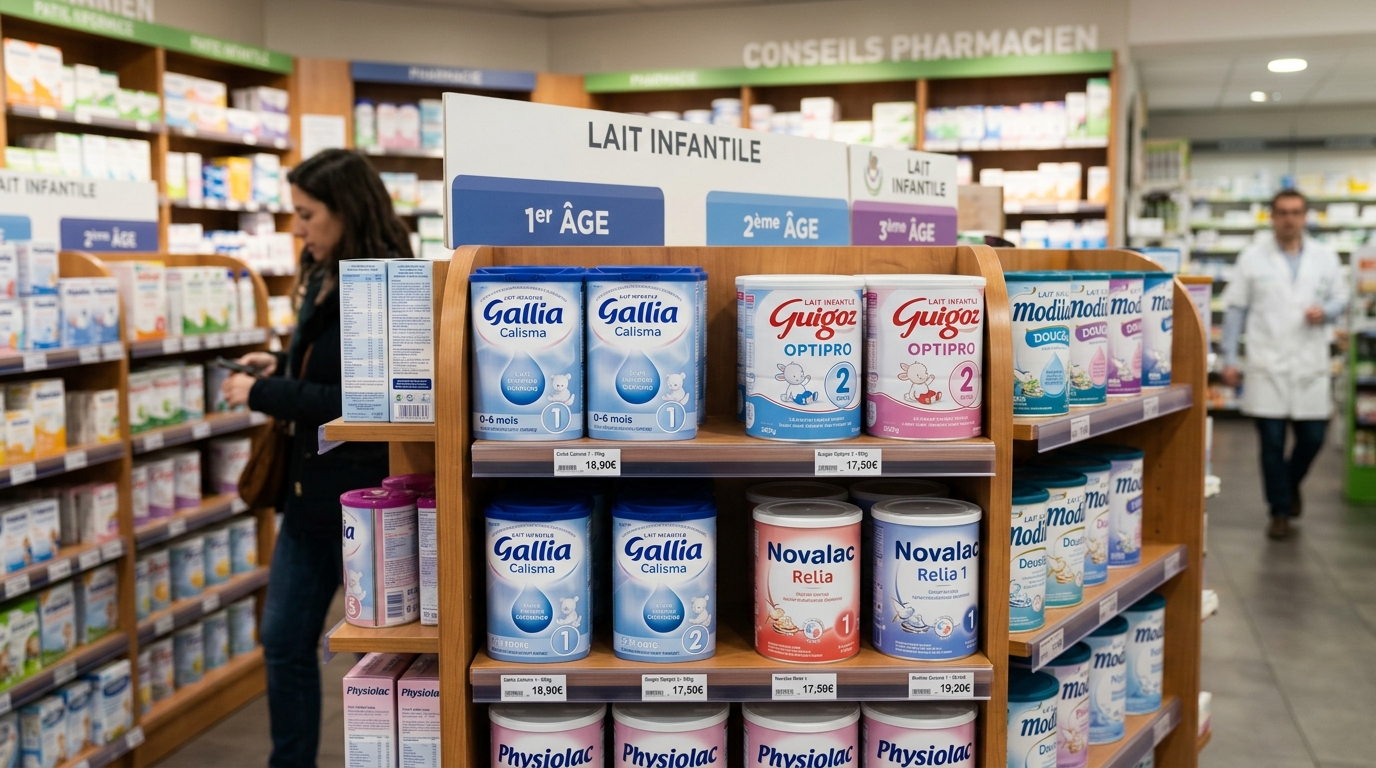
It is tough to feed an infant while the situation remains unclear. That is where the real solution adopted by numerous families comes into play: temporarily turning to substitute infant formulas, available at pharmacies or specialized shops, and subjected to strict controls. Among the alternatives cited, brands such as Biostime, Good Goût, Les Petits Culottés, Physiolac, and Modilac are mentioned. These brands provide a reassuring option while confidence is rebuilt in the usual references. Many parents have thus combined both reflexes: systematic verification on RappelConso and a temporary switch of brand, in order to sleep a little more peacefully despite the circumstances.
These September events acted as a wake-up call for many families, turning a simple purchasing habit into a genuine vigilance routine. Systematically checking batch numbers, favoring controlled sourcing channels, and staying informed of official alerts have become essential reflexes. The hope remains that these strengthened measures will push manufacturers toward greater transparency, so that the regained trust is never again put to such a stern test.
