
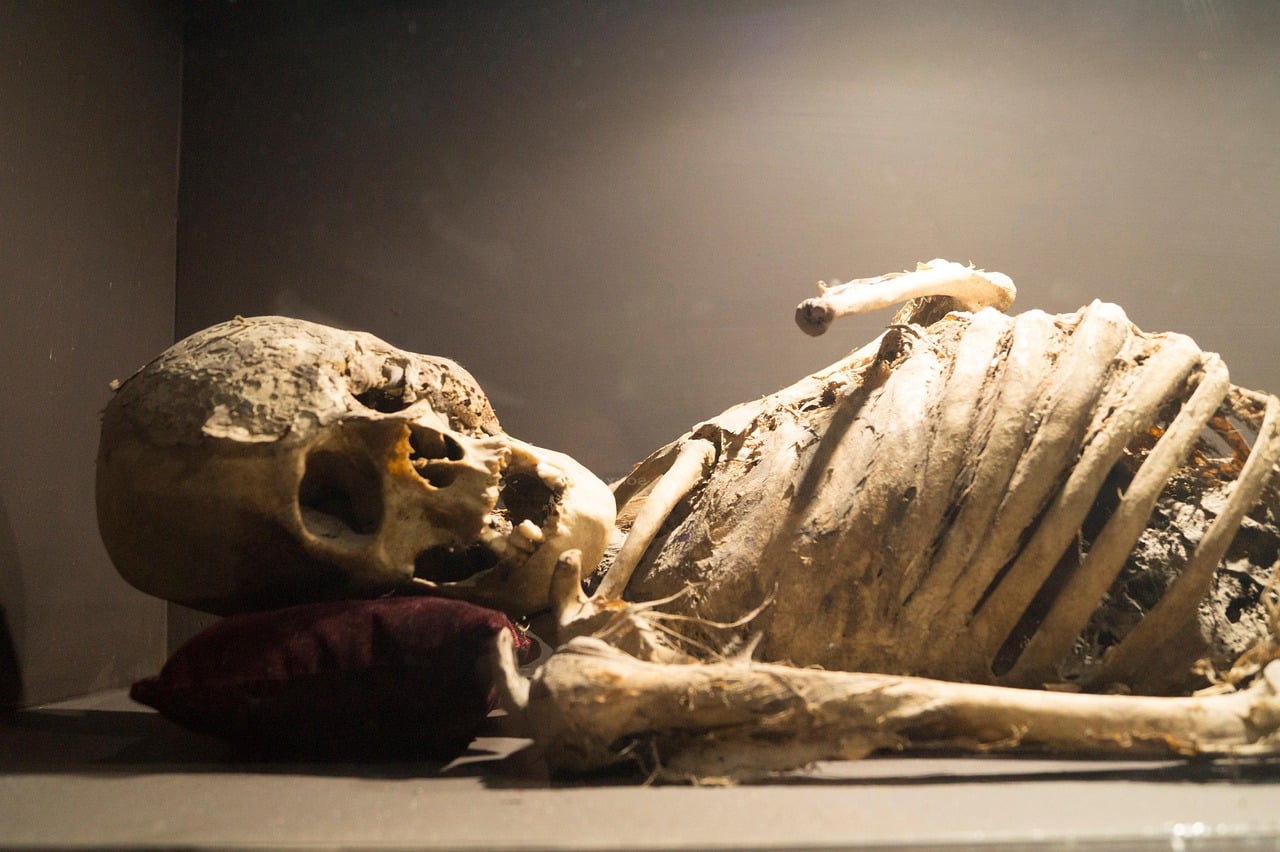
Specific changes occur in the human body very quickly after death, typically leading to the complete dissolution of tissues. However, under very specific conditions these tissues can become mummified, and thus preserved. Generally, this process takes several months. Yet in Bulgaria, a team of doctors recently encountered the strange case of a man found in a state of complete mummification only sixteen days after he was last seen alive. How can this phenomenon be explained?
An exceptional case
The body of this man was found on September 3 in the grassy areas bordering a railway line in Sofia, Bulgaria. Next to the body lay his bag filled with personal effects including a bottle of alcohol. The body belonged to a 34-year-old man who was last seen alive on August 18, wearing the same clothes still around him.
Autopsy at the Sofia Forensic Medicine and Ethics Clinic revealed no traumatic injuries. The toxicology analysis also came back negative. For the time being, the cause of death remains unknown.
Moreover, the most intriguing fact was that the man’s body appeared to be completely mummified. The surface of his skin displayed coloration ranging from light brown to dark brown. It was also hard, while small masses had formed from the internal organs. How can the astonishing speed of this natural process be explained, especially under such temperate conditions?
What happens to your body after death
The decomposition process is complex. It involves many phases, but we could summarize it as follows. It all begins with autolysis, where intracellular compounds are released, promoting bacterial growth. The putrefaction occurs in three phases: gas formation, softening of tissues followed by impregnation and decomposition. Bacteria such as Clostridium welchii, streptococci, Escherichia coli and Proteus produce destructive enzymes that act on tissues, releasing gases such as H2S, NH3, CO2, CH4. These gases can discolor the skin green and produce a distinctive odor that attracts insects and animals, contributing to the decomposition of organic tissues into simpler elements.
That said, this decomposition process can accelerate or stop depending on the surrounding conditions. Sometimes, these conditions can even favor the preservation of the body. Momification is one of the most common forms of preservational changes.
Conditions not initially met
The process of human body mummification depends on several factors, notably dry air, ventilation, solar radiation and high temperatures. Depending on these conditions, mummification can take several weeks, or even months, to complete.
Over the sixteen days between the last sighting of this man and the discovery of his corpse, local temperature would have varied only from 16°C to 33°C, with relative humidity for August at 52%. Solar radiation was moderate, while the wind would have blown at an average of 13 km/h.
According to the forensic experts, these measured values could potentially favor near-mummification. They suppose, however, that the regular movement of trains passing along the railway line could have produced an additional windy condition, which could have helped accelerate the process.
In any case, doctors note that there are only a few cases of this kind reported in the literature. It is therefore an extremely rare event, especially when the typical conditions for this process are not met.
Was this man really dead two weeks earlier?
Given the exceptional nature of this case, we might question eyewitness reports claiming that the man was indeed alive on August 18. However, several clues noted by forensic examiners also allowed confirmation.
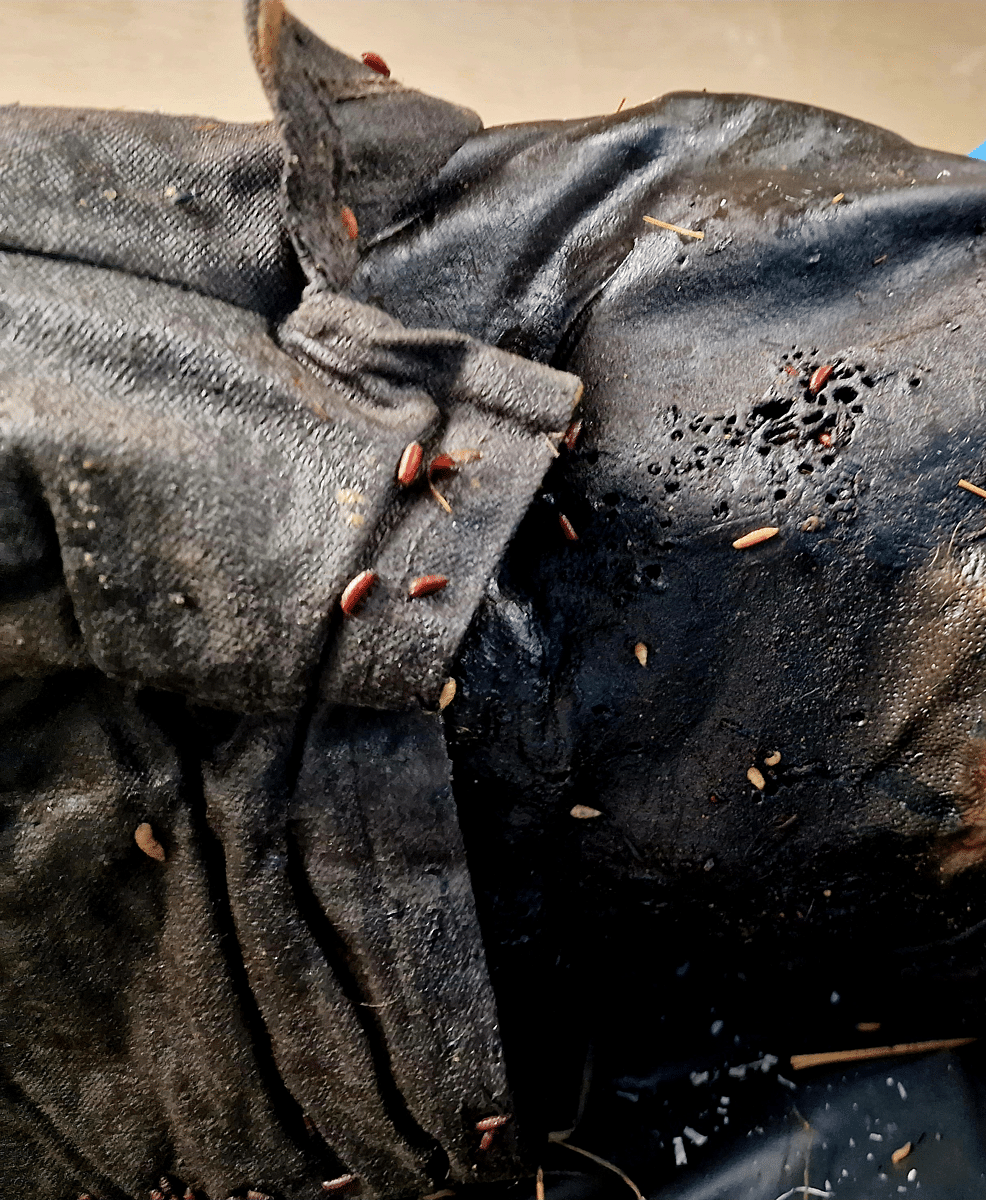
As mentioned previously, different types of insects are drawn to corpses, including flies. They have a complete life cycle comprising several stages (egg, larva, pupa and adult). This cycle can therefore give an idea of the approximate time elapsed since death since each of its stages corresponds to a specific time interval.
That said, many factors, including the environment, can stop, accelerate or slow down this insect life cycle. In the case studied, the atmospheric and geographic conditions of the Sofia region imply a complete fly life cycle ranging from 14 to 18 days depending on the species. We also know that the formation of the nymphal stage begins about seven to ten days after the eggs are laid.
Yet, the body here was covered only by a few larvae and pupae of different sizes in metamorphosis, which clearly indicates that the death likely occurred less than 18 days before the discovery of the body.
These data thus align with the information that the deceased was last seen alive about sixteen days earlier, namely August 18.
The study is published in the journal Cureus.

Sindre Halvorsen
I write about space exploration, frontier science and the technologies that are quietly shaping the future. From Norway, I follow the missions, discoveries and ideas that connect life on Earth with what lies beyond it. My goal is to make complex subjects clear, useful and worth paying attention to.