
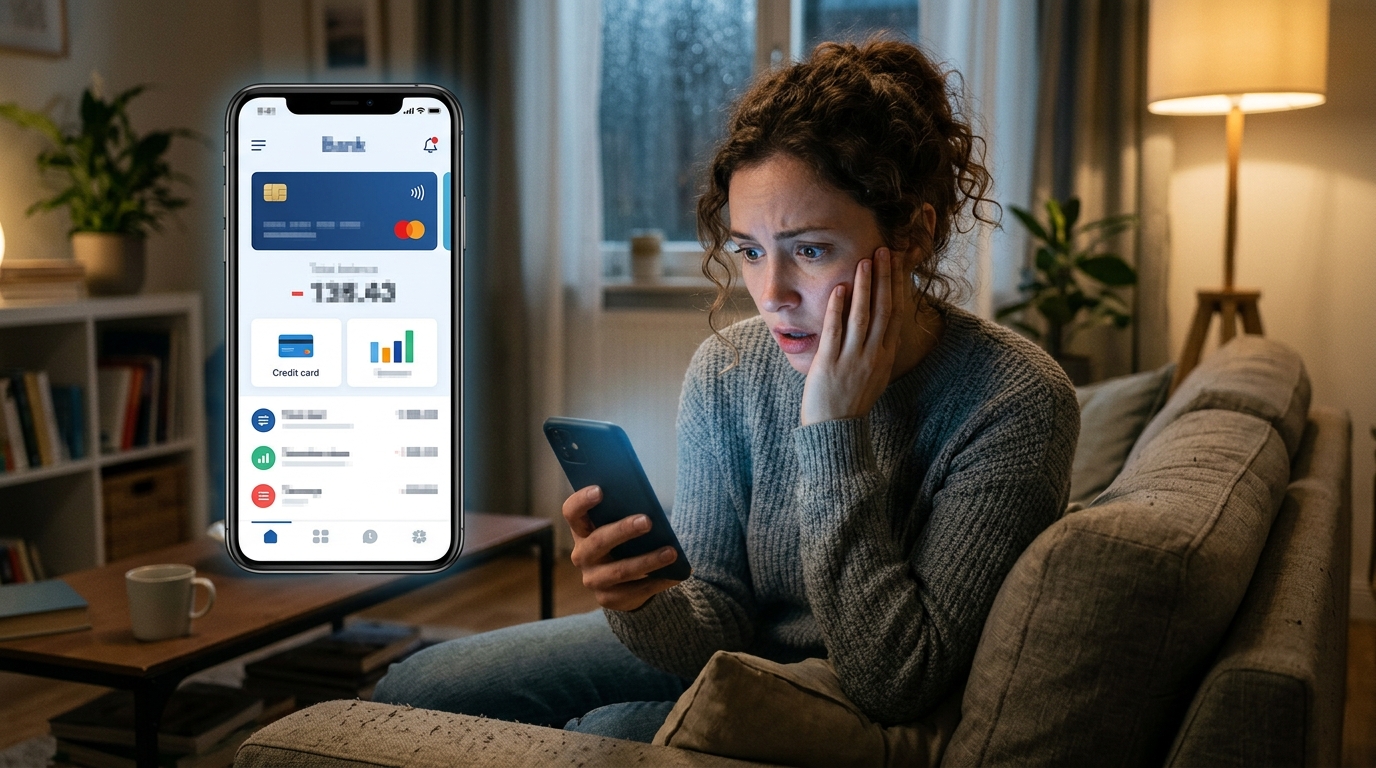
Sometimes all it takes is a notification that pops up on a smartphone’s lock screen for everything to tilt. A four-figure amount, a currency, a familiar bank name, and suddenly, the chilling certainty that something is completely slipping out of your control.
That’s exactly what happened to me this back-to-school period, when I thought I had exhausted the usual precautions to secure my accounts. I saw the confirmation SMS flash by before I could even grasp what was at stake. My bank was approving a transfer of 12,000 euros that I had never initiated. The most troubling part of this story isn’t the amount, dizzying as it already is, but the way in which it was made possible.
The flaw didn’t come from a stolen password, nor from a cloned card at a dubious ATM. It hid in a discreet line of my online banking space, a feature that no one, absolutely no one, had ever advised me to check: the list of trusted beneficiaries.
The Invisible Flaw Banks Never Highlight
When we think of banking security, we immediately imagine complex passwords, two-factor authentication by SMS or app, or even facial recognition to authorize an online payment. These measures command all the attention, and rightly so, since they form the first line of defense against classic hacking attempts. But behind this reassuring façade lies a gray area that banks rarely, or never, mention when you open an account or set up digital services. This gray area is precisely the management of the bénéficiaires de confiance, a feature designed originally to simplify the lives of customers who regularly transfer funds to the same relatives or service providers.
The principle is simple, almost too simple: once a beneficiary is added to this list, transfers intended for them no longer consistently require enhanced validation. The idea behind this mechanism is commendable—it aims to spare the user from retyping a security code for each transfer to their spouse, their student child, or their landlord for rent. The problem is that this list can be altered by a third party who has gained access, even temporarily, to the online space. And once a new name appears there, it becomes almost invisible amid the sea of information that one rarely examines.
How a Fraudster Turns Your Account into an ATM
The scenario is terrifyingly effective. A fraudster manages, often through a well-honed phishing technique or access gained via malware, to log into a victim’s online space. Rather than attempting an immediate transfer—which would almost certainly trigger an alert and a validation request—he chooses a quieter route: he adds a trusted beneficiary. This name may correspond to an account he controls himself, or to an intermediary tasked with moving funds quickly to blur the trail.
Once this step is complete, the bank account functions almost like an ATM at the fraudster’s disposal. Subsequent transfers directed to this new beneficiary no longer demand an extra validation code because the system treats it as an already approved recipient. It is precisely this mechanism that explains why I received a confirmation SMS, and not a standard security alert asking for my consent. The transfer of 12,000 euros wasn’t blocked because, technically, it complied with all the rules set by my own online space—rules I had let change without ever noticing.
What is most striking about this case is the sluggishness of the warning signal. Unlike card fraud, often detected within minutes thanks to systems monitoring unusual transactions, a transfer to a trusted beneficiary can pass completely unnoticed for several days. The time it takes for the victim to check their balance, notice the anomaly, and finally understand what actually happened.
What I Should Have Checked Before Getting This SMS (and What You Should Do Now)
In hindsight, several signals could have alerted me if I had known where to look. The section for registered beneficiaries, often tucked away in a scarcely visible sub-menu of the banking app, nonetheless deserves regular attention. It isn’t a matter of checking it once a year, but rather integrating it into a monthly verification routine, much like re-reading one’s account statement before filing it away.
Here are the reflexes that, if they had been in place from the start, would probably have prevented this mishap:
- Regularly check the full list of registered beneficiaries in the online space, including those marked as trusted.
- Enable, where possible, automatic notifications for every addition or modification to this list.
- Change the password for the online banking space as soon as there is any doubt about potential compromised access.
- Immediately contact your bank’s fraud department if you suspect a transfer, even if the amount seems modest at first.
- Avoid clicking on links received by SMS or email that claim to be from the bank, and always favor the official app.
These actions, almost trivial once you know them, actually form an effective shield against this type of fraud. The problem is that most customers discover this feature only when it harms them, never beforehand. Banks, for their part, talk a lot about passwords and two-factor authentication, but remain strikingly quiet about this vulnerability area, which is nonetheless well identified.
In this back-to-school period, as phishing attempts multiply alongside increasingly everyday digital banking habits, taking five minutes to explore the tiniest corners of one’s online space is no longer excessive. It has become, in my view, a necessity on par with checking one’s monthly statements.
This experience taught me that banking security relies not only on visible, reassuring barriers, but also on technical details we neglect due to a lack of information. The unresolved question remains: how many other customers, at this very moment, are unaware that a single line in their online space could one day turn their account into an easy target. And you, have you ever taken the time to check yours?
