
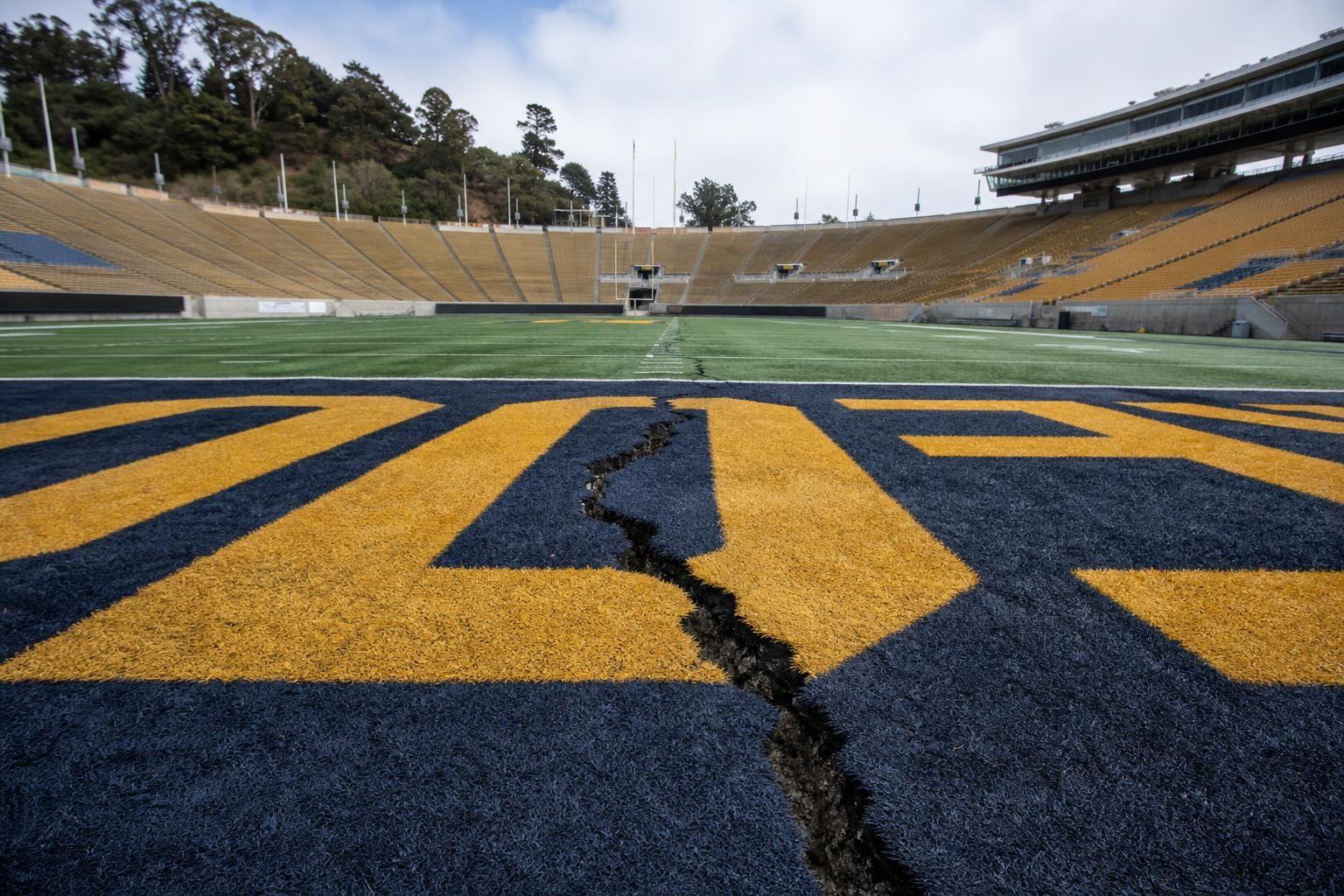
On certain autumn Saturdays, the roar of fans rises over the Berkeley hills, and the ground itself tells a quieter story. I know this because the earth keeps records, and as a geologist I read them with a mix of awe and unease. Beneath the stripes of the field, the crust is already in motion, inching along on a schedule that cares nothing for kickoffs or scoreboards.
Where the line of scrimmage meets a line in the Earth
The structure locals revere as California Memorial Stadium straddles the Hayward Fault, a restless seam that cuts across the East Bay. Not alongside it—beneath it, threading the length of the arena like a quiet, stubborn river. On maps I carry in the field, the fault’s trace glides through bleachers, tunnels, and the turf itself.
When I first stepped onto the 50-yard line with a fault map in hand, a colleague whispered, “It’s not a metaphor—this is literally built on a rupture zone.” He was right, and the stadium wears the evidence if you know where to look.
What “active” really means
“Active” is the word that makes engineers sit forward and the public sit back. An active fault moves, creeps, and occasionally tears, releasing energy that’s been locked away by friction and time. The Hayward Fault is both creeping day by day and capable of abrupt, damaging breaks.
In 1868, a major earthquake along this fault wrecked parts of the Bay Area, long before anyone wore a helmet here. The clock since then hasn’t stopped. Seismologists estimate a significant chance of a large quake on this segment within a lifetime. “Not if, but when,” is the line that gets repeated, and in my discipline it isn’t theater—it’s forecast.
Architecture that expects the ground to move
The stadium isn’t reckless; it’s rebuilt to be realistic. Renovations added expansion joints, flexible seating sections, and a moat-like separation where the fault is expected to shear. Parts of the structure are deliberately allowed to slide past one another, like boxcars decoupling during a turn.
“These joints aren’t cracks; they’re choices,” an engineer told me while we traced a seam with our boots. The aim isn’t to defy geology but to let the building breathe with it, sacrificing replaceable pieces to save the whole.
How a game-day rupture would actually feel
If rupture happened during a drive, the experience would be rapid and weird. You might feel a lateral shove, then a lurching roll. The turf could offset by feet, seams yawning and snapping back like a zipper pulled too hard. The sound would be a chorus of metal groans, concrete pops, and a very human silence.
I don’t describe this to alarm, but to clarify. Earthquakes are not cinematic explosions; they are mechanical events. Most injuries arise from falls, flying objects, and poor choices, not from the earth cracking people open. Good design and good habits matter.
What to do if you’re in the stands
Preparedness is not paranoia; it is choreography learned before the music starts. When I bring students to games, I have a quiet ritual:
- Spot your nearest exit, but in strong shaking, stay put: drop, cover, and hold under a seat or barrier until the motion stops. Then exit calmly, avoiding facades and overhead hazards.
The paradox of place and risk
There is a reason universities, neighborhoods, and memories cling to the East Bay slopes. The same subterranean forces that uplift the ridges create views, soils, and water pathways that made this a place of abundance. The fault is not a villain; it is a condition of residence.
“Living here means living with context,” I tell first-years who arrive with wide eyes and earthquake apps. The goal is not fearlessness but informed courage—a respect for what the ground can do, paired with an honest plan for what we will do in return.
Reading the stadium like a field notebook
Next time you file past the arches, look for the subtle gaps and misalignments designed to take a punch. Feel the way sound bounces from bowl to hillside, a reminder that waves move through stone and story alike. The place is a living diagram of adaptation—steel where rigidity helps, slip planes where yielding is wiser.
As a scientist I trust data; as a person I trust craft. Here you can see both: probabilistic hazard models baked into concrete details; decades of lessons poured into soft joints and strong frames.
Why this truth belongs in the open
Some prefer the myth that safety is a binary switch—on or off, safe or unsafe. The real world is more textured. We build with what we know, we plan for what we can anticipate, and we practice for what we cannot predict. Owning that truth invites agency, not dread.
So yes, the ground under these yard markers is busy with geology, and yes, people still gather to cheer, learn, and remember. If that feels contradictory, it’s only because the earth holds more than one story at a time. We can hold them too: delight and risk, heritage and hazard, a Saturday’s bright noise and the planet’s deeper voice.
