
A few months ago, Elon Musk claimed he wanted to send into space a million satellites housing data centers. Involving SpaceX and xAI, this titanic initiative aims to relocate the computing power of AI into space in order to avoid certain drawbacks increasingly evident on Earth.
One million space data centers dedicated to AI
In May 2025, we discussed the collaboration of the French company Latitude – the originator of the Zephyr rocket – with the project of the Emirati company Madari Space. The objective? To develop a constellation of micro-satellites weighing 50 to 100 kg each, whose mission would be to store and process digital data. Together, Latitude and Madari Space plan to put on orbit no fewer than 8,000 micro-satellites by 2028.
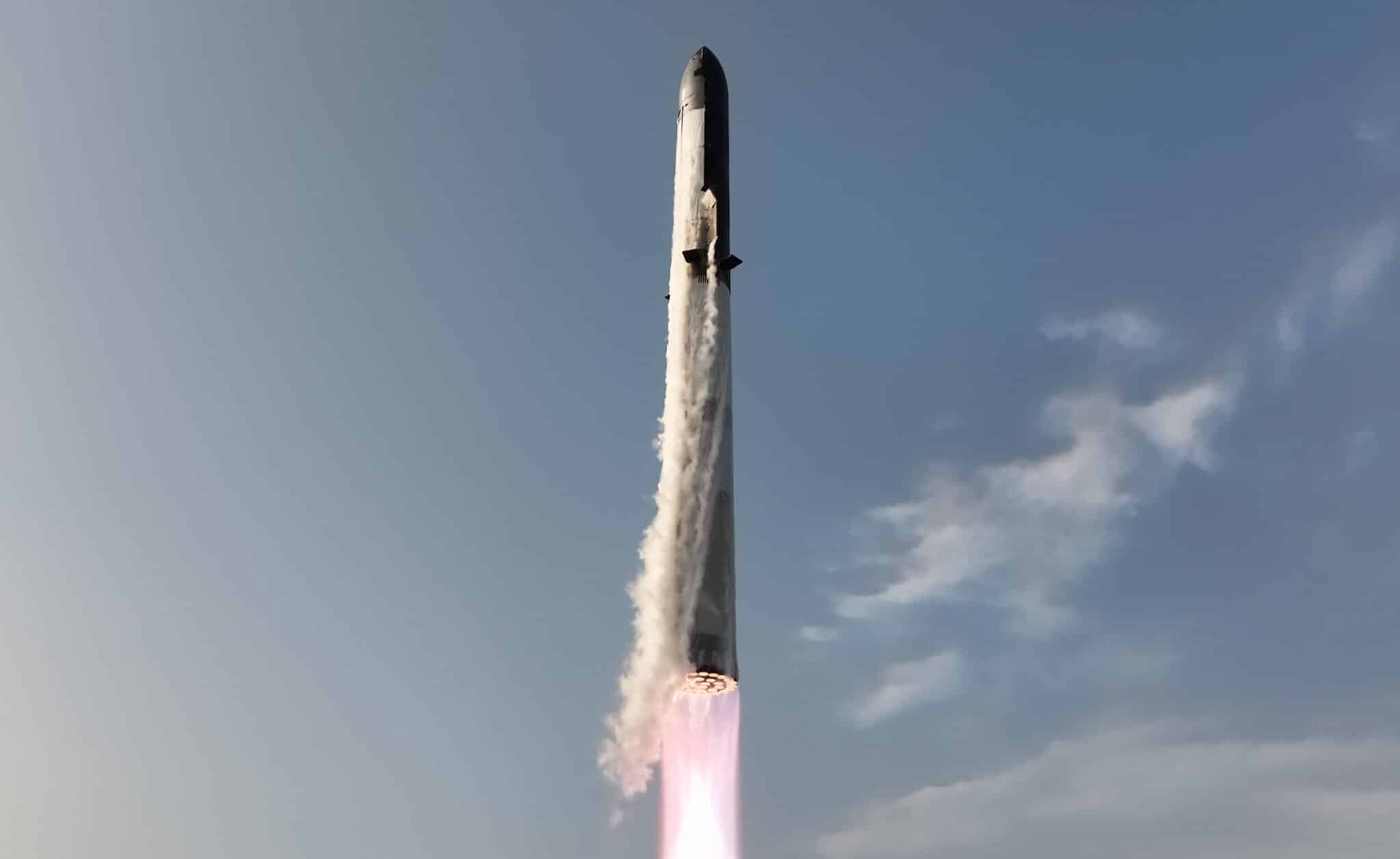
A few months later, Elon Musk unveiled his own project for space data centers, via SpaceX and xAI. However, this latter is far more ambitious since, this time, the plan involves a million satellites weighing between 3.5 and 7.5 tons each. According to him, the giant Starship rocket should handle the launches. Two prototypes are planned for early 2027, while commercial launches are expected to begin in 2028.
« You can take my word for it. In 36 months, but probably closer to 30 months, the most profitable place to deploy AI will be space. And then, being in space will become incredibly advantageous. », had declared Elon Musk in an episode of the Cheeky Pint podcast in February 2026.
Is Elon Musk’s project truly feasible?
While the Latitude and Madari Space project appears quite realistic, SpaceX and xAI’s plan raises many questions, as Ars Technica explained in a July 15, 2026 article. First, the Starship rocket is not yet truly ready — V3 tests are ongoing. It is therefore possible to imagine that in 2027 or 2028 there will be a V4 with a payload of about 200 tons. According to estimates, SpaceX would need to conduct around 3,500 launches per year — that is, about ten per day — to deploy and refresh the satellite fleet. Moreover, this fleet is expected to have a lifespan of roughly five years.
In terms of budget, the total bill should hover around 1.5 trillion dollars, covering satellite production costs, launches, and terrestrial ground infrastructure. However, in the most unfavorable scenario, the total cost could approach 10 trillion dollars. In other words, the financial equation of the project might not hold unless expenditures are dramatically reduced.
It is also important to note that, for now, the technology required to operate space-based data centers is not yet ready. One of the main challenges is heat management: in the absence of water and air, thermal energy can only be dissipated through infrared radiation. Concretely, enormous radiator panels would need to be installed on the satellites, which would add weight to the structures and complicate the overall mechanics. Then come questions about cosmic radiation and also latency, since the satellites would be separated by several kilometers from one another.
What advantages does space offer?
The idea of sending data centers into space primarily stems from a desire to solve the energy and environmental crisis of terrestrial servers. Indeed, with the surge of artificial intelligence, the demand for electricity and water to cool infrastructures is becoming increasingly unsustainable on Earth. This is also driving decisions regarding new installations, such as those recently made in the state of New York.
The satellite constellations could capture intense solar energy continuously because the panels would not be affected by day-night cycles or cloud cover. On the cooling side, hundreds of billions of liters of water would be saved. Moreover, while the issue of radiator-based thermal dissipation remains a concern, the frigid cold of space would at least allow us to do without air conditioners.
