
In the United States, a team of researchers has managed to transplant human brain organoids into the brains of genetically modified mice. According to the researchers, this work could pave the way for enormous advances in modeling psychiatric and neurodevelopmental disorders. What should be known about this major breakthrough? What are its limitations?
Live models known as “xenocortical”
For a long time, many scientists have sought to understand how a healthy brain develops, as well as to uncover why abnormalities cause psychiatric or neurological diseases. To pierce the mysteries of our brain, researchers rely on several complementary approaches such as brain imaging, in vivo animal models, traditional 2D cell cultures, and post-mortem analyses. Since 2013, there has also been talk of in vitro organoids grown in a Petri dish.
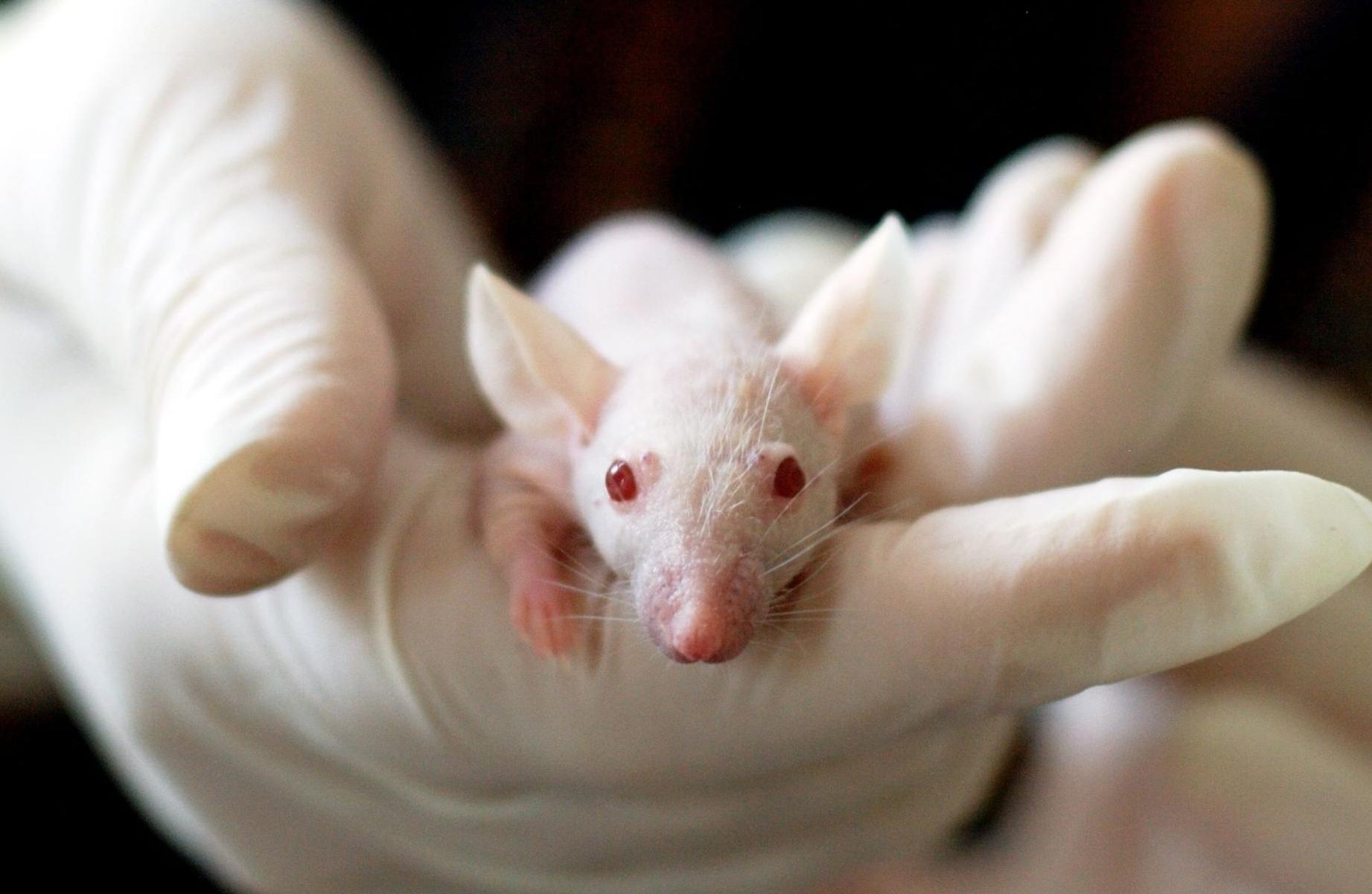
As evidenced by a new study published in Nature on September 16, 2026, a major breakthrough has emerged: the living models known as “xenocortical”. Researchers at Stanford University (United States) used genetically modified mice to be born with almost no cortex and no hippocampus. A few days after birth, the pups received injections of human cortical organoids—about 4 million cells in total—cultured from reprogrammed human skin cells.
“Human cortical neurons integrate into the mouse’s nervous system, and the calcium imaging and in vivo electrophysiological analyses performed on the cortical grafts revealed organized activity patterns resembling developing circuits.”, the study notes.
Promising prospects
In practice, organoids grown in vitro face a major limitation. Indeed, without blood vessels or stimulation, they stop growing and eventually die, remaining far from fully mature. By using the mouse’s body as a living “bioreactor,” scientists have managed to obtain a human tissue that is much more complex.
For the very first time in a living animal, the researchers witnessed the formation of von Economo neurons in the graft. With a distinctive spindle-shaped morphology, these cells belong to a rare and specialized class of brain neurons. Fascinating to neuroscientists for a century, they are closely linked to human evolution, intelligence, and social cognition. They are also among the cells most affected by certain diseases, notably frontotemporal dementia.
The study authors also deprived the mice of oxygen for five hours. This allowed them to observe in real time the extreme fragility of human tissue in the face of hypoxia, notably characterizing cerebral palsy leading to certain pregnancy complications. The scientists also discussed the potential to eventually decode complex psychiatric disorders arising from wiring defects in the human cortex, including profound autism, epilepsy, and schizophrenia.
Biological and ethical limits
The American researchers’ study undoubtedly opens the door to a new era of modeling psychiatric and neurodevelopmental disorders. However, their system has a few limitations. Indeed, human cells operate on their own biological clock, about twenty times slower than mouse cells. After several months, the transplanted tissue remains“young,” equivalent to a mid-gestation fetal stage. As a result, the neurons do not organize into the neatly layered cortical architecture seen in humans.
The researchers also stressed that the rodents did not show any signs of human consciousness, nor even any increase in cognitive capacities. It should be noted, however, that their motor functions—initially impaired by the near absence of a cortex and hippocampus—improved, albeit with minor memory-related deficits. Finally, the ethical question is crucial, relating to the host’s level of brain evolution in hosting human cortical organoids, or, more broadly, to the potential future development of some form of human-like sensitivity or cognition in these animals.
