
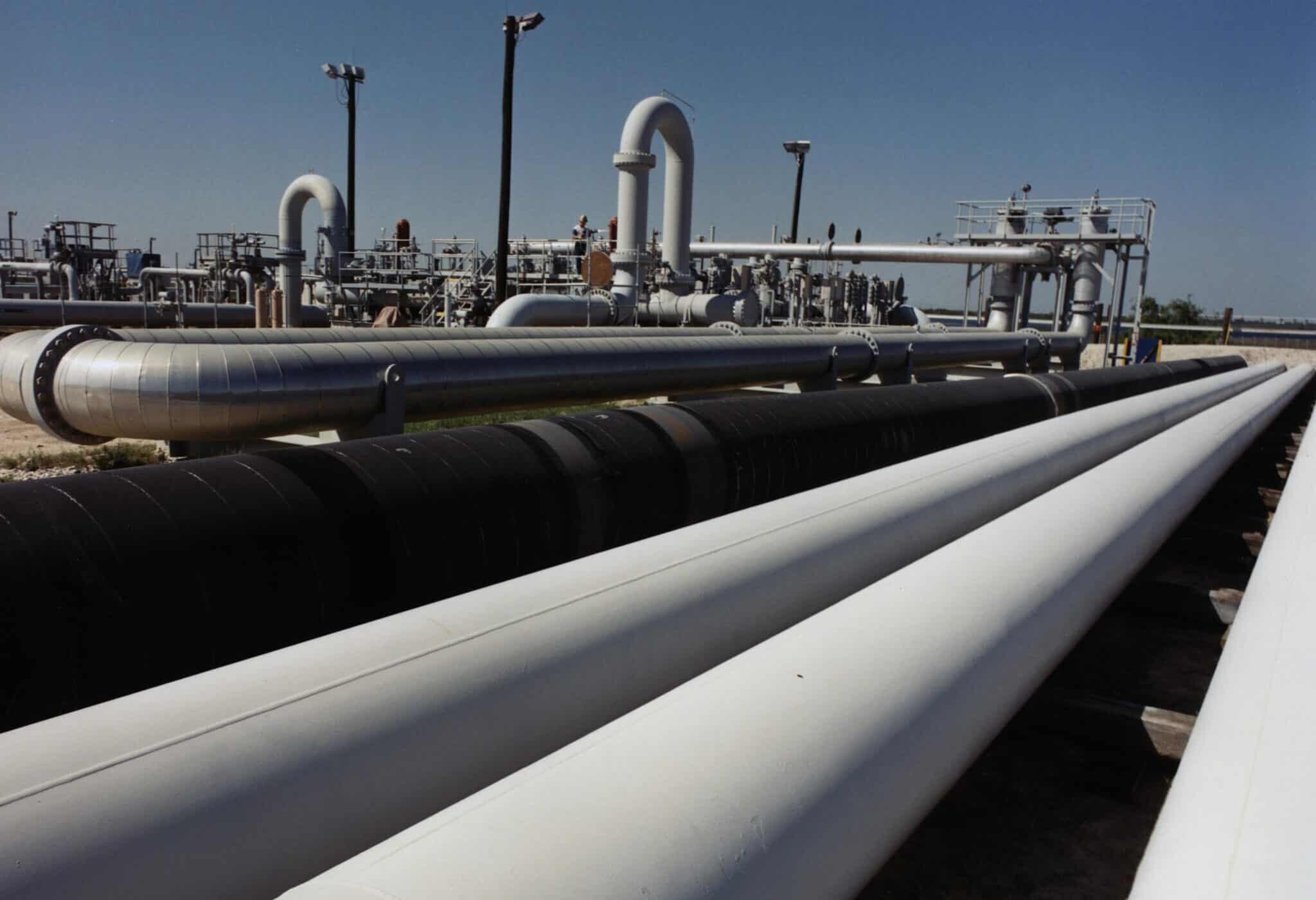
Drawing on data from a brand-new precision-detection satellite, American researchers have recently published a striking report. The document focuses primarily on methane plumes emitted by the three largest gas basins in the United States. What do the results reveal?
Identifying the United States’ methane “super-emitters”
First, it is worth recalling that the Permian Basin (Texas, New Mexico), the Appalachian Basin, and the Haynesville Basin (Texas, Louisiana, Arkansas) account for two-thirds of the United States’ natural gas production. It is also worth noting that these production regions feed Europe heavily with liquefied natural gas (LNG).
In September 2026, a team from the University of California, Los Angeles (UCLA) published its report Methane Made in America. The objective of these studies was to rank the largest “super-emitters” of methane from these gas basins. As part of the study, the scientists relied on data from the brand-new precision-detection satellite Tanager-1, operated by Planet Labs PBC. Additional data were gathered by NASA’s Earth Surface Mineral Dust Source Investigation (EMIT) instrument.
“This report presents an accessible ranking of the ten major oil and gas sites within these three basins, as observed by one of the world’s most advanced methane-detection satellites.”, the report states.
Rates up to fifteen times the tolerance threshold
It turns out that the data allowed the detection of no fewer than 1,097 methane plumes between January 2025 and June 2026. However, the ten sites ranked as the largest super-emitters all far exceed the official super-emission threshold defined by the U.S. Environmental Protection Agency (EPA) — namely 0.1 tonne of methane per hour. The largest emitter mentioned in the report is a natural gas processing plant operated by Energy Transfer, located near Shreveport, Louisiana (Haynesville basin). This plant emits an average of 1.56 tonnes of methane per hour, i.e., fifteen times the EPA tolerance threshold. Furthermore, Energy Transfer is directly linked to two of the ten sites considered among the biggest super-emitters.
“If this Shreveport site were to emit methane continuously for a year at the average rate calculated from the detected plumes, this would, according to EPA calculations, equal the greenhouse gas emissions produced by a gasoline passenger car traveling about 1.57 billion kilometers,” notes the study.
Among the other responsible companies, it is possible to name Howard Energy, Aethon Energy, TC Energy, Black Bear Midstream, Western Midstream, and Boardwalk Pipeline.
A highly unfavorable context for the Trump administration
It must be said that the publication of this ranking arrives at a pivotal moment in the United States. Indeed, the Trump administration had repealed the essential component of the Methane Emissions Reduction Program at the start of 2025, namely the Waste Emissions Charge. This tax embodied the “polluter-pays” principle in the form of a progressive fine of $900 to $1,500 per tonne of wasted gas.
Yet, the removal of this federal tax and the loosening of leak regulations come almost at the moment when technologies are beginning to render these industrial emissions visibly from space. Thus, several major scenarios may flow from this situation, potentially weaving together legal battles, tougher state regulations, citizen monitoring, investor pressure, European trade barriers, or divisions within the oil industry itself.
