
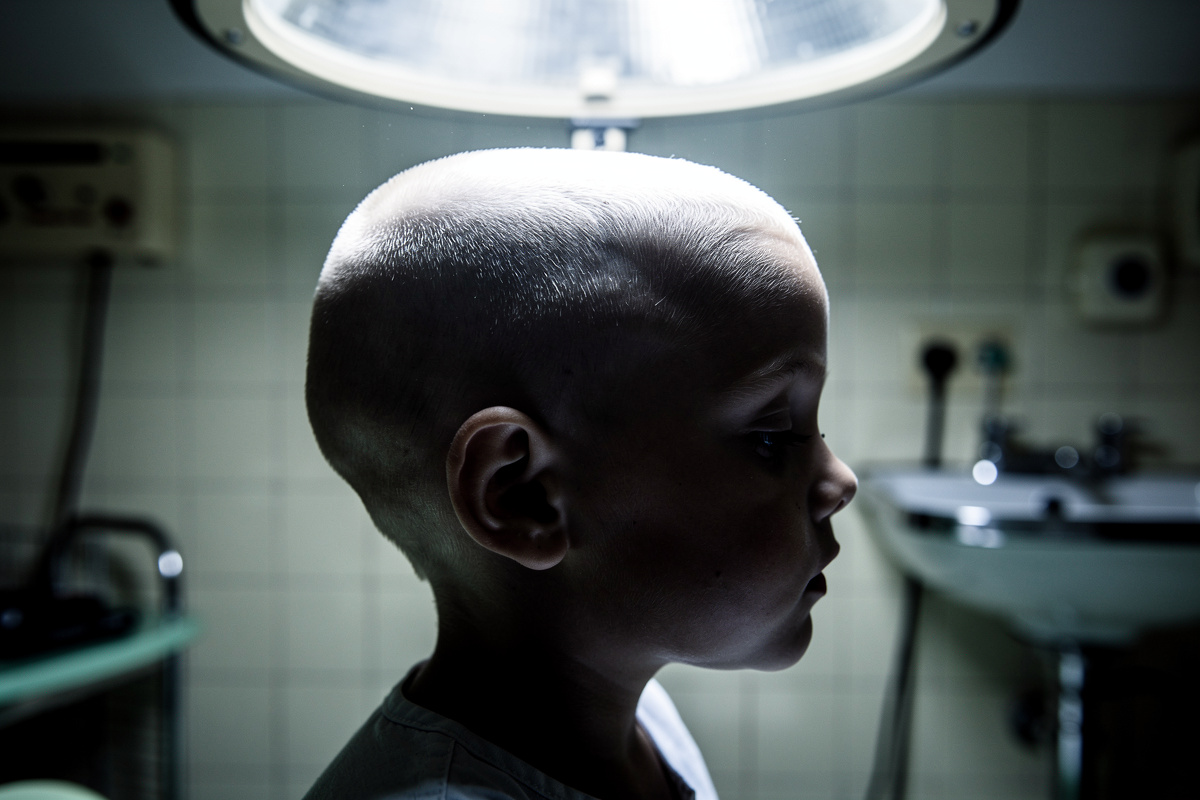
There are pages in medical history that we would sometimes prefer never to retell, and the one I invite you to explore today clearly belongs to that category. Between the late 1940s and the early 1960s, tens of thousands of children in Israel received cranium irradiation to treat a benign scalp infection, tinea capitis (ringworm). At the time, this treatment seemed modern, effective, and without particular danger. Decades later, researchers meticulously tracked more than 10,000 of these children as they grew into adults and compared their health with that of children who had never been exposed to X-rays. The result of this comparison, published in one of the world’s most respected medical journals, highlighted a health gap that no one could have imagined would be so pronounced. Let us dive together into this case, known as the “ringworm affair,” which speaks volumes about how our attitude toward medical radiation has evolved.
- Between 1948 and 1960, tens of thousands of Israeli children with ringworm were treated with cranium irradiation under the Kienböck protocol, delivering 3.5 to 4 grays per field.
- The Ron-Modan study, published in 1988 in the New England Journal of Medicine, demonstrated, across more than 10,000 followed children, a significant excess of meningiomas and thyroid cancers compared with unirradiated children.
- In 1995, Israel enacted a compensation law for these victims, and the affair enduringly reinforced the principles of pediatric radioprotection.
- An outbreak of ringworm treated with X-rays in 1950s Israel
- The Kienböck protocol: a radiation dose deemed innocuous at the time
- Meningiomas and thyroid cancers: the verdict of the Ron-Modan study
- What this cohort changed in modern medical radioprotection
An outbreak of ringworm treated with X-rays in 1950s Israel
To understand this history, one must return to the very particular context of the State of Israel at its founding. During this period, massive waves of migration brought populations from North Africa and the Middle East into the country, often under precarious sanitary conditions. In this setting of overcrowding and close quarters, scalp ringworm, a highly contagious fungal infection that is generally not dangerous, spread with astonishing speed among children. Thousands of young patients were involved, presenting a real public health challenge for the authorities of the time.
The problem was that antifungal treatments as we know them today did not yet exist in an effective and widely accessible form. Doctors of the era turned to a radical method that had already proven effective elsewhere: irradiation of the scalp with X-rays, aimed at destroying the hair follicles and, with them, the fungus responsible for the infection. A solution that seemed pragmatic in the face of urgency, but whose long-term consequences for developing bodies were not remotely anticipated by anyone.
The Kienböck protocol: a radiation dose deemed innocuous at the time
The treatment administered to these children rested on a precise protocol, known as the Kienböck protocol, which used superficial radiotherapy equipment delivering 75 to 100 kilovolts. Concretely, the young patients were exposed to doses of 3.5 to 4 grays per irradiation field, with the device placed at a distance of 25 to 30 centimeters from the skin. To give a sense of scale, these radiation levels are substantial compared with today’s safety standards in medical imaging, where the aim is to minimize exposure as much as possible, especially for the youngest patients.
At the time, knowledge about the cumulative effects of ionizing radiation on a developing brain remained markedly incomplete. It was known that high doses could be dangerous, but the thresholds considered safe were set with a margin of safety that we would now regard as far too narrow. The treatment was thus administered in a routine manner, without families or even clinicians fully realizing the delayed risks they were exposing these children to, often only a few years old.
Meningiomas and thyroid cancers: the verdict of the Ron-Modan study
It was in 1988 that the true implications of this treatment began to emerge, thanks to a study published in the highly respected New England Journal of Medicine, led by Elaine Ron, Baruch Modan, and their colleagues. Researchers tracked an impressive total of 10,834 patients treated between 1948 and 1960, cross-referencing pathology registries from all Israeli hospitals with national cancer and death registries. This rigorous methodology allowed a solid statistical link to be established between infant irradiation and the later development of certain brain and nervous system tumors.
The investigators’ conclusion was unequivocal: among irradiated children, there was a markedly higher occurrence of meningiomas and thyroid cancers than among unexposed children. These two pathologies stood out as the most evident markers of the health gap between the two groups. Additional analyses conducted on larger cohorts helped refine the picture: sixteen intracranial tumors were recorded, including seven brain cancers, four meningiomas, and five acoustic neuromas (vestibular schwannomas) among the irradiated subjects, versus a single case among the controls, with an average cerebral dose of about 1.4 gray. An excess of leukemias was also identified, with eight cases in the exposed group against one in the non-exposed group, following an average dose of about 4 grays to the cranial marrow. The salivary glands were not spared either, with a higher incidence of both benign and malignant tumors among the treated children, whether in Israel or in New York where similar cohorts had been studied.
What this cohort changed in modern medical radioprotection
In the face of the scale of these findings, the State of Israel eventually acknowledged its responsibility by enacting, in 1995, a compensation law for patients irradiated for ringworm between 1946 and 1960. A belated recognition, but one that allowed numerous victims to receive medical follow-up and compensation for the consequences suffered decades earlier. This affair also had a formative effect on how the international scientific community approached medical radioprotection, especially for children, whose growing tissues are markedly more sensitive to the effects of ionizing radiation than those of adults.
What makes this cohort uniquely important is that it is still being followed and studied today, more than seventy years after the first treatments. Researchers are now looking at other potential pathologies linked to this early exposure, notably early-onset dementia, a line of inquiry pursued within the so-called Tinea Capitis cohort, which brings together children aged 0 to 15 at the time of irradiation. This case has greatly contributed to shaping the precautionary principles now applied in pediatric radiology, where every dose is weighed carefully, with the watchword being to expose a young patient only when strictly necessary.
This story illustrates how medicine often advances through painful episodes, whose lessons eventually benefit future generations. Children treated for a simple ringworm in 1950s Israel paid a very heavy price for an advance that no one could have anticipated at the time: pediatric radiation protection that is far stricter today, built on the learnings drawn from their own medical journey. A timely reminder that behind every current safety protocol lies often a human story, sometimes tragic, that must never be forgotten.
