
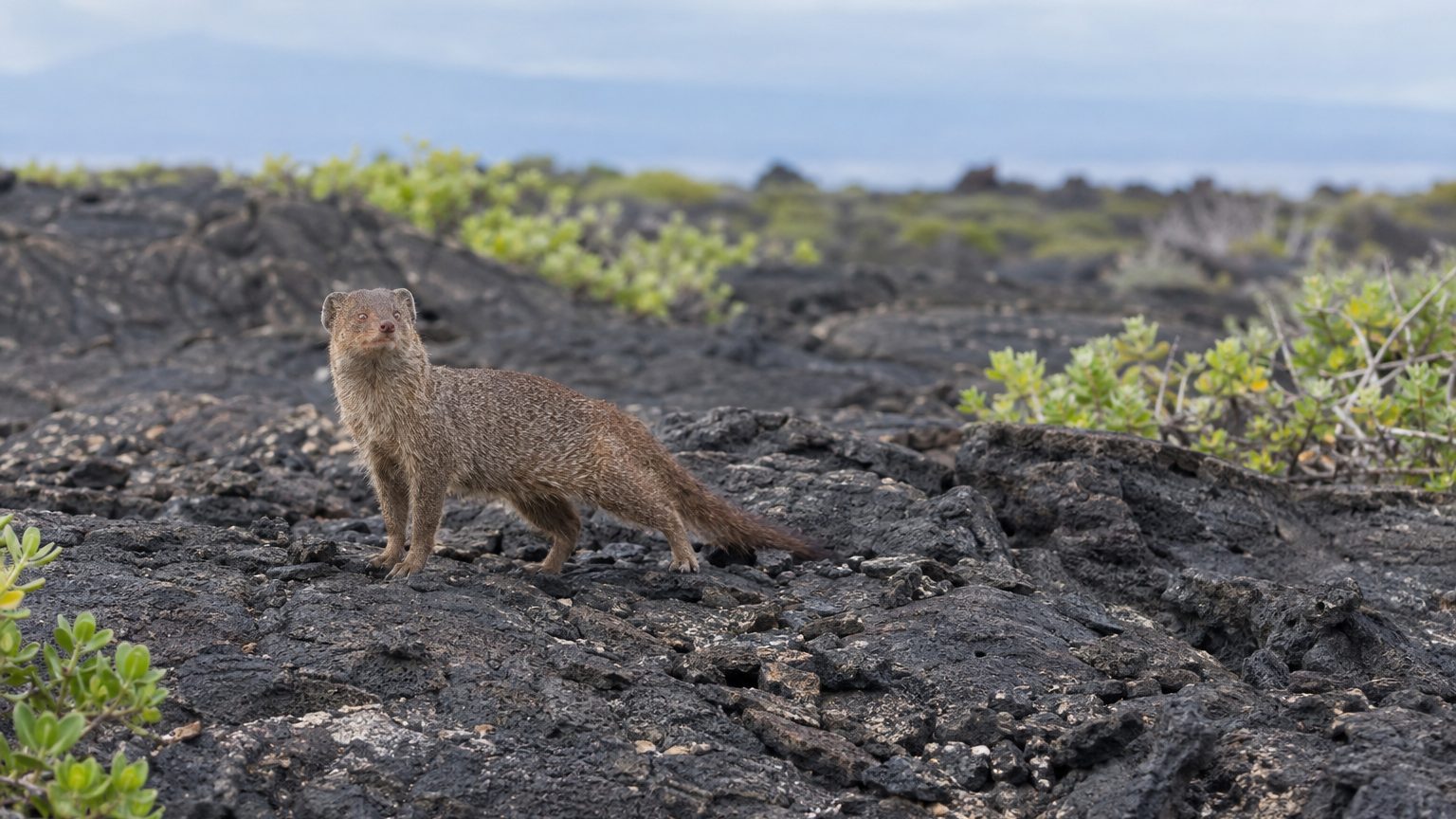
- Mongooses imported in 1883 hunt only by day, while the pest rats emerge at night: the two species never meet.
- Without a natural predator in Hawaii, mongooses feed on eggs and chicks of ground-nesting birds, threatening eight protected species.
- The mongoose population established itself on five Hawaiian islands within a few decades, causing about $50 million in annual damages.
A gamble launched without the slightest verification
In 1883, 72 mongooses embarked from Jamaica toward the northeastern coast of the island of Hawaii. Planter W. H. Purvis, affiliated with the Pacific Sugar Mill sugar-cane plantation, hoped to marshal them into an army against rats that were devouring his crops. The plan failed for a mechanical reason: the mongoose hunts by day, while the rats emerge at night.
The two creatures hardly cross paths.
The idea wasn’t ridiculous on paper. About a decade earlier, in 1872, Indian-origin mongooses had been introduced in Jamaica, and a publication praising their results had captivated Hawaiian planters. The rats, for their part, would have swelled in the hundreds of thousands across the Hamakua coast, to the point of threatening to abandon cultivation. No tests, no prior studies: merely the intuition of industrialists, nothing more.
The chronicles of the era diverge somewhat on the details. Some credit Jonathan Tucker, sent to Jamaica by the Hilo planters, with having brought back the 72 animals, while those in Hamakua organized their own importation in 1885. A few observers even noted a retreat in the rat population, before better poisoning techniques made the mongoose seem unnecessary, even as its populations were already well established.
Ground nests: the ideal target
Deprived of nocturnal prey, the Java mongoose (Herpestes javanicus, renamed Urva auropunctata by some taxonomists) turns to whatever it encounters in broad daylight. It is omnivorous: insects, reptiles, amphibians, crustaceans, birds, and especially eggs. Yet Hawaii’s fauna evolved without a terrestrial mammalian predator, and many species nest directly on the ground.
The nēnē goose, the archipelago’s emblematic bird, pays a heavy price. Mongooses raid eggs and goslings from nests, and prey on adults during molt, a four- to six-week period when they can no longer fly. Under the 2019 federal delisting rule, nesting success reaches 82% on the Kauai refuge complex, versus 62% at Haleakalā and 58% at Hawaii Volcanoes National Park.
Hawksbill turtles also come to the table.
On beaches, mongooses dig up nests and devour entire clutches, weighing heavily on species that already struggle with limited juvenile survival. Green turtles meet the same fate. On the avifauna side, the mongoose is implicated in the difficulties of eight federally protected species, including the alalā (Hawaiian crow) and the petrels.
A colonization that nothing can slow
A female can reproduce as early as ten months old and bears two or three litters per year. With no natural predator on the archipelago (neither suitable raptors, nor large snakes, nor jackals), the population advanced rapidly: within a few decades, the species occupied Oahu, Molokai, Maui, and the island of Hawaii, from the coastline up to about 2,130 meters in altitude. The tally is estimated at $50 million in annual damages for Hawaii and Puerto Rico combined.
Kauai stands out as an exception, and luck plays little part in it. According to historian Tomich, a shipment of mongooses bound for the island was thrown into the port’s water by dockworkers who had recognized the cargo. No further introductions are documented, and Lanai also has no known population.
This absence has measurable effects. By the 2025 census, Kauai housed about 2,643 of the archipelago’s 4,323 nēnē, more than half of the species on a single island, even as sporadic mongoose sightings there had already alerted biosafety authorities.
Sources: ohiostate.pressbooks.pub | dlnr.hawaii.gov
