
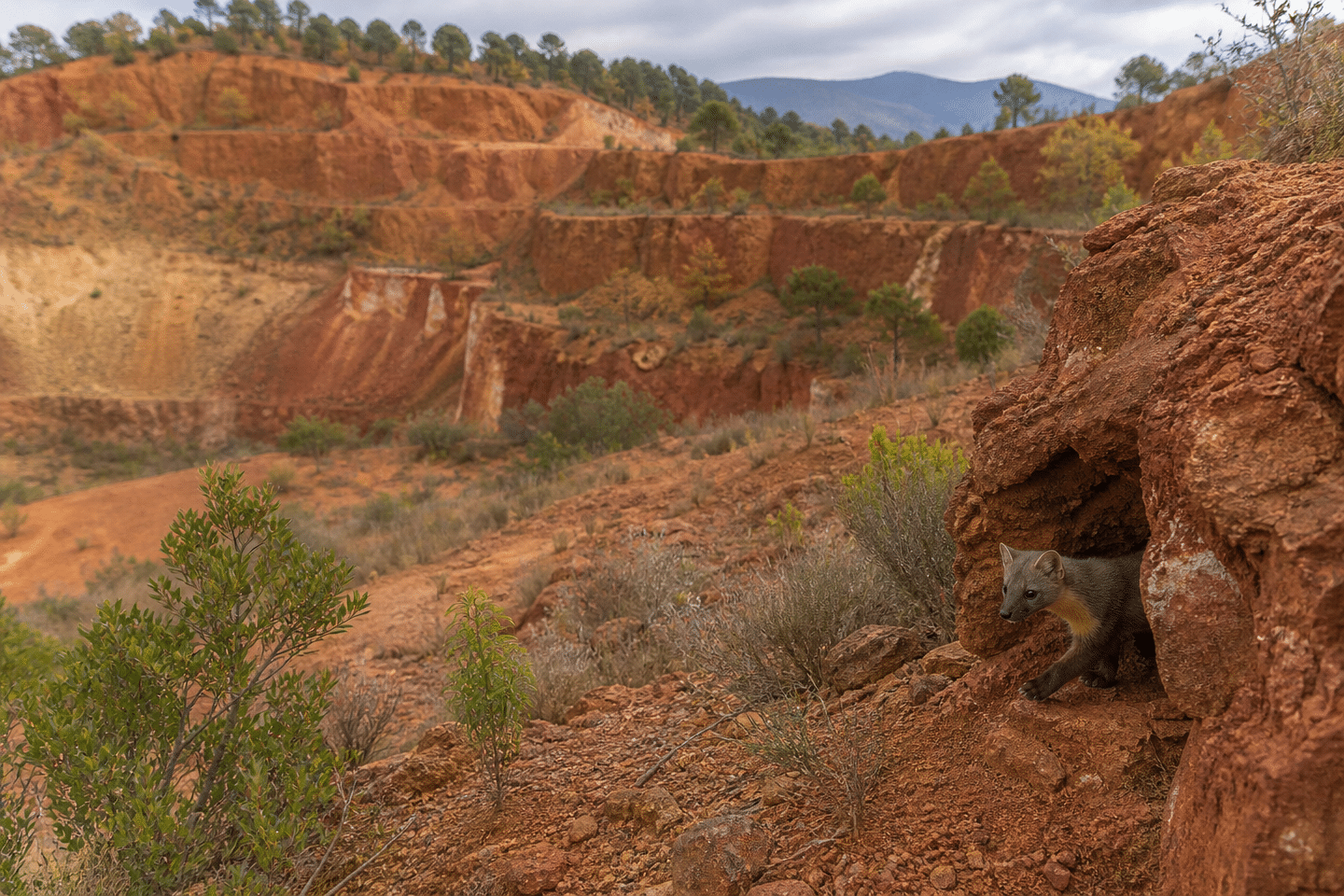
In the Var, an ochre landscape scarred by old mining now shelters one of France’s most singular conservation stories. On this terrain shaped by bauxite exploitation, a iconic reptile has found refuge. The Hermann’s tortoise survives there, while it has vanished from nearly the rest of the continent.
- The National Nature Reserve of the Maures Plain, a former bauxite mining area, has protected since 2009 more than 5,000 hectares between Vidauban and Le Cannet-des-Maures
- The Hermann’s tortoise, protected since 1979, remains to this day the only land tortoise still wild in metropolitan France, its range now limited to the Var and Corsica
- A national action plan for 2018–2027 aims to reinforce this fragile population, threatened by fires like the Gonfaron blaze, including the experimental release of thirty tortoises bred by SOPTOM
- An industrial scar turned into an unexpected sanctuary
- The last bastion of a species France nearly lost
- Why this centenarian tortoise survives nowhere else on the continent
An Industrial Scar Turned into an Unexpected Sanctuary
The Maures Plain still bears the marks of its industrial past. The stream that feeds one of the region’s main water bodies is aptly named the Mine Stream, testifying to extraction activity that left a lasting mark on local geology, especially around the bauxite deposit mined in the area.
This landscape shaped by humans has gradually been recolonized by nature. Two artificial lakes, originally created to combat fires, now complete the scenery: Lake Escarcets and Lake Aurèdes. Their shores host dense reed beds and riparian woodlands that shelter a fauna and flora richness that is surprising for a site so long scarred by industry.
This mosaic of wetlands and Mediterranean heathlands sits at the heart of the National Nature Reserve of the Maures Plain, which since 2009 protects over 5,000 hectares between Vidauban and Le Cannet-des-Maures. A territory where the scar left by the quarries has, over decades, transformed into a genuine ecological sanctuary.
The Last Bastion of a Species France Nearly Lost
The Hermann’s tortoise has been protected in France since 1979, a date that speaks volumes about the urgency already perceived at the time for this species. It remains to this day the only terrestrial tortoise still present in the wild in metropolitan France, its range now limited to the Var and Corsica.
In the Maures Plain, the Maures massif, Colle du Rouet and the Gonfaron-Flassans plateau host the last continental core of the species’ population. Specialists estimate local density at between two and ten individuals per hectare, a figure that may seem modest but represents, on a national scale, an exceptional concentration.
This population, however, remains fragile. The Gonfaron fire burned nearly 8,000 hectares in the plain and the Maures massif, including 3,000 hectares inside the nature reserve. A stark reminder that fire remains the main threat to a creature unable to quickly flee a front of flames. The courts have also sanctioned human incursions into this habitat: the Château de Berne estate, which had cleared five hectares in the plain in 2019, was fined 100,000 euros and ordered to pay more than 375,000 euros for ecological damage caused to the species.
Why This Centenarian TortMouse Survives Nowhere Else on the Continent
The Hermann’s tortoise longevity, which can surpass a century, comes with an extremely slow reproductive rate. Each female lays few eggs, and the youngsters take years to reach a size sufficient to escape their natural predators. This biological tempo makes the species particularly vulnerable to any abrupt disturbance of its habitat, whether a fire, urbanization, or simple clearing.
In response to this, a national action plan covering 2018–2027 was established and coordinated by the DREAL PACA. Its objective is clear: stabilize and then strengthen existing populations, especially in this final continental stronghold where every preserved hectare counts double.
This strategy materialized in an experimental release of thirty juveniles and subadults from the captive breeding program of SOPTOM, directly into the National Nature Reserve of the Maures Plain. A cautious, step-by-step operation that illustrates how rebuilding a wild population remains a lengthy undertaking, mirroring the very longevity of the animal it seeks to save.
What this story ultimately reveals is the capacity of a landscape shaped by mining to rebound as a refuge for a species on the brink of extinction. The former open-pit bauxite quarry, abandoned and transformed into a natural wetland, now harbors the only viable wild population of Hermann’s tortoise in continental France. A still precarious balance, now relying as much on human vigilance as on the species’ own resilience, protected for nearly half a century.
👉 A small gesture for Space Group? Follow us on Google, add us to your bookmarks, and find us on Google News so you don’t miss any discovery.
