
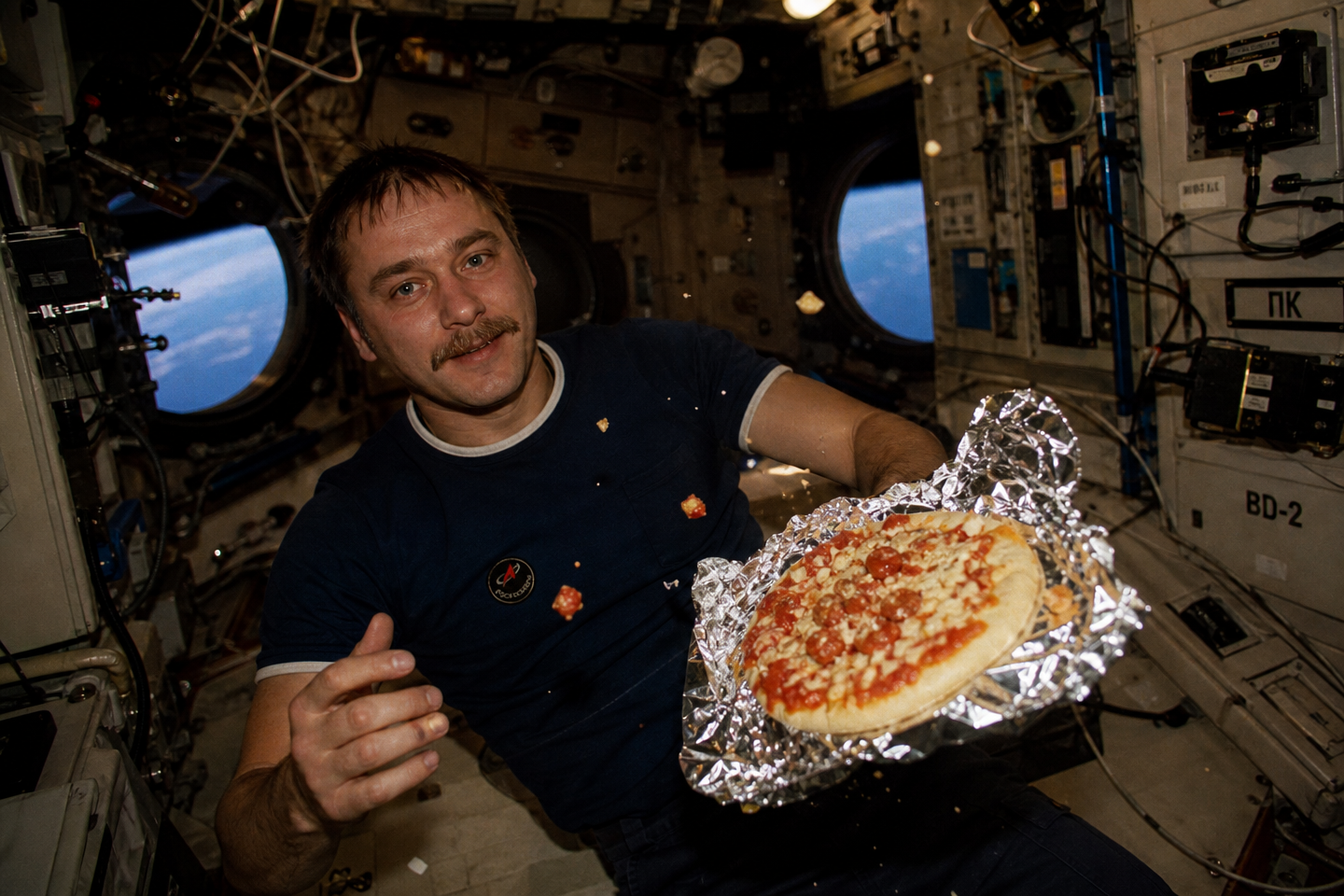
There are marketing stunts that vanish as quickly as they are born, and then there is this story, a touch delirious, that eventually made its way into the books on space exploration. In the early 2000s, as the International Space Station was just beginning to host its first permanent crews, an American fast-food chain had the crazy idea of delivering one of its flagship products there. No scooter, no cardboard box slid under a door: this time, the delivery took the star route, aboard a Russian cargo ship. A bet so improbable that it ultimately entered history as the furthest-delivered order ever honored.
- In 2001, Pizza Hut delivered a salami pizza to the International Space Station via a Russian Progress cargo ship, with a recipe adapted to withstand sixty days without refrigeration.
- The recipe was adjusted by boosting tomato concentrate and spices to compensate for the diminished taste caused by zero gravity, and American astronauts were not permitted to participate in such commercial operations.
- Russian cosmonaut Iouri Oussatchev received and heated this personal six-inch pizza to share with his crew, marking the first pizza party ever organized in orbit.
- The day a pizza left Earth’s atmosphere
- A million dollars for a pizza, the deal that shook space advertising
- Iouri Oussatchev, cosmonaut and first client delivered into space
- What this crazy delivery changed in the history of advertising and space
In 2001, Pizza Hut joined forces with the Russian space agency to ship a salami pizza to the International Space Station. The original plan called for a pepperoni pizza, the brand’s flagship ingredient, but it simply did not survive the sixty-day shelf-life tests required by the constraints of space travel. Pepperoni was out, and a completely redesigned recipe based on salami—a dried cured meat able to withstand the journey without refrigeration—took its place.
The pizza, a compact 15-centimeter format, also saw its recipe adjusted to fit the effects of microgravity on taste. In orbit, bodily fluids redistribute differently, which noticeably dulls flavor perception. To compensate for this well-known phenomenon among astronauts, Pizza Hut teams had to dose tomato concentrate and spices more generously. Vacuum-sealed, the pizza then joined the rest of the usual cargo destined for the crew, before boarding a Progress cargo vessel, the Russian vehicle tasked with delivering supplies to the station.
A million dollars for a pizza, the deal that shook space advertising
Behind this operation lies a detail impressive enough to make one’s head spin: Pizza Hut reportedly paid nearly a million dollars to the Russian space agency to carry out this extraordinary delivery. A colossal sum for a simple pizza, but it is explained by the brand’s stated ambition to claim the title of the first chain to have delivered food into space. A golden advertising argument, hard to match, and almost impossible to replicate given how costly space logistics remain.
This contract also reveals a reality less known to the general public: at the time, American astronauts were not allowed to participate in this kind of commercial operation. The rules prohibited any form of advertising aboard American spacecraft, which naturally steered the operation toward the Russian program, more open to such partnerships. A detail that speaks volumes about the philosophical differences between the two great space powers of that era.
Iouri Oussatchev, cosmonaut and first client delivered into space
The recipient of this atypical order was named Iouri Oussatchev, a Russian cosmonaut on board the station at the time. He received the famous six-inch personal pizza, then heated it in the station’s oven to share with his crewmates. A scene that would be almost routine on Earth, but utterly unprecedented in orbit: the very first pizza party ever organized outside Earth’s atmosphere.
One can easily imagine the strangeness of the moment: savoring a slice of pizza in zero gravity, flavors somewhat dulled, as Earth scrolls by the window. The precise dates of this delivery vary slightly by source—some mention March, others July 2001—so caution is warranted regarding the exact chronology. What remains certain is that the event itself, documented and confirmed, left a lasting impression far beyond the circle of fast-food enthusiasts.
What this crazy delivery changed in the history of advertising and space
Beyond the tasty anecdote, this operation opened a breach into which other brands later tried to rush, with varying degrees of success. It demonstrated that space, long reserved for scientific and military feats, could also become a playground for marketing, provided one is willing to pay the price. A strong symbol of the gradual commercialization of Low Earth Orbit, at a time when the International Space Station was just beginning to write its early pages.
On the Russian side, this partnership also revealed a more pragmatic approach to funding space missions, where every revenue opportunity, however unusual, could help ease the astronomically high costs of crewed flights. Two decades later, as space tourism and private partnerships multiply, this pizza delivered for nearly a million dollars now reads almost as a precursor of what space was to become: a market in its own right.
One remaining question, almost vertiginous: as private companies compete to send tourists into orbit, what will be the most audacious delivery in the history of space? After the pizza, it’s hard to predict what human imagination may still reserve for those who view the stars as a simple market to conquer.
