
A reflex as natural as it is misleading: when the thermometer climbs above 35°C, throwing open the windows seems to be the first impulse to try. Ventilate, let in “fresh air,” hope for a saving breeze. That is exactly what you should not do, repeat building professionals and health agencies in unison. The reason is simple, relentless, and nonetheless little known.
Takeaways
- A natural reflex that makes the situation worse: discover the thermal trap that 74% of the French population do not suspect
- Thermodynamics hides an unknown secret that turns your windows into heat conveyors
- A simple nocturnal strategy can create a temperature difference of 5 to 10°C in your home
The Thermal Trap That Everyone Ignores
The mechanism is brutally logical. Do not open your windows when the outside air is hotter than the inside air, and this becomes the most reliable rule of thumb. For example, if your home is at 25°C but it’s 29°C outside, opening the windows lets in heat instead of cooling the house. The hoped-for breeze then becomes a heat-carrier instead of a relief.
This isn’t guesswork: it’s elementary thermodynamics. Just as heat escapes the house through the windows, opening them allows the hot outside air to rush in. Many people leave their windows open all day when they head to work, to air out, to let in fresh air, to feel better. Nothing could be more wrong!
And the sensation of coolness we think we feel? The breeze on the skin promotes the evaporation of our sweat, offering a pleasant but deceptive illusion of coolness. The body is happy. The room, quietly, grows warmer.
What ADEME and Building Experts Say
ADEME insists: don’t wait too long to close the windows, because heat can rise very quickly by mid-morning. Open windows only when it’s coolest, namely during the night and early morning. A recommendation that most French people still ignore, despite repeated heatwaves.
According to Clément Hau, adviser at France Rénov’, the right reflex is to open the windows wide in the early morning to let in cool air, then to close shutters and windows during the day. This method keeps indoor temperatures more comfortable, with sometimes several degrees’ difference between inside and outside. Several degrees: that’s the difference between a tolerable night and a sleepless night at 28°C in your bedroom.
Numbers speak for themselves: a careful management of openings can keep indoor temperatures 5 to 10°C cooler than the outside, without even turning on air conditioning. Five to ten degrees of difference, simply by managing when to open and close windows.
According to the Qualitel 2025 Barometer, 74% of French people have already faced a heatwave, and 66% say they have experienced heat inside their home. Suffering, when a simple gesture like closing windows before noon could make all the difference.
The Nocturnal Strategy: When It Really Matters
During the day, opening the windows mainly admits hot air. At night, however, outside air often drops a few degrees. That is the right moment to create a cross-ventilation and expel the heat that has accumulated in walls, floors, and furniture. The building materials have absorbed calories all day long, and night represents the only genuine window for thermal clearing.
The most favorable time to create a refreshing air flow is at night or very early in the morning, when outside air has shed most of its heat. Many specialists point to the window of time between 10:00 p.m. and 6:00 a.m. as the most suitable. The only true reference remains the thermometer: if outside temperature is lower than the indoor temperature, opening promotes cooling.
To amplify the effect, open simultaneously windows located at the bottom and at the upper floor: this chimney effect quickly pushes the warm stagnant air upward and out. Placing a fan in front of one window, directed outward, while opening a window on the opposite side creates a suction that draws in cool air and expels hot air. Simple, effective, free.
A nuance not to be overlooked: asphalt on roads and dark façades can reach up to 80°C under summer rays and radiate heat for many hours after dusk. It is wiser to wait until the night air is truly cooler. Opening at 9 p.m. in certain urban areas can still be counterproductive.
Shutters Closed During the Day, Home Transformed into a Refuge
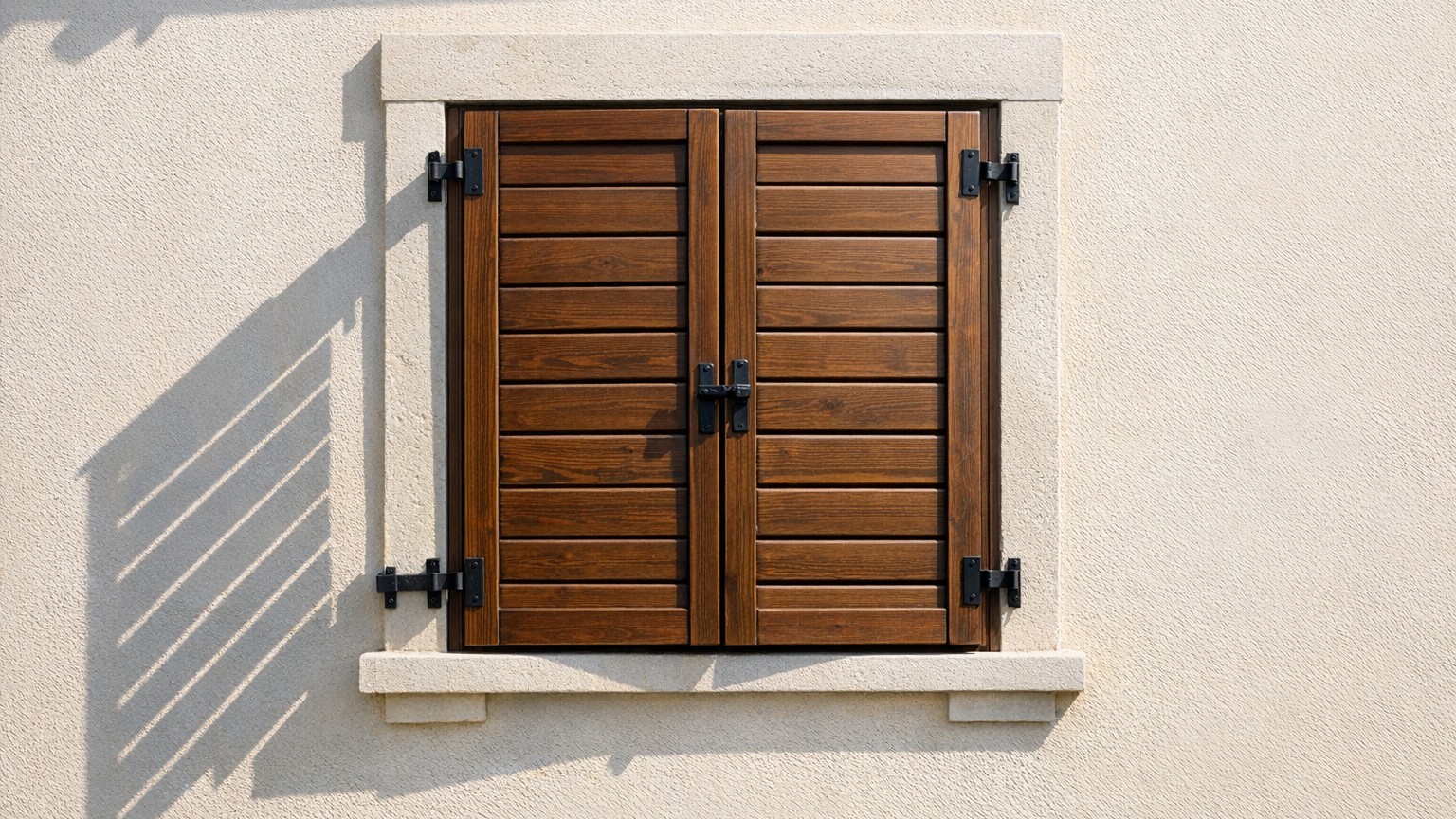
Throughout the day, keeping windows, shutters, blinds, and curtains closed—especially on sun-exposed façades—aims to preserve the freshness gained during the night and to prevent radiant heat from warming the glazing. The secret of inhabitants of southern Europe lies precisely in shutters, which effectively prevent interior overheating. These regions have known for centuries what more temperate countries are rediscovering under climate disruption.
Glazing surfaces are among the main entry points for heat into a home: when solar radiation passes through a window, the luminous energy is absorbed by walls, floors, or furniture, then converted into heat. An unprotected window acts like a magnifying glass. Exterior shutters, by contrast, block the radiation before it reaches the glass.
For those whose windows are not equipped, the aim is to prevent the sun from directly hitting the windows and turning the home into a greenhouse. The simplest solution is to install exterior shutters or external blinds, ideally in light colors so they reflect heat, whereas dark colors absorb more.
One last practical point, often underestimated: as soon as a heat-wave period is announced the day before, it is better to refresh the home as much as possible the previous night and quickly close the shutters and windows before the heat wave begins. The more you refresh the home before the heat wave and the faster you block heat entry, the more comfort you gain during very hot days. A heatwave is prepared the night before, not when the 38°C are already there.
Sources: fr.news.yahoo.com | polvillemarseille.fr
