
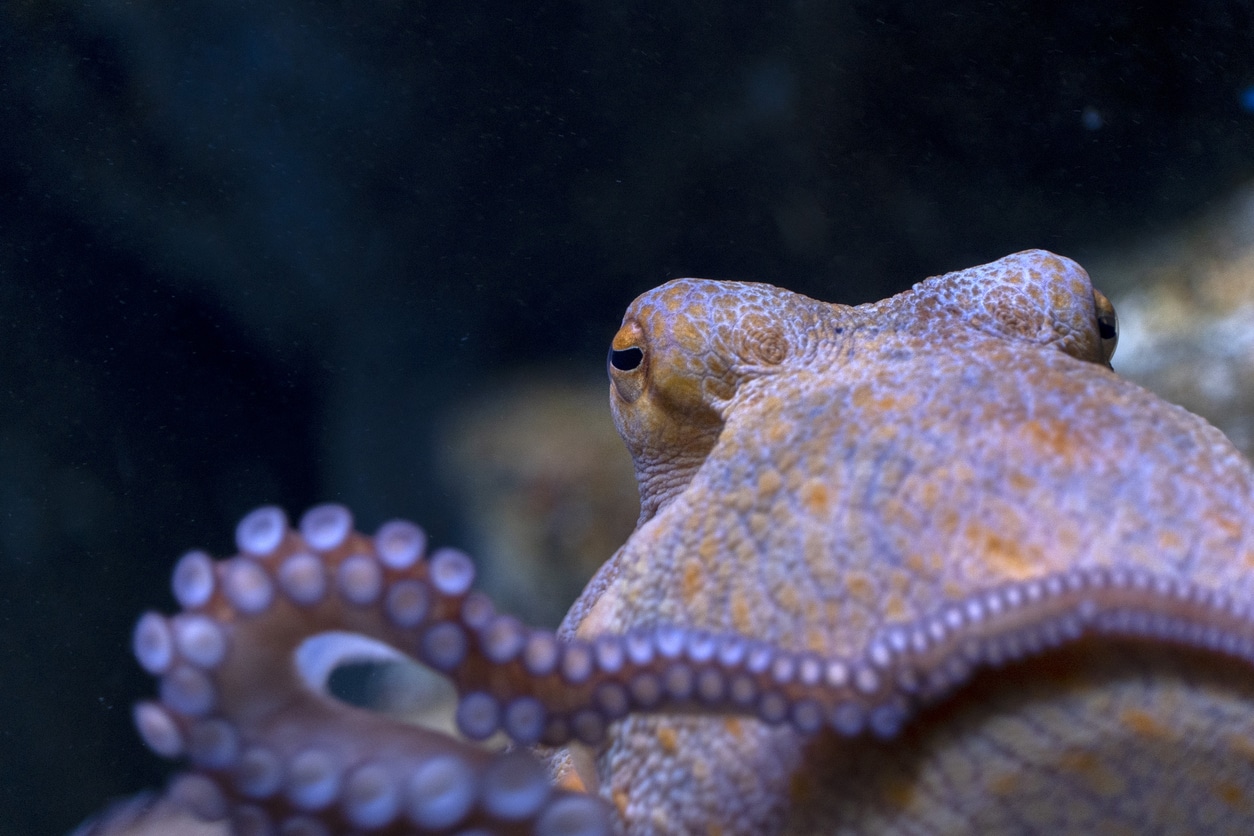
We eat many cephalopods such as octopuses, squids, and cuttlefish. Delicious but also good for health and the environment, these marine animals are also reputed to be highly intelligent. Should we really eat them?
Good for health and the environment
Octopuses, squids and cuttlefish are widely consumed in Asia but less well known in Europe. Rich in protein – about 16 g of protein per 100 g – and low in fat, these cephalopods are considered to be good for health. They also contain iron, copper, selenium and vitamin B12. Moreover, they are a source of omega-3 (polyunsaturated fats) and are low in unhealthy fats.
It is worth noting that cephalopods have a relatively short lifespan – around two years – but reproduce very quickly. Containing low levels of heavy metals as opposed to large fish, they represent an interesting alternative to reduce fish consumption and thereby limit overfishing. Cephalopod stocks are by no means in danger, and for good reason: they adapt very well to climate warming.
Intelligent marine animals
Indeed, consuming them raises ethical questions. Octopuses, squids and cuttlefish are quite intelligent! They can, for instance, change color to adapt to their surroundings, among their many abilities. Moreover, new species are sometimes discovered.
A study published in 2017 highlighted intelligent behaviors in octopus, such as using a coconut shell as shelter or opening jars to obtain food. Researchers even witnessed a scene in which an octopus opened a jar by staring at the researchers while discarding the stale food, as if asking for fresh food.
Additionally, the octopus’s tentacles function as a kind of second brain. Indeed, about two-thirds of its roughly 500 million neurons are located in its arms, i.e., tens of millions per arm. Thus, the octopus is capable of feeling pain, or even anticipating it!
Can we consume them without harming them?
Thus, from health and ecological perspectives, eating cephalopods is viable. However, considering their intelligence, this is more complex. To date, no scientifically validated slaughter method guarantees that they are not harmed. Cold, sometimes proposed as a solution, does not anesthetize them: immersion in cold water is stressful for them.
Sources : Wired – Consoglobe
Article updated with the help of AI · Our method
