
In the context of a recent study, a biologist at a Swiss university analyzed the mechanism of polyploidy, that is, the doubling of a plant’s genome. According to the expert, while this natural phenomenon is found in many agricultural crops, it does not provide them with immediate “superpowers” against heat waves. However, the results offer a lesson for the future.
Artificially Doubling Plant Genomes
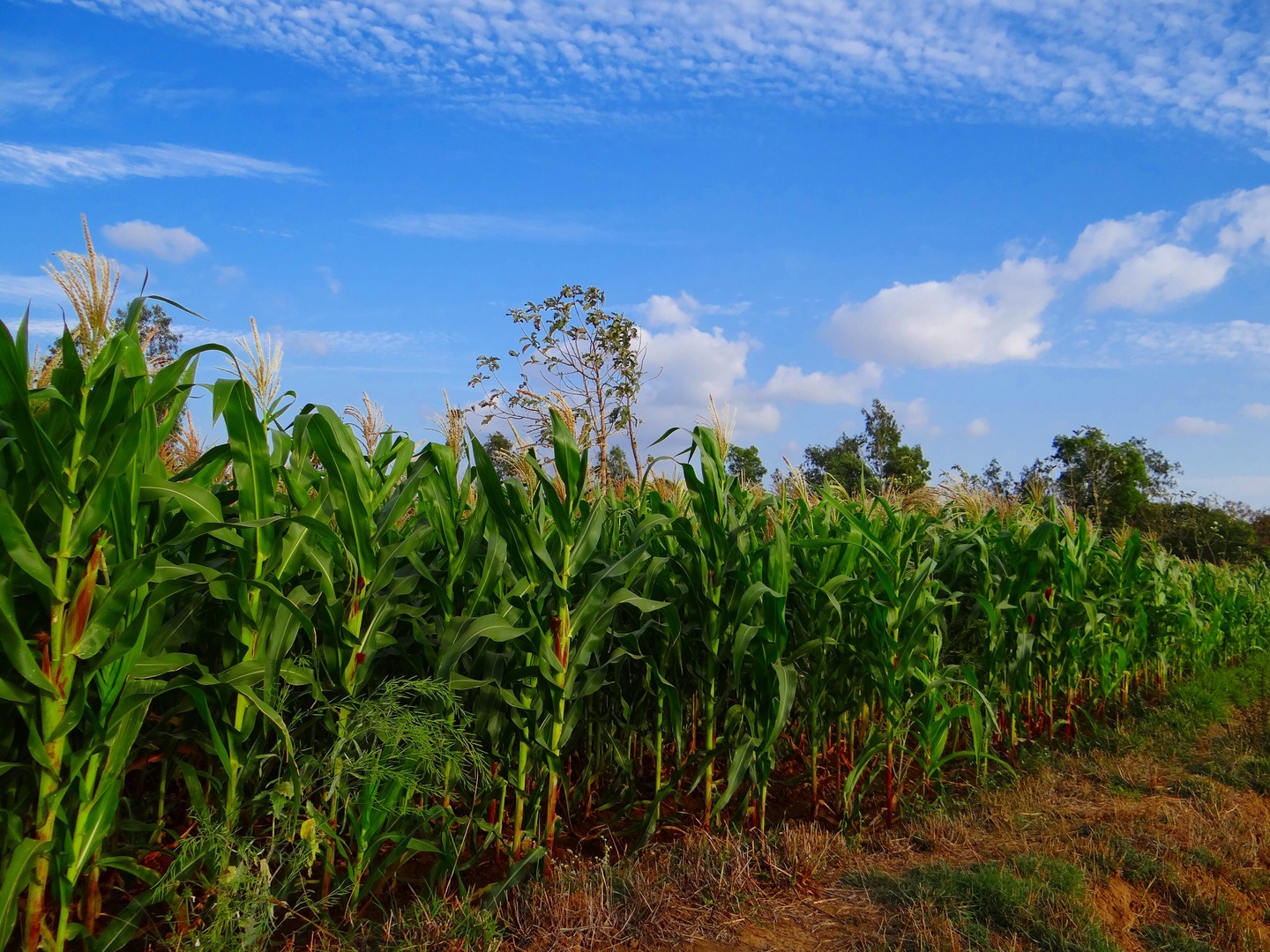
Facing increasingly frequent and intense heat waves and droughts, the agricultural world is looking to transform its practices. The topic is highly important, as it becomes a matter of global food security. One lever is to replace water-intensive crops (e.g., corn) with substitute plants naturally resistant to heat, featuring deep roots and/or lower water requirements (e.g., millet, sorghum).
Another possible lever would be to genetically modify plants to allow them to withstand extreme heat. Professor Christian Parisod from the University of Fribourg (Switzerland) and his team have indeed explored this path, as evidenced by a publication in the journal PNAS on August 4, 2026. He says he has analyzed the mechanism of polyploidy – the doubling of a plant’s genome – a natural phenomenon found in many essential crops.
“Polyploid species are particularly common among cultivated plants, such as wheat, potato, or rapeseed, but also in some harsh environments. Thus, one often thinks that doubling the genome instantly provides new evolutionary superpowers to plants and that this would have favored their survival during major climatic upheavals.”, can be read in the press release describing the study.
No Short-Term Effect but All Is Not Lost
Over three months, the researchers compared in the laboratory different versions of the smooth lunetière Biscutella laevigata subjected to extreme heat (above 40°C). The comparison included diploid plants, plants with a genome naturally doubled for thousands of generations, and plants with artificially doubled genomes in the laboratory (synthetic polyploids). According to the results of this experiment, artificially doubling the plant genes provides no short-term advantage. They grow more slowly and show less resistance to stress, regardless of temperature. Moreover, it appears that artificial genome doubling is quite energy-intensive.
For Christian Parisod, it seems illusory to hope that a single mutation or a simple technological innovation can solve tomorrow’s climate challenges. It must be said that plants whose genome doubled naturally a long time ago fare much better in the face of intense heat. Indeed, evolution over generations has allowed the initial drawbacks linked to genetic doubling to be corrected, natural selection having progressively shaped the plant’s genome in order to teach it to withstand heat waves.
The Swiss study deserves credit for challenging some earlier works that claimed genome doubling immediately favored adaptation. However, the researchers admitted that if there are no immediate effects, artificial genome doubling still generates a potential that natural selection could shape over generations. In the very near future, it should therefore be a matter of a collaboration between biologists and natural selection spanning multiple generations, in order to develop the climate resilience of plants.
