
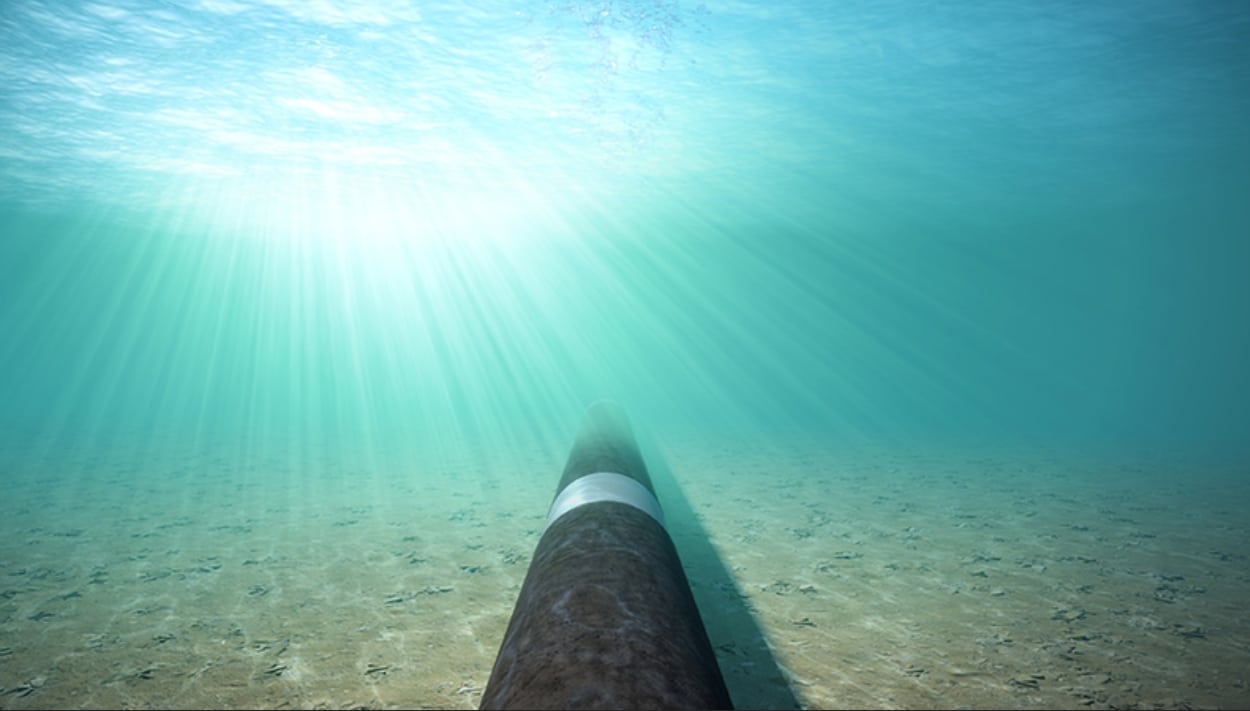
Contrary to what one might think, the causes of submarine cable breaks are quite numerous. While some causes are natural, the vast majority stems from human activities. And since these are strategic installations, there are cases where sabotage is suspected, with evidence often scarce.
Three-quarters of incidents have human origin
First, let us recall that the global submarine cable network forms the true backbone of the digital world. Indeed, although satellites often capture public attention, they account for only a small share of global telecommunications. In fact, between 95% and 99% of intercontinental data traffic passes through submarine cables. Additionally, around 600 cables are active or being deployed, for a total length of more than 1.5 million kilometers — that is 37 times the Earth’s circumference.
Many factors can cause damage to these cables. Some are natural, such as earthquakes or underwater landslides. Other causes involve human activities, primarily related to shipping and fishing. In most cases, anchors from ships or fishing gear damage the cables, not always by accident.
In fact, no less than 74% of incidents are triggered by human activities, as revealed by an article in Courrier International on August 2, 2026. The newspaper also published an infographic (see below).
Many alleged sabotage cases
At the end of 2025, CNBC spoke with Matthew Mooney, director of international affairs at the cybersecurity company Recorded Future. He highlighted a significant rise in such incidents at sea in the Baltic and in the Formosa Strait during 2024 and 2025. However, it remains difficult to state with certainty whether these were intentional acts (sabotage) or not. Still, the increase could be linked to rising tensions between Russia and Ukraine and between China and Taiwan.
“I would say we have observed a significant uptick in vandalism acts that we consider intentional […] It is nevertheless difficult to claim with certainty that they are intentional acts. However, the patterns that emerge from these events give grounds to be suspicious about their potentially accidental nature,” explained the expert.
Protecting these strategic infrastructures
Even if the evidence is not always forthcoming, governments take the threat seriously. More than a year ago, NATO deployed aircraft, ships, drones and submarines in the Baltic Sentinel operation. This operation followed the mysterious severing of two major telecommunications cables at the end of 2024, namely the C-Lion1 between Finland and Germany, and the BCS East-West linking Lithuania to Sweden. The objective? To safeguard the region’s submarine infrastructures against the growing threats of sabotage. Since then, cable-related incidents appear to have become rarer.
But what actually happens when a cable is damaged? Simply, the data flow it carried is interrupted, with consequences for various exchanges, mainly commercial and social. Not surprisingly, it quickly translates into economic losses. Moreover, the repair efforts to rehabilitate the cables can take quite a long time, depending on the fault location — isolated zones or geopolitically sensitive areas.
👉 A small gesture for Space Group? Follow us on Google, add us to your favorites, and find us on Google News so you never miss a discovery.
