
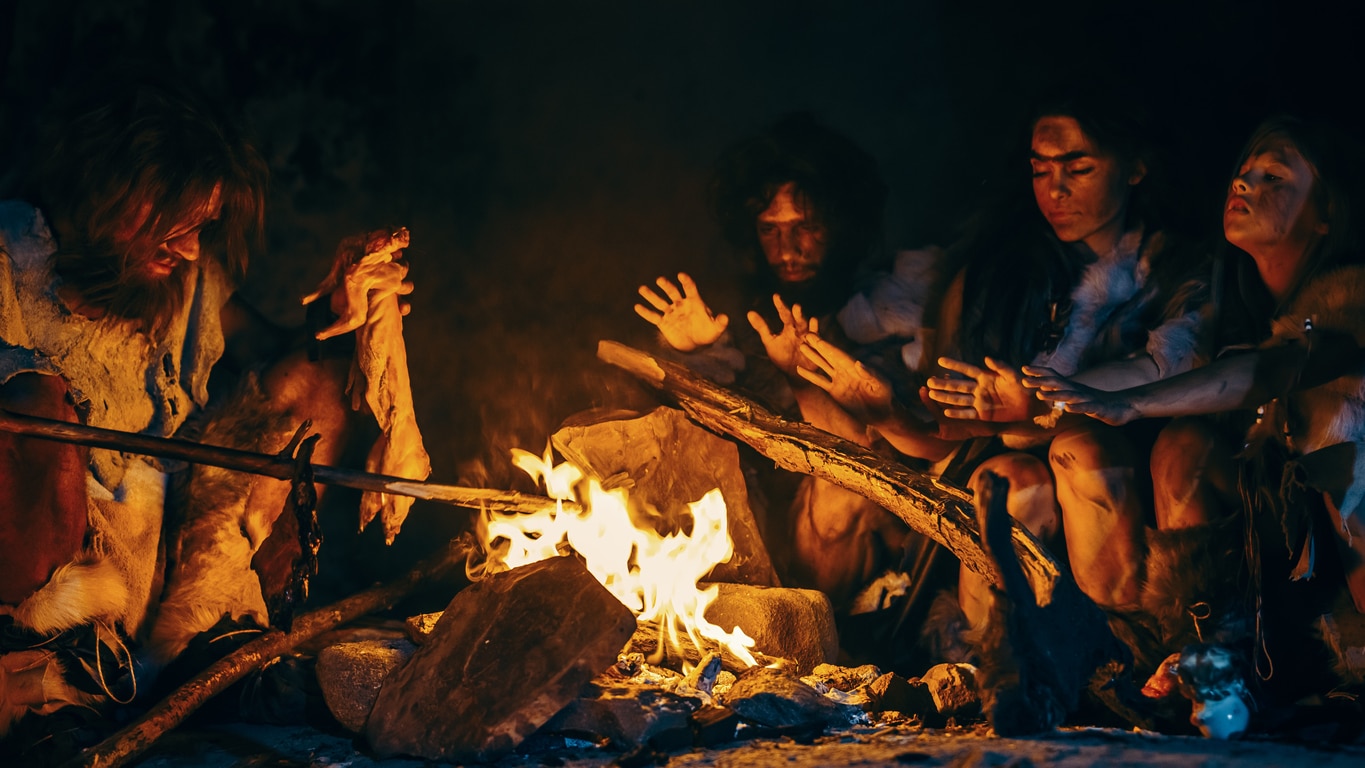
Colossal Biosciences is working on resurrecting Ice Age creatures. But could we go further and clone a Neanderthal? The genome of this archaic human species was fully sequenced in 2010, making it theoretically feasible. The scientific, medical, and ethical obstacles are so massive that the question is mainly whether we should do it.
What you will learn
- Why the complete sequencing of the Neanderthal genome is not enough to make cloning possible
- What concrete medical risks would weigh on a surrogate mother and on the fetus itself
- Why raising a healthy Neanderthal in today’s world would pose unprecedented ethical challenges
The sequenced genome, but cloning is impossible
In 2010, scientists achieved something that seemed impossible: sequencing the entire Neanderthal genome from fossil remains. For Harvard geneticist George Church, this feat opened a dizzying prospect — to synthetically design all Neanderthal genes and insert them into a human cell.
In theory, this altered DNA could be implanted into an egg cell, then into a surrogate mother, to give birth to a living archaic hominin.
In practice, the gap between theory and reality is abyssal.
Cloning requires complete, intact DNA. Yet Neanderthal fossil samples are fragmentary and degraded. What Colossal Biosciences is doing with its “giant wolves” or its mammoths is not cloning — it is genetic modification of living species to give them archaic traits. A fundamental difference.
Unprecedented medical risks for the surrogate mother
Suppose the genetic hurdle is overcome. The medical problems remain substantial.
No one knows whether Neanderthal DNA is compatible with a human pregnancy. The mother’s body could reject the fetus, causing a miscarriage with severe physical and psychological consequences. And if pregnancy reached term, the delivery itself would be high-risk: Neanderthal newborns’ body proportions differed significantly from Homo sapiens, with direct implications for passage through the birth canal.
These risks are not hypothetical. Cloned animals consistently display high rates of miscarriages, stillbirths, and malformations. Applied to a cognitively complex human species, the endeavor crosses an ethical threshold that most global legislations deem insurmountable.
A child without a species, without milk, without an adapted environment
The obstacles do not end at birth. Research suggests Neanderthal infants grew much faster than Homo sapiens babies — an adaptation to glacial environments where a stockier body offered better insulation. There is nothing to indicate that human breast milk or current infant formulas would meet this newborn’s nutritional needs.
And beyond childhood? An adult Neanderthal would be alone of his species in a warming world, radically different from the glacial environment in which he evolved for hundreds of thousands of years. What rights would be recognized for him? What social life would be possible for a being potentially as conscious as Homo sapiens, but utterly isolated?
The real question isn’t “can we,” but “should we”
The debate over cloning Neanderthals illustrates a recurring tension in biotechnology: the speed at which science advances outpaces the speed at which societies formulate ethical answers.
Cloning a Neanderthal would mean cloning a human being. And on this point, global scientific and legal consensus is unequivocal.
