
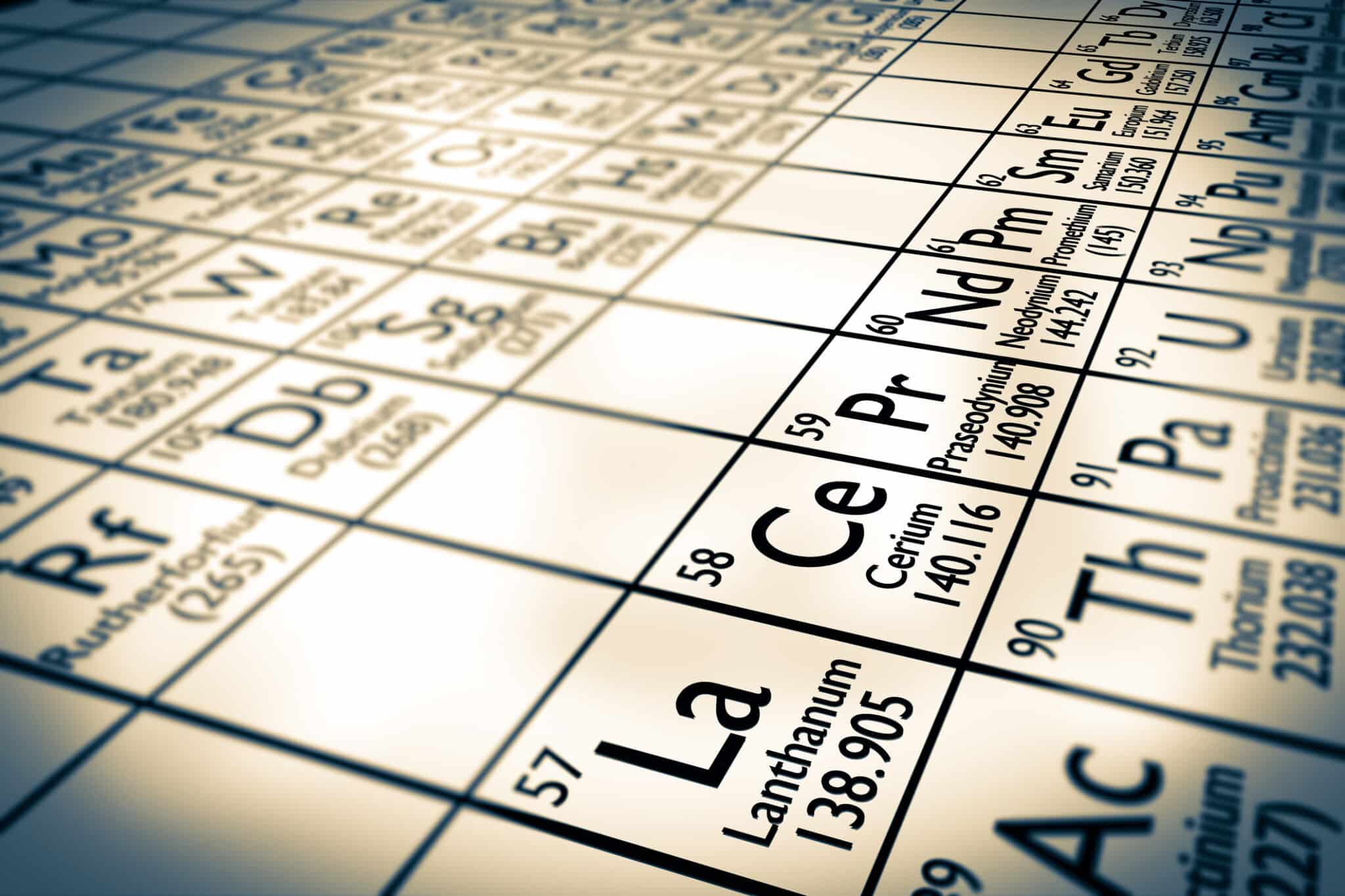
Rare earth elements are ubiquitous in a wide range of technologies and they are largely sourced from China. In France, the state has recently funded a facility aimed at becoming the first European recycler of rare earths. Ultimately, the objective is to reduce dependency on a China that has dominated the market for many years.
The future first European recycler of rare earths
For reference, rare earths form a group of 17 metals with similar properties, including yttrium, samarium, neodymium, and lutetium. Yet, China controls about 70% of annual mining production, a share that becomes even more dominant when considering the processing and separation of rare earths – up to 90%. If other countries are also significant producers— notably the United States — many players remain dependent on China.
In France, the government has recently funded an initiative by Caremag, a division of the Carester expertise service that supports companies wishing to exploit rare earths. As stated in a press release published in April 2026, this investment totals 106 million euros, complemented by 110 million from a Japanese partner (Iwatani Corporation), with the creation of a joint venture: the Japan France Rare Earth Company.
What is at stake is a recycling plant currently under construction in Lacq (Pyrénées-Atlantiques), with commissioning planned for the end of 2026. Caremag’s objective is to recycle around 2,000 tonnes of magnets each year and also to refine 5,000 tonnes of mineral concentrates. According to project managers, this industrial unit will become the first European recycler of rare earths and the largest producer of heavy rare earths, including dysprosium and terbium.
Why is this initiative interesting?
Through this initiative, France hopes to reduce its dependence on China for rare earths. It could also represent a major step toward European autonomy in permanent magnets, essential components for a multitude of technological applications such as household appliances, electric vehicles (motors), wind turbines (generators), smartphones, etc.
Along the way, let us recall another possibility that could theoretically help France lessen this reliance: opening mines on national soil. In April 2026, the government launched a project to inventory potential deposits of strategic minerals, with work assigned to the Bureau of Geological and Mining Research (BRGM).
For now, recycling rare earths remains a highly interesting ecological solution. Indeed, this approach is clearly less energy-intensive, uses less water, pollutes less, and is less invasive than traditional mining.
