
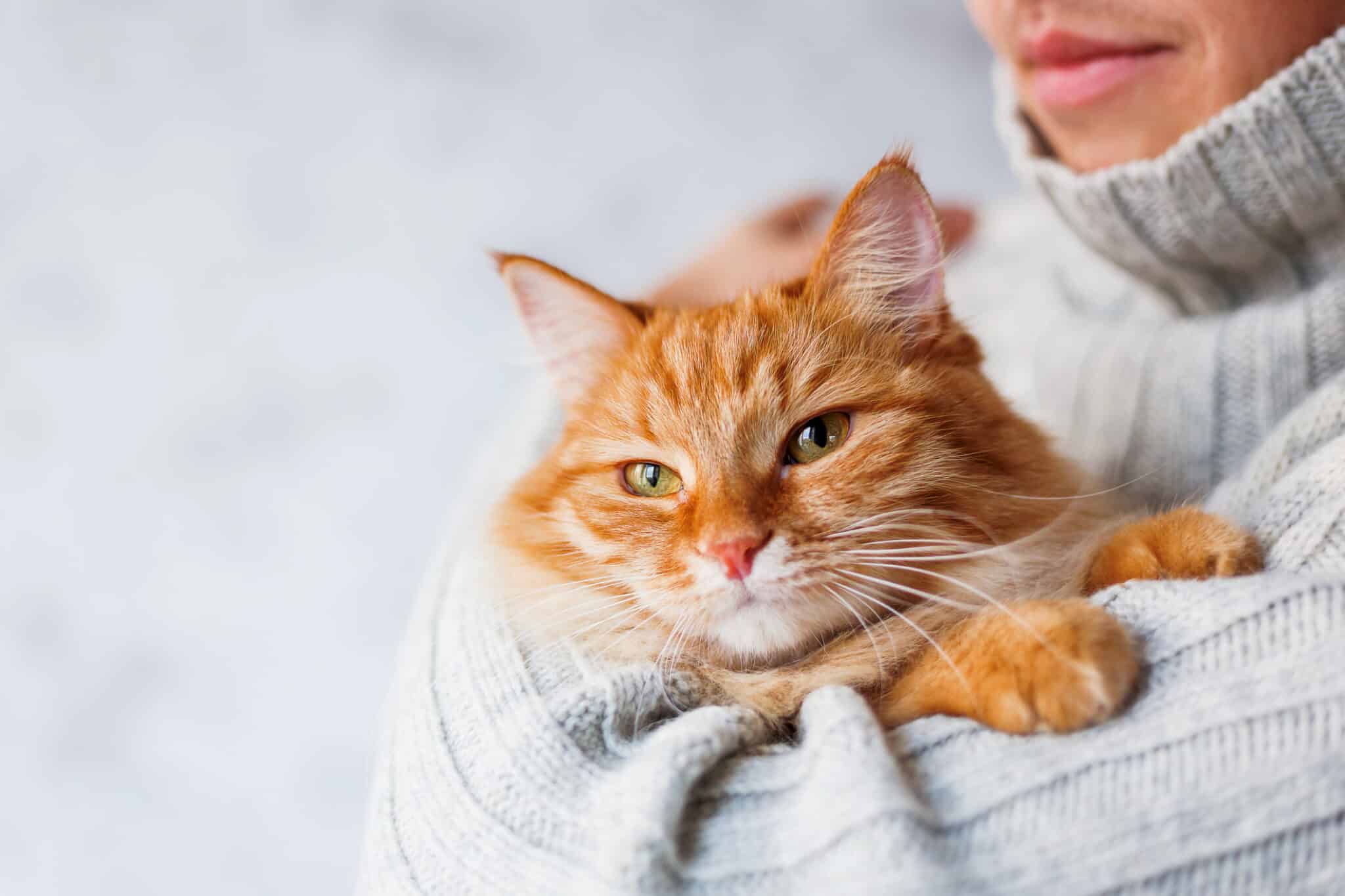
Millions of cat owners around the world can finally grasp this scientifically explainable sensation: the deep sense of well-being that comes from stroking a feline is not just a feeling. A series of groundbreaking studies has shown that our four-legged companions trigger the release of oxytocin in our brain, the very hormone responsible for maternal bonding and romantic connections. This discovery upends our understanding of interspecies relationships and reveals how cats have literally hacked our brain chemistry to forge a mutual emotional dependence.
The hormone that governs our emotions
Oxytocin richly earns its nickname as the hormone of love. This neurochemical molecule orchestrates our most cherished relationships: it floods the brain as a mother cradles her newborn, unites couples in intimacy, and cements enduring friendships. Its power goes beyond mere feeling: it actively lowers cortisol, the stress hormone that undermines our daily life, while activating our parasympathetic nervous system responsible for relaxation.
Scientists already knew its role in the dog–human relationship, where a single glance shared between a owner and their canine companion triggers a mutual hormonal cascade. Yet cats, those enigmatic creatures famed for their independence, seemed to resist this attachment chemistry.
Appearances were deceiving. Japanese research conducted in 2021 shattered this assumption by demonstrating that a simple session of stroking a cat provokes a measurable rise in oxytocin in the owner.
The secret mechanics of the purr
The cat’s purring conceals a remarkably sophisticated mechanism. This characteristic vibration, perceived as soothing by most humans, acts as a powerful neurochemical trigger. The low frequencies of the purr directly stimulate oxytocin production in our brain, creating a measurable sense of relaxation.
A 2002 study revealed that exposure to purring significantly lowers human blood pressure and can even lessen pain perception. This effect is explained by the massive release of oxytocin that neutralizes circulating cortisol in the body.
Thus, cats have developed a remarkably effective interspecies communication tool, capable of remotely shaping our emotional state. This discovery points to a notable coevolution between domestic felines and humans.
The subtle art of feline seduction
Unlike dogs, which openly seek human attention, cats master a more refined body language. The slow blink is their signature behavior: this gesture, nicknamed the “feline smile” by ethologists, signals a state of complete trust and triggers an oxytocinergic response in the observing human.
A February 2025 study revealed the nuances of this interaction. Researchers found that oxytocin increases only when physical contact respects the cat’s boundaries. Felines that initiate contact—by settling on laps or rubbing their head against their owner—show a rise in hormones proportional to the time spent near the human.
Conversely, forcing interaction produces the opposite effect: oxytocin falls in cats coerced, highlighting the importance of mutual consent in this chemistry of attachment.
Feline personalities and hormonal variations
Not every cat responds identically to this hormonal mechanism. Researchers have identified distinct behavioral profiles that influence oxytocin release.
The secure felines, who actively seek out human contact, exhibit the strongest responses. Their oxytocin levels rise steadily during positive interactions, creating a virtuous cycle of mutual reinforcement.
The avoidant cats, who keep their distance, show no significant hormonal variation. As for anxious individuals, they paradoxically display elevated oxytocin at rest, which declines during handling, betraying their chronic stress.
The science behind feline addiction
These findings finally illuminate why so many people develop a genuine dependence on feline companionship. The oxytocin released during everyday interactions—petting, purring, play—creates a buffering effect against anxiety and depression, comparable to human social support.
Cats have thus achieved a remarkable evolutionary feat: these former solitary hunters have developed the capacity to stimulate our brain’s reward system, ensuring their domestic survival.
Although their responses are more modest than those of dogs (12% increase versus 57%), felines compensate with the subtlety and durability of their effects. Their affection, harder to obtain, becomes all the more precious once granted.
