
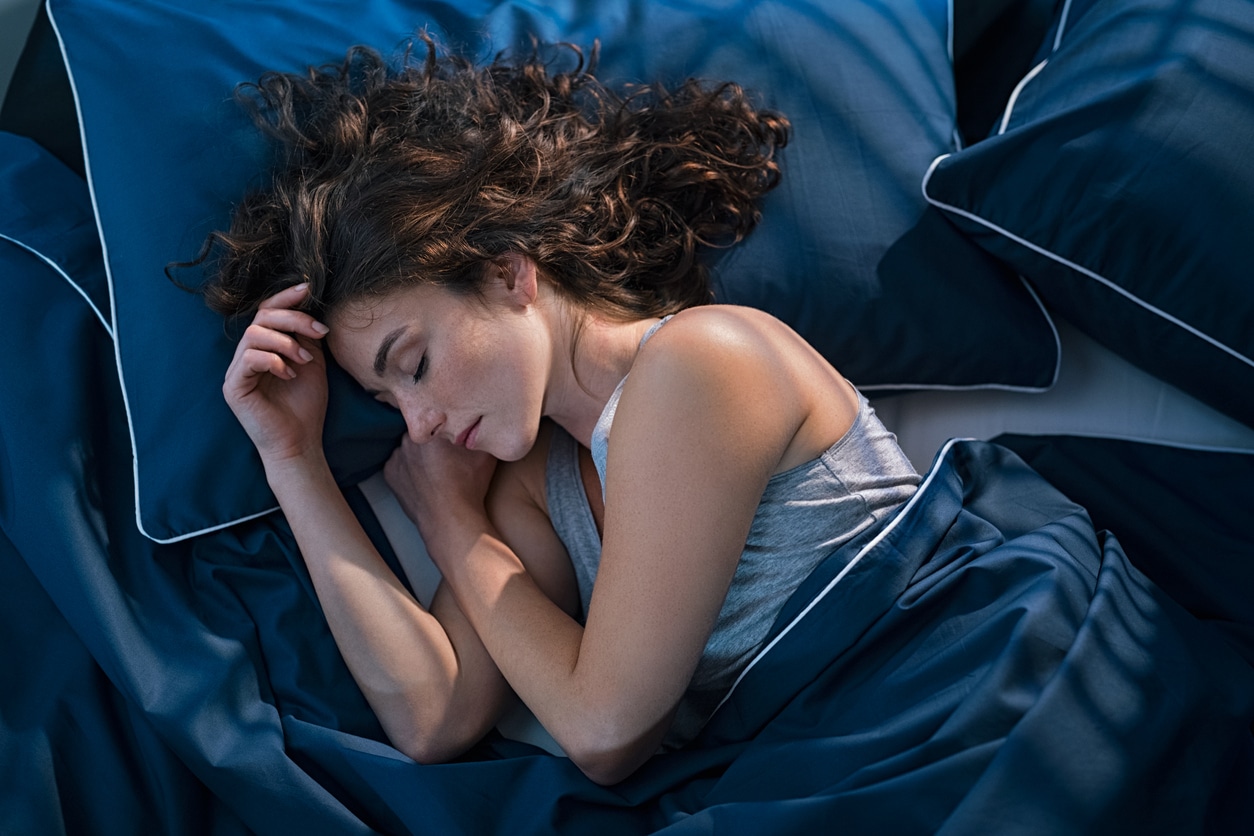
By stimulating brain activity in awake mice, American researchers have observed the emergence of certain sleep-related benefits. In the long run, scientists plan to test this approach directly in humans. What exactly should be known about these studies?
Research Focusing on the Somatosensory and Motor Cortex
Sleep is essential for the survival of the body and the brain, acting as a biological maintenance hub. In terms of physical health, sleep enables cellular regeneration, strengthens immunity, preserves cardiac health, and ensures metabolic balance. At the level of mental health, sleep contributes to maintaining learning and memory, ensures cellular cleansing in the brain, and regulates emotions.
What if it were possible to reap some of the benefits of sleep without actually sleeping? Researchers at the University of Wisconsin–Madison (United States) published a study on the topic in Nature Neuroscience on June 8, 2026. The authors sought to determine whether the somatosensory and motor cortex (in the cerebral cortex) could enter deep sleep while the subject remains awake.
Recall that the somatosensory and motor cortex represents about 80% of sleep in adult humans. Moreover, the ability of this region to enter sleep while the individual is not sleeping already exists in certain animal species, notably seals, dolphins, or ducks.
Algal Protein and Optogenetics
Scientists attempted to verify whether artificially forcing neurons to adopt the electrical rhythm of deep sleep—while the subject is awake—could be enough to regenerate these cells and consolidate memory. In their work, the authors used sleep-deprived, genetically modified mice that received an injection of an algae protein—the channelrhodopsin—allowing them to bypass a natural barrier: mammalian neurons do not respond to light. Then, they employed optogenetics, that is, light beams allowing control of the activity of specific neurons. This technique enabled the activation of On-Off phases simulating the rhythm of deep sleep, and this was restricted to their somatosensory and motor cortex. In parallel, the researchers observed a control group of sleep-deprived mice that did not receive any light stimulation.
After forcing this “local sleep” artificial state in the mice, the scientists analyzed their brains and their behavior. Memory tests revealed that sleep-deprived mice subjected to optogenetic stimulation achieved results similar to those of fully rested mice. The control group (unstimulated) completely failed the tests. At the molecular level, the study authors confirmed a drop in markers of synaptic strength, signaling a reset and relief of overloaded neural connections, one of the usual benefits of deep sleep. Moreover, when the researchers allowed the stimulated mice to sleep normally, these mice showed a reduced demand for deep sleep in the somatosensory and motor cortex, compared with the rest of the brain. This demonstrates that the region in question had already recovered.
Very Useful Potential Applications
The conclusion of these works is as curious as it is fascinating, in that the brain does not need to put the entire body into sleep to regenerate, as occurs during deep sleep. The study authors estimate that if it becomes possible to reproduce the electrical oscillation movement of deep sleep in a specific area, that same area should fully recover its functions.
Finally, the scientists hope to conduct tests directly on humans to definitively prove their theory. If successful, these studies could pave the way for enhancing vigilance in certain professions through techniques such as transcranial magnetic stimulation (TMS), as well as for treating cognitive and memory disorders, notably Alzheimer’s disease. Other applications could involve post-stroke rehabilitation medicine, the treatment of depression, or sport (recovery).
