
Although the last volcanic eruption in the Puy-de-Dôme dates back to antiquity, future episodes of the same kind could occur in the Massif Central. Indeed, a layer of lava lies beneath the region and this layer is expected to surface someday.
Volcanic Activity Merely Dormant
While the Puy de Dôme is a French department, the term largely designates a volcano about 11,000 years old, whose last eruption dates to 5760 BCE. Since then, lava has not flowed in France. However, this situation would not be definitive if one trusts Guillaume Boudoire, a volcanologist at the Laboratoire Magmas et Volcans at the University of Clermont Auvergne. In an interview with Journal Du Net in an article published in August 2026, he spoke of a highly probable “volcanic reactivation” in the Massif Central.
While this may be the expert’s certainty, it is essential to note that forecasting future eruptions is very difficult. Nonetheless, the fact remains that volcanic activity tends to follow cycles, alternating between active phases and dormant periods. It appears that volcanic activity in the Massif Central is not extinguished but merely dormant, and this has been the case for 7,000 years.
As Guillaume Boudoire explains, the region experienced a major activity cycle about 40,000 years ago, followed by a pause of several thousand years. Then activity resumed 15,000 years ago before ceasing after the last eruption of the Puy de Dôme. Thus, this activity should resume, but it is difficult to determine whether it will occur in 500, 1,000, 5,000, or 10,000 years. In the meantime, the specialist asserts that if the Auvergne volcanoes’ activity did not resume, it would constitute a serious anomaly.
A Recent False Alarm
Between late 2021 and November 2022, scientists detected exceptional seismic activity in the Mont-Dore area. During this period, more than 400 microseismic events occurred in a defined zone, namely near Lake Chambon. While substantial seismic activity can herald the onset of a volcanic eruption, Boudoire dismissed this hypothesis. He explained at the time that there was no ascending seismicity, i.e., no magma rise. Analyses of the sources and their gases confirmed the absence of magma at shallow depth.
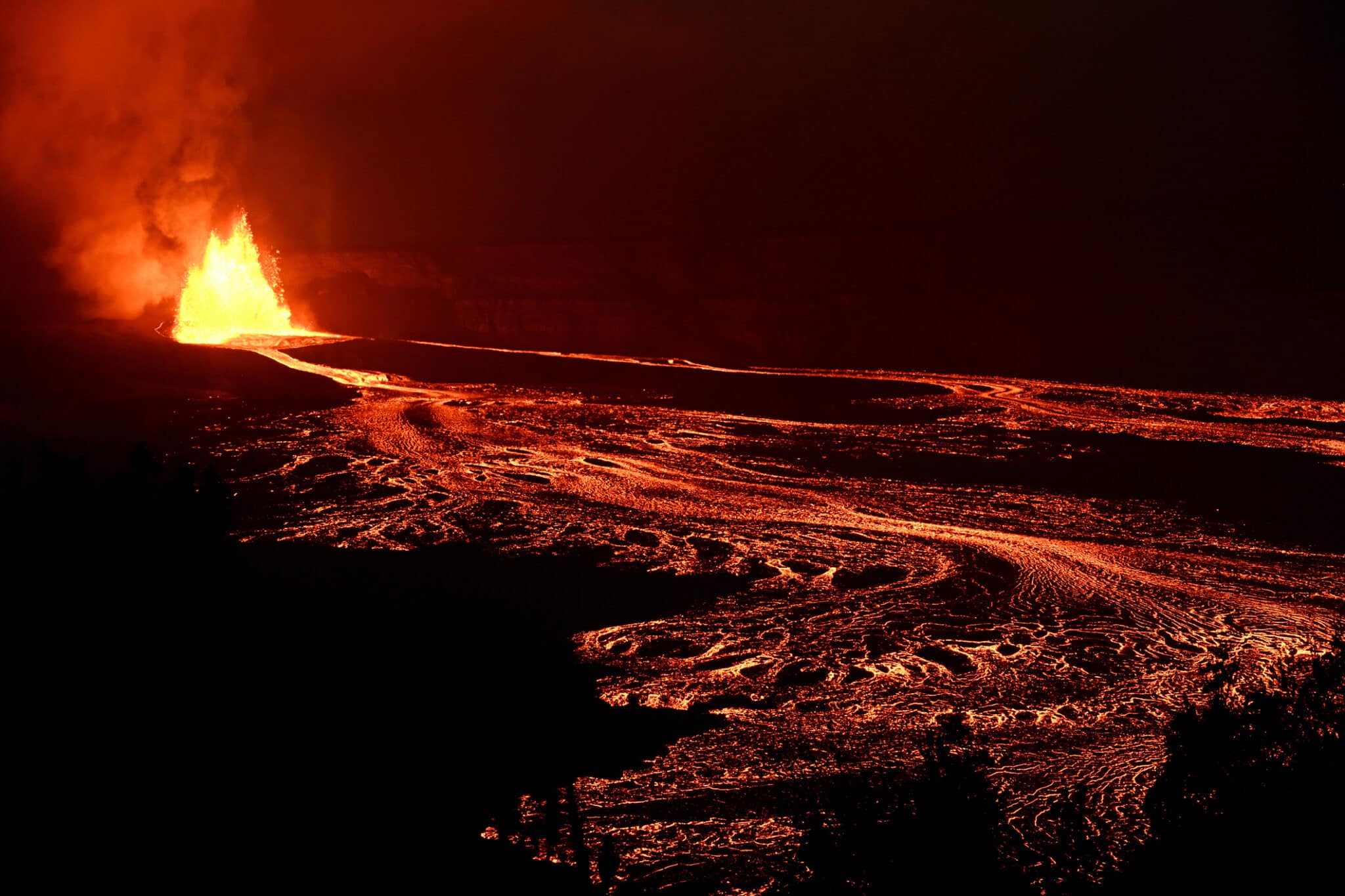
The volcanoes of the Massif Central are expected to wake up one day, but another question arises: what would this return to activity look like? The most probable scenario would involve primitive magma stored in the mantle. It would more likely manifest as effusive eruptions with the emission of fluid lava flows, most of which would spread across the surface of the volcanoes. Nevertheless, the possibility of explosive eruptions — pyroclastic flows and volcanic ejecta — cannot be ruled out.
