
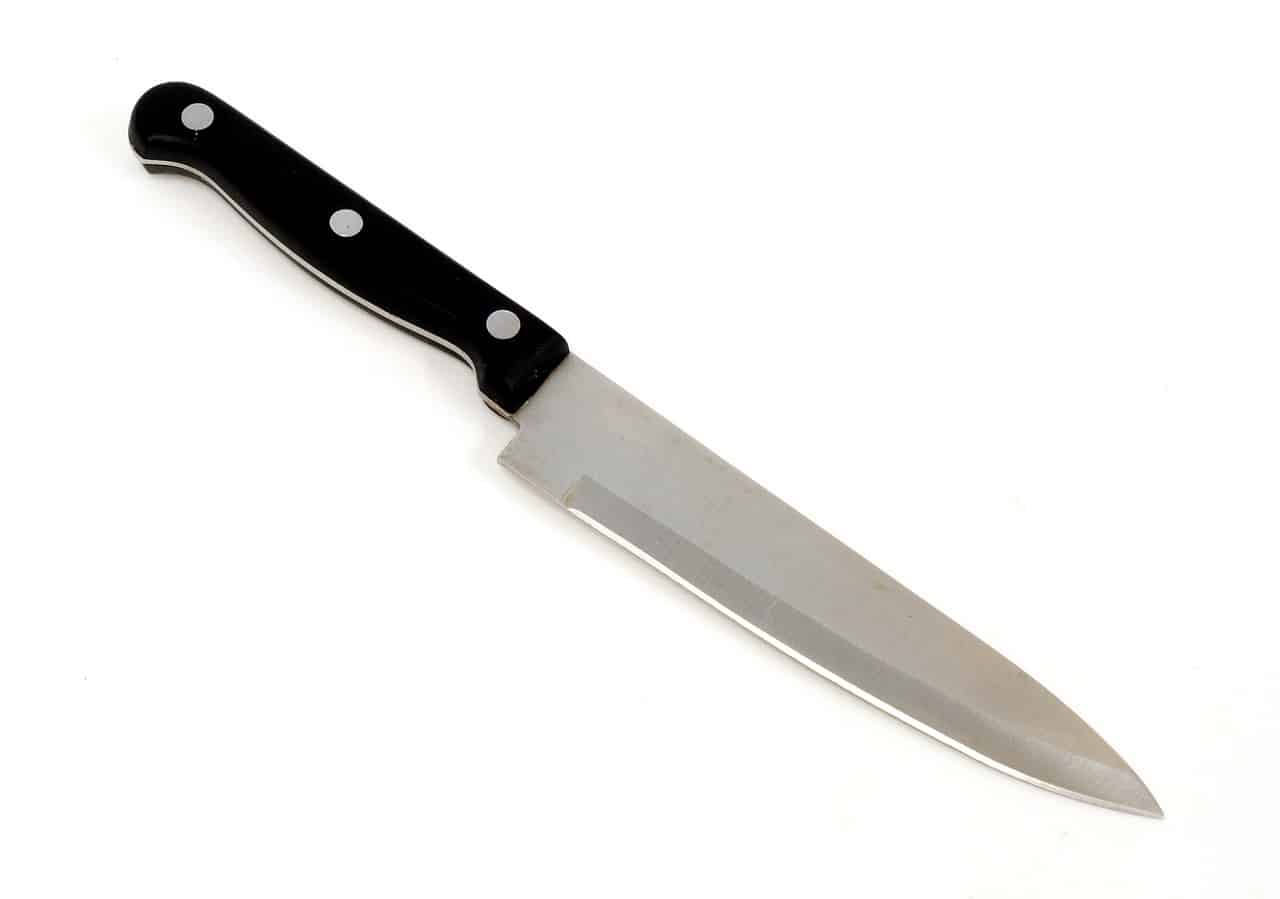
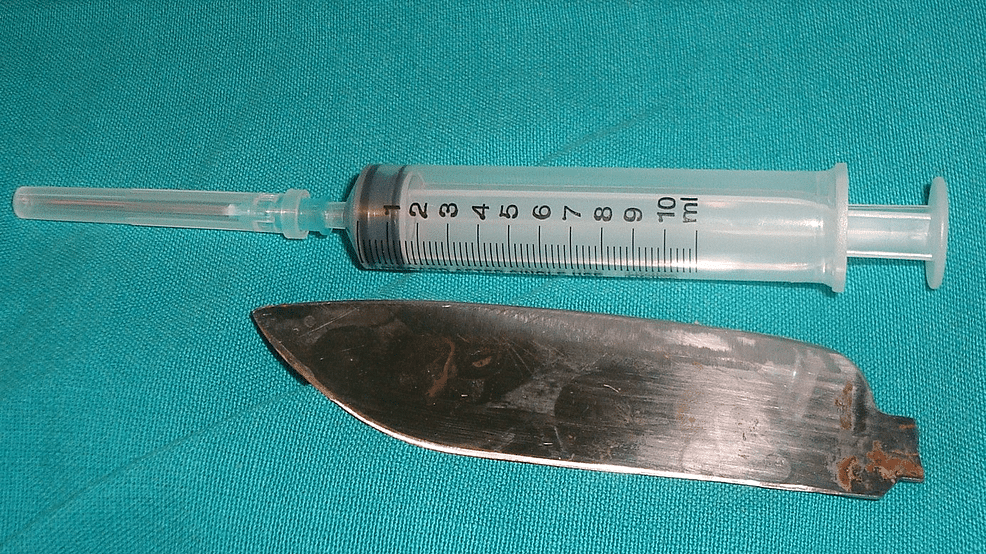
Several weeks ago in Nepal, a man was stabbed in the abdomen. The next day he learned that the nearly fifteen-centimeter blade remained inside his belly. He underwent surgery and recovered successfully. Fortunately, the sharp foreign object, freely floating within the abdominal cavity, had not caused any major visceral injury. Doctors, describing it as an “unusual and spectacular injury,” have just published a case report.
A Day with a Knife in the Belly
A 22-year-old man recently presented to the emergency department of a hospital in Nepal, complaining of a mild, persistent pain in the lower left quadrant for about 24 hours. The patient, who did not exhibit abdominal distension, nausea, vomiting, diarrhea, or constipation, remained alert. His abdominal examination revealed a sutured wound on the right side of the abdomen, just beneath the rib cage.
He soon disclosed that he had been stabbed the previous night with a knife during a brawl. He had subsequently been taken to a local medical center where the wound was sutured by a healthcare worker.
Since there was no direct visualization of a foreign body, no one suspected that the blade of the knife, about fifteen centimeters, remained inside. The patient himself was intoxicated at the time of the incident, and as a result, he was sent home.
A No Collateral Injury
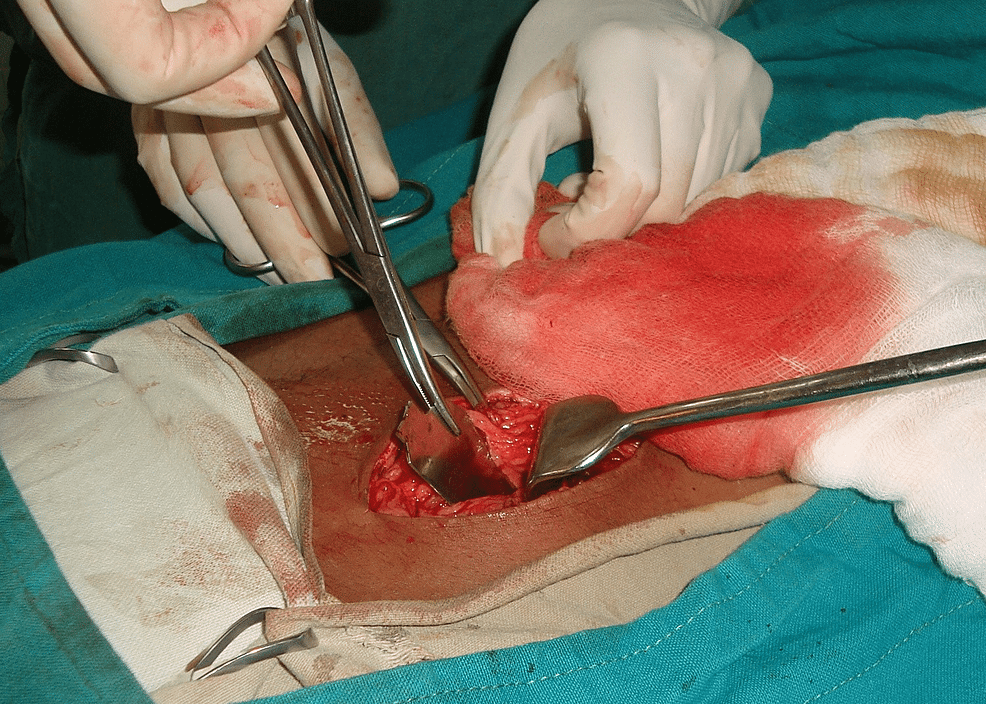
The man was eventually taken to the operating room. Fluoroscopy then revealed the blade’s location inside the abdominal cavity. A laparotomy subsequently allowed for its removal from the left iliac region.
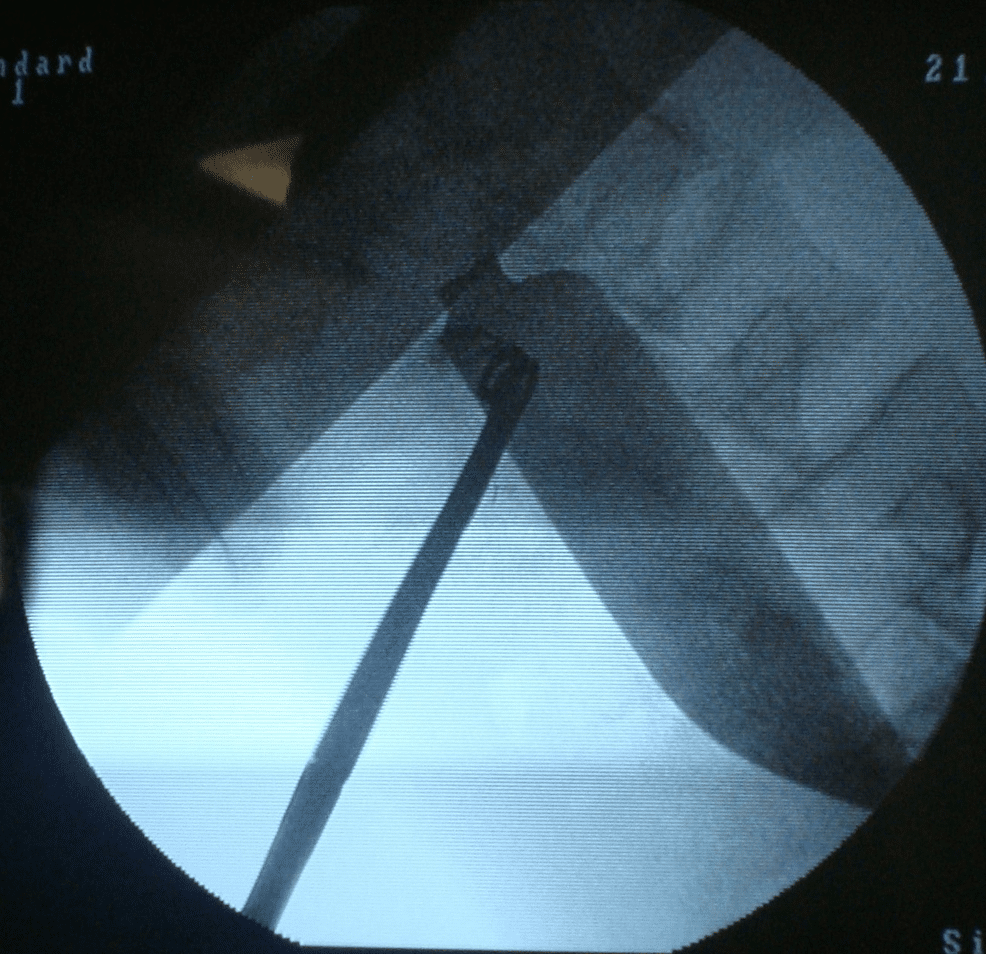
Fortunately, the doctors noted no major injury to nearby organs, apart from a superficial 1 cm laceration on the anterior surface of the liver. The blade had thus traveled from the right upper quadrant to the left iliac region without injuring any viscera. Nevertheless, the potential risk associated with a freely moving sharp object inside the abdominal cavity was substantial, with a high likelihood of further injuries to organs and vessels.
The patient eventually recovered without incident and was allowed to leave the hospital on postoperative day five. Upon discharge, he was advised to attend a postoperative follow-up one week later. However, he never appeared for it.
Takeaways
Stab wounds of the abdomen and other parts of the body are common injuries. However, a knife blade retained within the abdominal cavity is a rare phenomenon, the doctors note in the case report.
They also remind us that all knife-related injuries typically require careful clinical and radiological evaluation. They propose that an adequate wound exploration was not performed at the earlier center. The medical attendant had merely sutured the wound. Abdominal radiographs are, however, routinely included in the diagnostic workup in most centers.
When evaluating patients with knife-induced trauma, it is therefore important to pay particular attention to the fate of instruments, including their retention inside the body, the doctors remind. As this case study demonstrates, potentially dangerous foreign bodies can indeed remain within the abdominal cavity without causing significant symptoms.
