
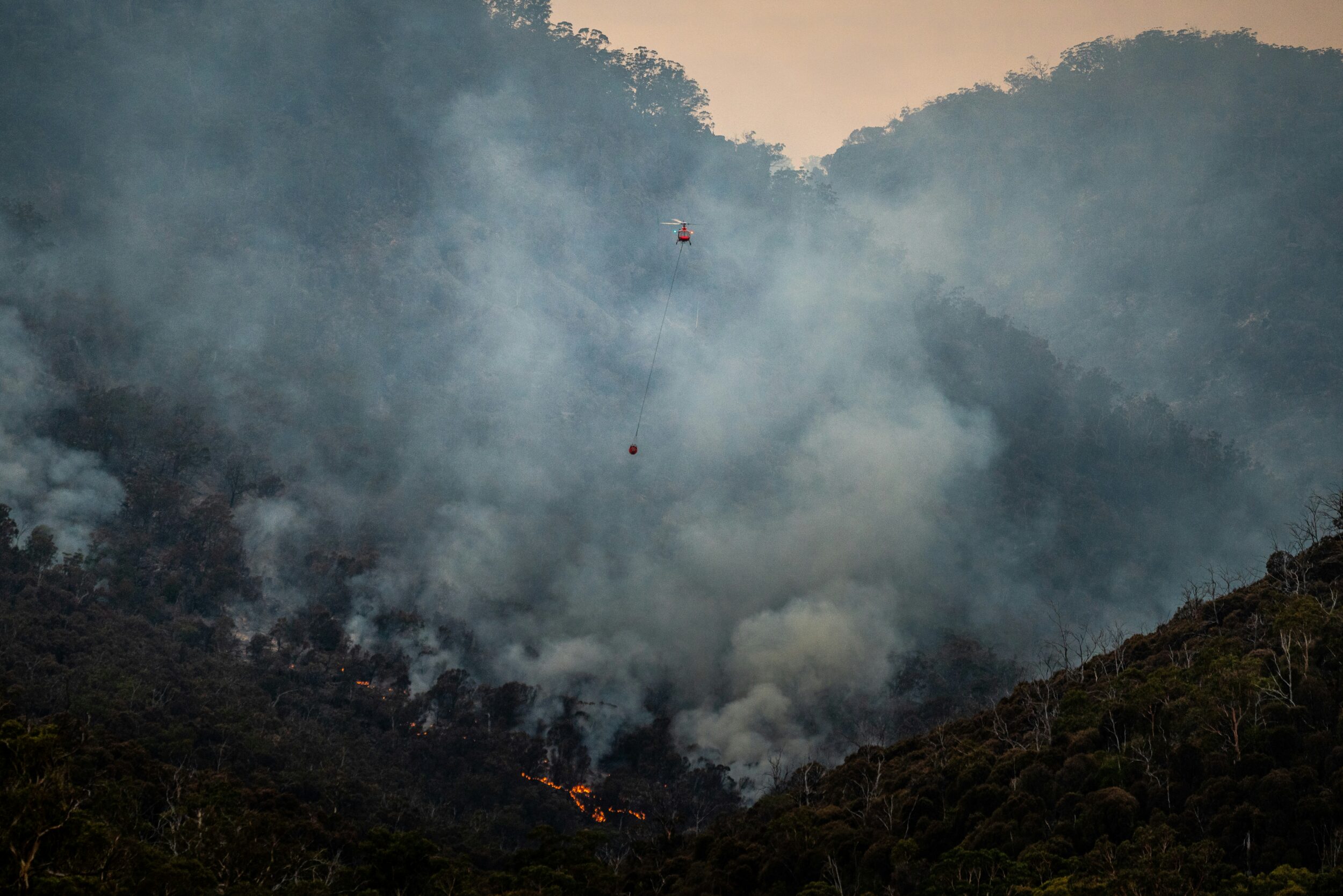
The IPCC has officially ruled out its most catastrophic climate scenario, deeming it unlikely now. This decision is quickly seized upon by climate skeptics as proof of failed science. It is precisely the opposite. Behind this withdrawal lies a subtler reality—and an urgency to act on climate that does not vanish.
What you will learn
- What the RCP 8.5 scenario is and why it has been abandoned
- Why this abandonment is partly good news, and not a total victory
- What the new climate scenarios concretely predict for the end of the century
An apocalyptic scenario ruled out — but not for the reasons you might think
For more than a decade, RCP 8.5 haunted climate reports. This scenario depicted a world where fossil-fuel exploitation accelerates without restraint through 2100, driving global warming to as much as 4.8°C above pre-industrial levels.
It has now been officially excluded from the IPCC’s next assessment report. Not because climate scientists erred, but because the world has—at least in part—shifted its trajectory.
Understanding the RCPs: the weather of the future in numbers
In 2011, climatologist Detlef van Vuuren and his team developed a framework of scenarios called representative concentration pathways, the RCPs. Their logic is straightforward: depending on how much greenhouse gas is accumulated in the atmosphere by 2100, how much extra heat will be trapped per square meter?
Four levels were defined, ranging from 2.6 to 8.5 watts per square meter. The RCP 8.5 represented the absolute ceiling—not the most probable scenario, but the worst-case one imaginable.
Around 2016–2017, researchers enriched these models by incorporating socioeconomic trajectories, the SSPs, subsequently used by the IPCC in its 2021 report. The SSP5-8.5 combined rapid economic growth with a heavy reliance on fossil fuels.
Why this scenario became improbable
Fifteen years after its creation, van Vuuren himself, along with dozens of international climate scientists, co-authored a paper stating that SSP5-8.5 no longer reflects a credible trajectory.
The reason is concrete: the massive rise of renewable energy. Solar, wind, electric vehicles, and batteries—the dramatic drop in the cost of clean energy—has significantly bent the curve of future emissions.
A globally sustained expansion of fossil fuels at the pace envisioned in 2011 is now structurally unlikely.
What climate skeptics do with this decision
The exclusion of RCP 8.5 was immediately leveraged by climate skeptics—Donald Trump among them—as evidence that climate change was a manufactured scientific issue.
Climate scientist Andrew King, from the University of Melbourne, responds plainly: this withdrawal is precisely proof that climate policies have had a real impact. Dismissing a scenario that has become unlikely is an example of rigorous science—not a correction to it.
A real danger that does not disappear
Abandoning the worst-case scenario does not mean the threat has vanished. The new high-end models still project warming up to about 3.5°C by 2100—assuming the world does little or nothing to curb emissions in the second half of the century.
A 3.5°C warming remains catastrophic. The current trajectory of climate policies keeps global emissions relatively flat—which is far from enough to meet the Paris Agreement goals.
The worst may have been avoided. The danger, however, remains.
The study appears in Geoscientific Model Development.
Sources: GMD – The Scenario Model Intercomparison Project for CMIP7 (ScenarioMIP-CMIP7) (gmd.copernicus.org) | Explainer: The CMIP7 emissions scenarios – and how they explore future climate change (carbonbrief.org)
Article prepared with the help of AI · Our method
