
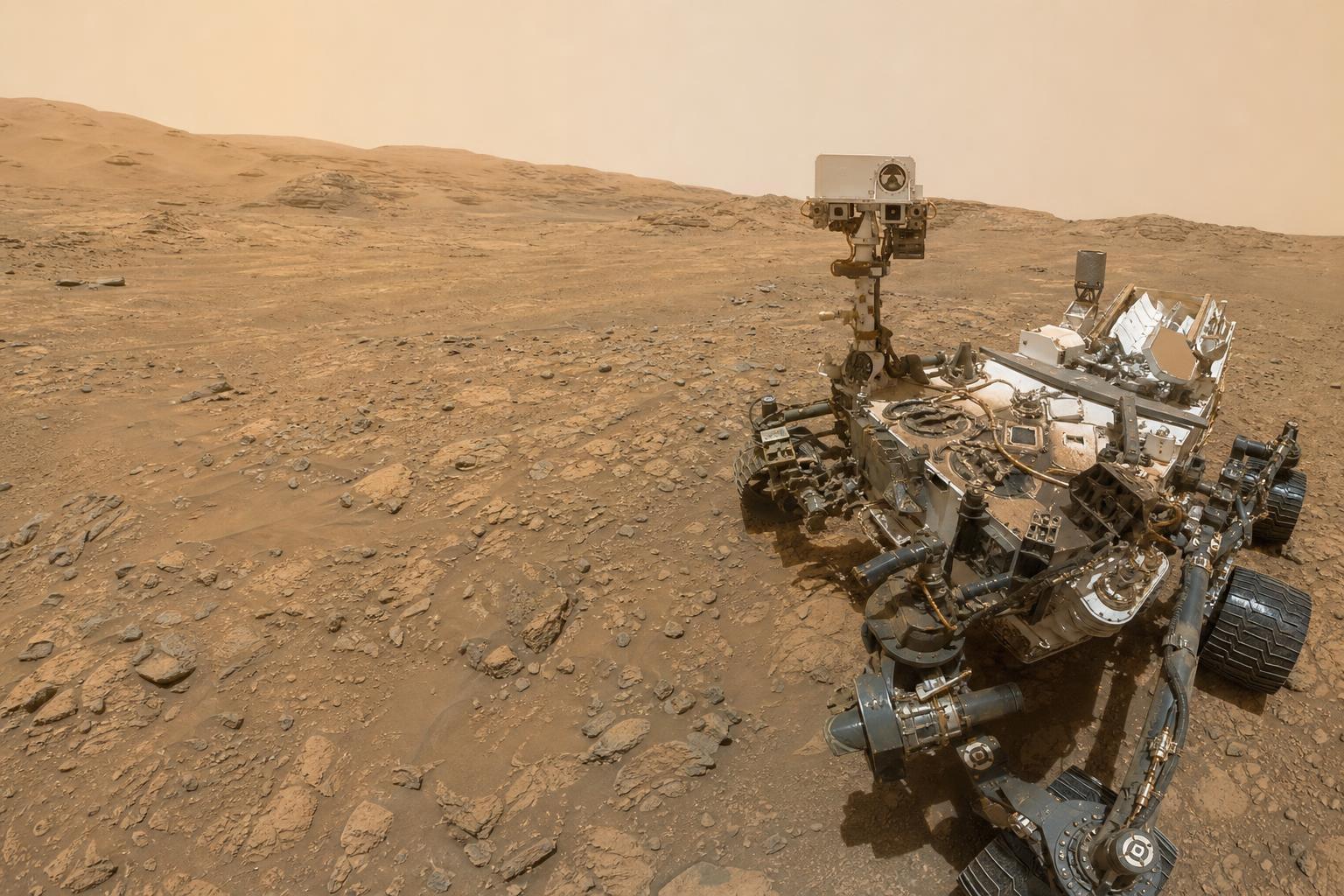
From a distance, the planet shines a rusty beacon in the night, but step closer and the palette softens to honeyed tones. Rover panoramas don’t splash neon scarlet; they whisper warmth, like sand kissed by late-afternoon light. The soil looks tan, the rocks golden, the sky a dusty amber that shifts with each breath of wind. Astronomers long called it red, yet the ground truth is more subtle than the nickname suggests.
What our eyes really see from afar
Telescopes catch scattered sunlight filtered through a planet-wide haze of iron-rich dust. That haze amplifies reds, muting blues, and paints a global albedo that seems uniform from Earth. From millions of miles, extremes blur, and “red” becomes a tidy shorthand for a wildly varied landscape.
Why the surface skews tan up close
Ground-level images tell a different story: fine-grained oxides coat rocks in a thin, powdery film. Basalt beneath is often gray, but the dust adds a caramel wash that reads as butterscotch to human eyes. “Color is context,” as planetary photographers like to say, and context on Mars is drifting, electrostatically clingy dust.
Dust, light, and the quiet physics of hue
Iron oxides are efficient absorbers of blue and reflectors of longer-wavelength light, so surfaces inherit a soft brown cast. At midday, sunlight filters through a suspended veil of micron-size particles, warming the scene like a permanent golden hour. When winds freshen, that veil thickens, and everything looks slightly more sepia than the day before.
“True color,” “natural color,” and the camera’s choices
Rover cameras chase fidelity with calibration targets and careful processing. Engineers publish “natural color” frames that mimic what a human would likely see, alongside “white-balanced” versions that remove reddish sky tint to reveal rock diversity. The second set can look startlingly beige, because it neutralizes the atmospheric filter that otherwise warms the scene.
Small planet, many palettes
Not all terrains wear the same coat. Dark basaltic dunes appear charcoal; hematite-bearing patches glint maroon; sulfate-rich outcrops turn pale and chalky. The hue we call butterscotch is the broad average, a first-impression color that dust and daylight constantly negotiate.
The sky plays its part
Mars has a faint, dusty atmosphere, and that dust gives it a yellow-brown dome under high sun. Paradoxically, sunsets drift to a delicate blue, because fine dust forward-scatters that color toward the observer. Ground warm, sky cool: a painter’s split-complement born of microphysics, not mystique.
Why our language lags behind the landscape
“Red” is memorable, marketable, and wonderfully simple. But simplicity can flatten detail, disguising how dynamic the planet’s colors truly are. Call it “butterscotch” and you invite texture, temperature, and a hint of edible analogy into the conversation.
What rovers actually confirm
Across missions, the consensus has held steady. Viking saw tan plains, Pathfinder echoed the tone, Spirit and Opportunity tromped through golden dust, and Curiosity plus Perseverance sealed the trend. Different cameras, different regions, same quietly warm ground truth in the aggregate.
A quick field guide to Martian color cues
- Thin dust on basalt makes rocks look tan; thicker coatings read more brown.
- Storm season deepens the atmosphere’s amber, muting distant contrasts.
- White-balanced images emphasize rock mineralogy, not the scene’s ambient mood.
- Shade cools colors toward gray, midday pushes them to honey and sand.
What this means for exploration
Color is data, not just decor. It hints at grain size, oxidation state, and weathering history, helping scientists map past water and current winds. When you see that steady tan, you’re really seeing a record of abrasion, transport, and time written in micron-thin layers.
A new mental picture to carry
Imagine kneeling beside a rover, boots planted in powder-fine soil, hands brushing a soft film from a rounded stone. The ground around you is gently golden, the horizon hazed with saffron, and the shadows draw cool blue lines across warm earth. As one mission engineer put it, “It isn’t loud red—it’s quiet sunlight on dust.”
Mars didn’t change; our vantage did, and our language is catching up. The planet remains dramatic, just in subtler, sand-toned ways that reward patient, up-close looking. Call it butterscotch if you like—an everyday word for a place that’s anything but ordinary.
