
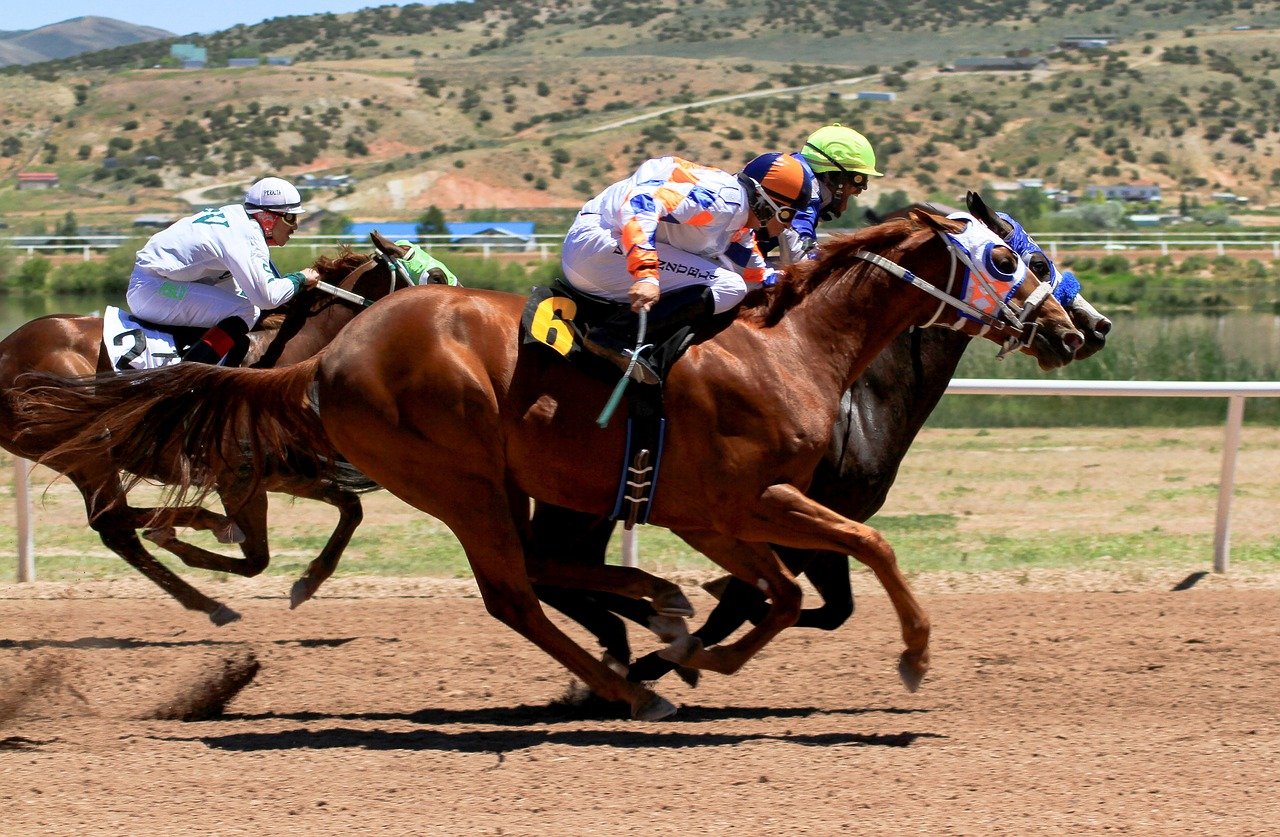
A study confirms that the whips administered to horses during horse racing have no effect on their ability to hold their line, nor on their speed. In other words, the use of these whips could be banned without affecting the integrity of the races.
The Melbourne Cup – the main horse racing competition in Australia – is just around the corner. The famous race takes place every year on the first Tuesday of November. This year will naturally be different due to the COVID-19 pandemic, but if there is one thing that will not change, it is the concern for the welfare of the horses, which seems to surface again each year.
The Whip Strikes
Everyone has already seen, whether directly on the racecourse or on television, these whip strikes inflicted by jockeys on the horses. Two main motivations are usually cited. The first: whips “encourage” the horses to run more straight, helping to reduce interference between the animals on the course. In this way, the risks of accidents that could threaten the physical integrity of the mounts and their rider are minimized.
Second justification: whip strikes “encourage” the horses to run faster. This is considered essential for the integrity of the race. In an industry worth more than a billion dollars that relies on betting, all stakeholders want to ensure that the favored horse has every chance to win.
The Pain Issue
However, earlier studies have indeed shown that whip blows are not painless for the animal.
As part of a study published in 2011 in the journal PLOS ONE, a team of researchers had indeed proven that a poorly placed whip strike often leads to inflammation, and thus persistent pain after the race. Moreover, the researchers had also concluded that so-called “anti-pain” whips were not effective. Another study, published this time in 2015, arrived at the same conclusions, after highlighting the highly innervated – and thus very sensitive – skin of horses.
Despite its lack of alignment with the principle of animal welfare, the use of the whip is today still allowed in certain equestrian sports, and notably in horse racing, for the two reasons cited above. Yet again, previous studies have highlighted that the whip has no impact on the horse’s line-holding and speed during the race. New work, published in the journal Animals, goes once again in the same direction.
No Impact on Direction, Safety or Speed
Since 1999, a form of whip-free racing has been practiced in Great Britain for apprentice jockeys. They are allowed to wear whips, but they can use them only in emergencies, such as to try to avoid a rubbing, for example. Note that this is not the only race to offer this approach. In Norway, whipless races have in fact been taking place for more than thirty years.
That said, after these English races, racing stewards produce reports detailing any unusual jockey behavior, the horses’ movements on the course, or interferences between animals. In the framework of this study, Australian researchers analyzed the reports from 126 races involving a total of 1178 participants (horses and jockeys). These included 67 whipless races conducted between January 2017 and December 2019, and thus 59 traditional races.
And once again, the conclusions are very clear. “Our work did not indicate any significant differences between the horses’ movements on the course, the interferences on the course, the frequency of incidents related to jockey behavior, or the average finishing times.” confirms Kirrilly Thompson, from the University of South Australia. “In simple terms, the use of the whip had no impact on direction, safety or speed. Contrary to long-standing beliefs, whipping racehorses simply does not work.”
These new results thus reinforce the idea that the use of whips in horse racing (even if blows are nowadays limited) could be banned without affecting the horses, the riders, or even the integrity of the races.
