
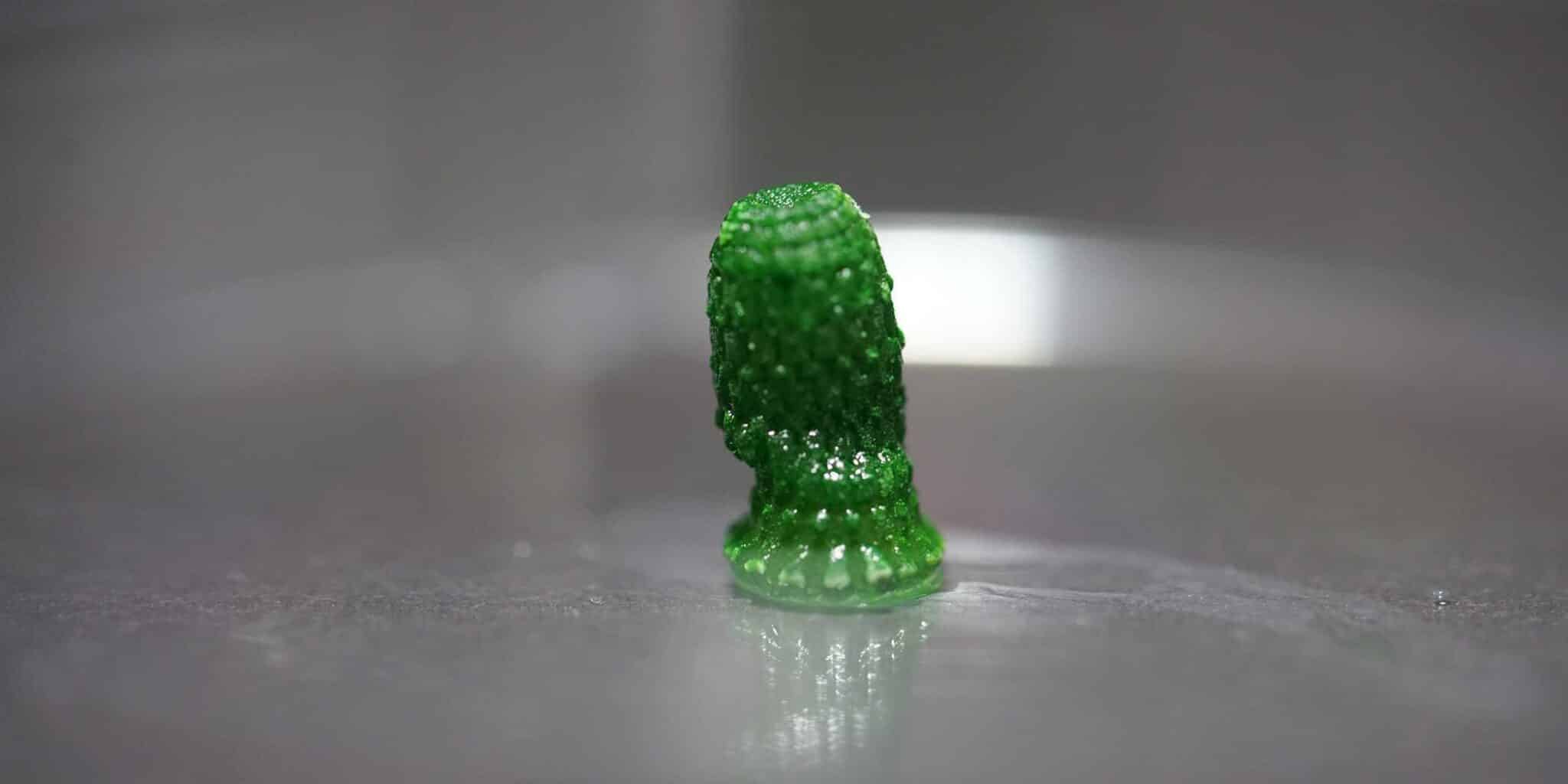
The fight against climate change requires bold innovations. Among them, Swiss researchers have taken a spectacular leap with the creation of a “living” material capable of capturing carbon dioxide directly from the atmosphere, thanks to a surprising natural ingredient: cyanobacteria, or blue-green algae. This material, the product of a collaboration at ETH Zurich, paves the way for buildings that can not only reinforce themselves but also actively contribute to the fight against global warming.
Cyanobacteria: Ancient Allies
Cyanobacteria are among the oldest life forms on Earth, present for over 3 billion years. Their strength lies in their ability to perform photosynthesis — a fascinating chemical process that converts sunlight, water, and carbon dioxide (CO₂) into oxygen and sugars. But what makes this new material so unique is that these blue-green algae do not merely store carbon in their biomass: they also transform it into solid minerals, akin to limestone.
This dual capability is essential. Indeed, biomass has its limits: the growth of cyanobacteria plateaus after roughly 30 days, curbing their long-term carbon storage potential. In contrast, mineralisation creates a solid internal scaffold for the material, strengthening it and sequestering carbon in a stable form over time.
A 3D-Printable Hydrogel, an Ideal Habitat
At the heart of this innovation lies a hydrogel, a highly water-rich, porous gel whose structure is specially designed to host the cyanobacteria. 3D printed, this gel ensures optimal penetration of light, water, and CO₂ to the algae, promoting their survival and photosynthetic activity.
This material, both flexible and robust, was successfully tested over an impressive 400 days in a row. During this period, it sequestered about 26 milligrams of CO₂ per gram, in the form of mineral precipitates, a yield markedly higher than other biological carbon capture methods.
Towards Buildings That Breathe Carbon
Imagine a future where building façades are not merely passive but actively regulate the climate. This is precisely the researchers’ aim: to use this “living” material as an exterior coating for buildings, capable of directly absorbing CO₂ from the air.
During a recent architecture exhibition in Venice, scientists presented trunk-shaped prototypes, each able to absorb up to 18 kilograms of CO₂ per year — the equivalent of a 20-year-old pine tree. This absorption capacity, coupled with the increasing mechanical strength afforded by mineralisation, makes this material a promising option for sustainable construction.
A Promising Future Thanks to Biotechnology
Nature isn’t the sole source of inspiration. Researchers also envisage further boosting the material’s performance through genetic modification of cyanobacteria. By increasing their photosynthetic capacity, it would be possible to accelerate carbon capture and maximise the material’s efficiency.
Moreover, although the study used artificial seawater to supply the necessary nutrients, the next step will involve understanding how to integrate these nutrients into the material when it is exposed to real-world conditions, for instance on the façade of a building.
An Eco-friendly and Energy-Efficient Solution
This living material stands out for its low environmental impact. Unlike industrial carbon capture methods, often energy-intensive, this approach relies on a natural process with minimal consumption. Photosynthesis operates using sunlight, making this technology not only innovative but also environmentally friendly.
Mark Tibbitt, a co-author of the study, thus emphasizes that this material can complement existing carbon sequestration strategies by capturing CO₂ in a natural and sustainable manner.
In Conclusion
This Swiss innovation brilliantly illustrates how the convergence of biology, advanced materials, and engineering can offer tangible solutions to the climate challenge. By integrating living, photosynthesising organisms into construction materials, it becomes possible to envision a future in which our cities actively participate in reducing atmospheric CO₂.
As climate change demands urgent action, this “living” material represents a promising avenue that deserves full attention. It combines resilience, durability, and ecological functionality, offering a new and ambitious vision for the architecture of the future.
The details of the study are published in the journal Nature Communications.
Sources : A building material that lives and stores carbon (ethz.ch) | Dual carbon sequestration with photosynthetic living materials (ncbi.nlm.nih.gov)
Article prepared with the help of AI · Our method
