
It began with a bargain and a bit of curiosity. A weekend browser at a Pennsylvania flea market spotted a shabby painting with a sturdy frame, handed over just four dollars, and carried it home with zero expectations. “Sometimes history doesn’t announce itself,” people like to say. In this case, it was whispering from behind the canvas.
A chance purchase, a hidden sheet
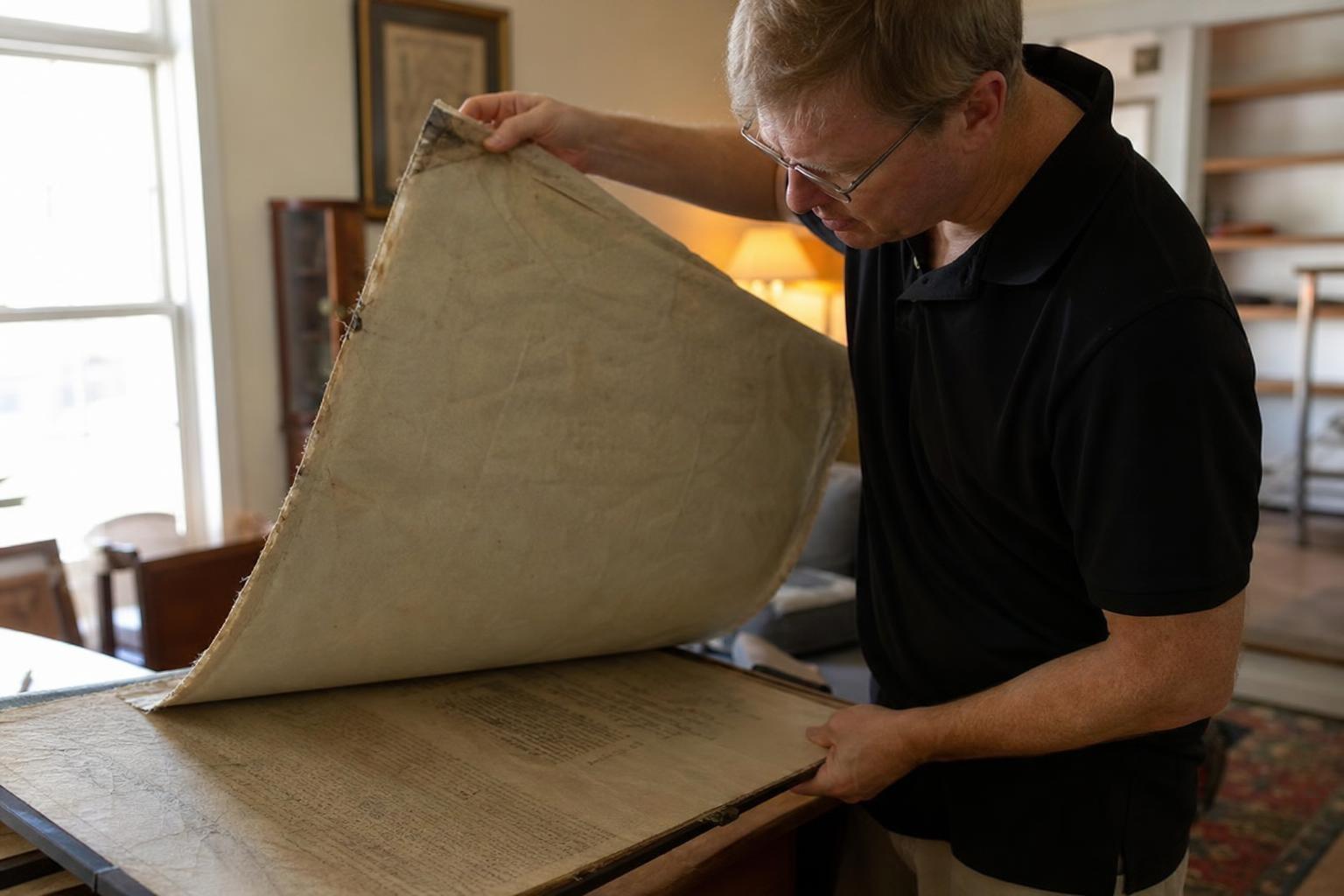
The buyer wasn’t after art; he wanted the frame. Back at home, he loosened the nails, lifted the brittle backing, and slid out the canvas. Tucked behind it was a folded sheet of old paper, creased into careful quarters.
At first glance it looked ordinary—yellowed, a bit stiff, letters pressed deep into the fibers. As the folds opened, the words appeared like a chorus: a bold title, a roster of states, and the thunder of a familiar creed. It was a contemporaneous printing of the nation’s founding declaration, dated to 1776.
“It looked like junk—until it wasn’t.”
A night in July, rushed into print
What he had found was a “Dunlap broadside,” named for John Dunlap, the Philadelphia printer tasked with producing the first published copies of the declaration on the night of July 4. Ink still wet, sheets were stacked, dried, and dispatched by riders into the waking new nation. Scholars estimate a few hundred were printed; only a couple dozen are known to survive.
Unlike the later stone engravings, these were single sheets, utilitarian and meant for speed—to post on tavern doors, to read aloud in public squares, to carry the news of political birth. They carry the tactile signs of haste: uneven inking, faint type impressions, and the authoritative design of a government in urgent motion.
Read aloud, the words still climb: “We hold these truths to be self-evident…” A sentence that feels both like a promise and a perpetual challenge.
From dusty frame to auction spotlight
Recognition came in waves. First, a suspicion: this wasn’t a cheap facsimile. Then, a specialist’s confirmation: original type, period paper, unmistakable handiwork of a revolutionary press. The unassuming flea market find became a front-page story.
What followed was a leap from attic quiet to auction-room roar. The sheet crossed a polished podium and changed hands for millions—proof that a nation’s memory can hide in plain sight. Years later, it would be publicly exhibited, drawing crowds who leaned close to see the crisp imprint of 1776 in real fiber and ink.
As one curator put it, “Documents like this collapse time—you stand inches from the moment itself.”
Why treasures end up behind old frames
To modern eyes it seems unlikely, but frames have long been convenient hiding places. An extra sheet becomes backing, a folded letter becomes stiffener, a printer’s discard becomes filler—all in service of a quick repair. In the 19th and early 20th centuries, few people used archival materials; a sturdy old paper could be pressed into service without a second thought.
There’s also the thrift of everyday life. People save what’s useful, not what’s precious—until a later generation realizes the value of what was tucked away. Fate loves a good coincidence, and frames provide just enough space to make one possible.
How to get lucky (on purpose) at flea markets
If you love a good hunt, you can shift the odds with careful habits. A single minute of extra attention can turn “maybe” into “you won’t believe this.”
- Check the back of old frames: look for multiple layers of paper, hand-cut nails, or unusual backing that might hide something folded.
What makes paper feel like power
There’s a reason people gasp at the real thing. Ink pressed into rag paper feels alive—letters have depth, edges have tooth, and the sheet breathes with the room. You’re not just reading words; you’re meeting their physical presence.
And there’s the scale of the risk it represents: a fragile broadside bearing lines that could have cost its signers everything. “Mutually we pledge to each other our Lives, our Fortunes, and our sacred Honor.” The sentence still tests us.
The small hinge of chance
It’s tempting to credit pure luck, but luck likes the curious. Someone looked twice at a ratty frame, opened it with careful hands, and followed a hunch down a path that kept widening. What began as four dollars and a shrug became a restored voice from the first breath of a new republic.
The lesson isn’t just “buy more junk.” It’s this: treat ordinary things as if they might have extraordinary stories. Listen for the quiet scratch of type in old paper, for creases that open like a folded map. Every market table, every thrift aisle, every attic box—they’re all rooms where the past is still waiting to be found.
