
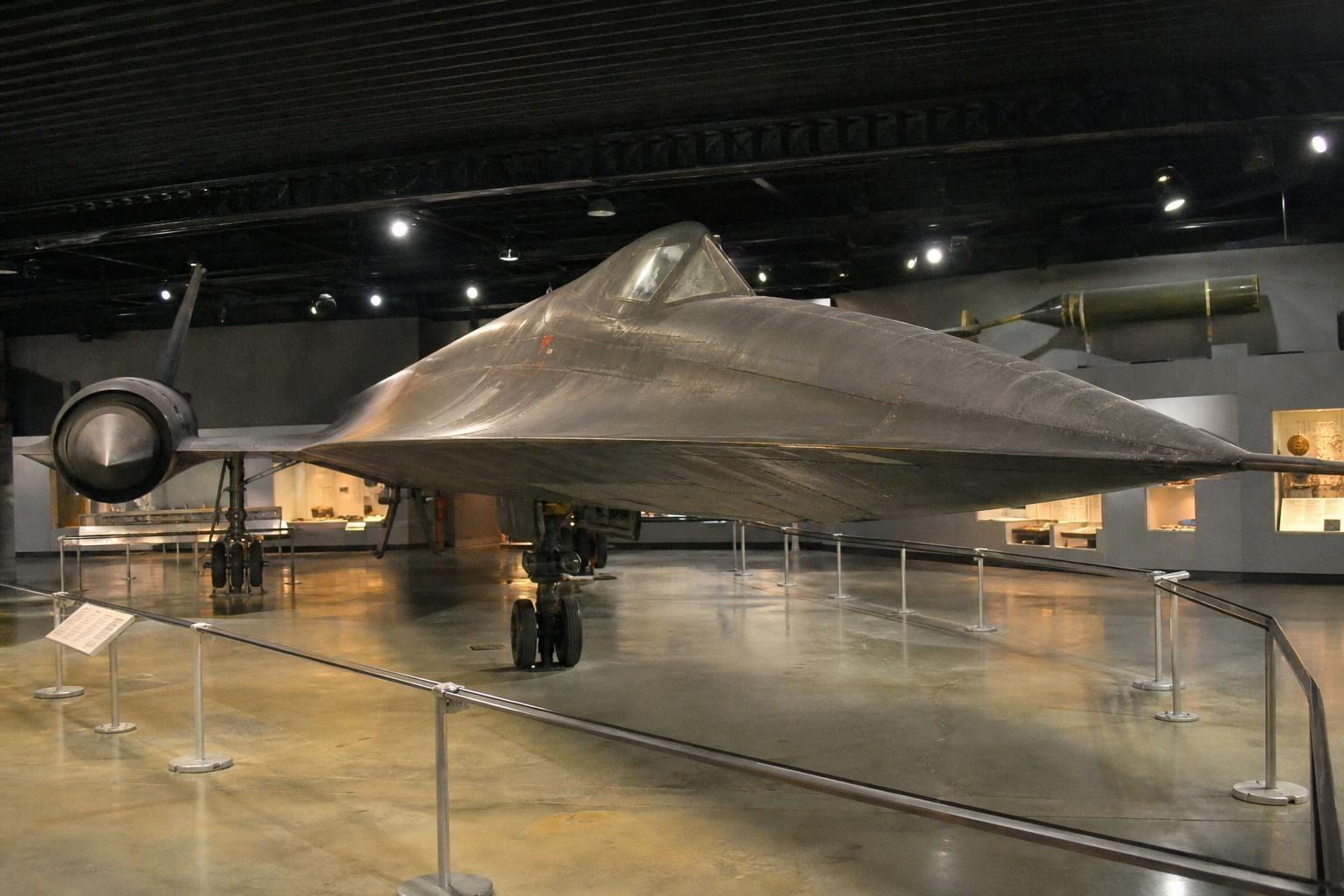
It began as a dare to physics and a promise to strategy. In the early Cold War, American planners chased a bomber so fast and so high that no interceptor could touch it. Out of that ambition came a gleaming, white, delta-winged giant that could cruise at Mach 3 and skim the edge of space. Only two were ever built—and fate was merciless to one.
The Valkyrie’s audacious brief
The airplane carried a mythic name and an even bolder mission. Designed to outrun defenses at 70,000 feet, it relied on speed as armor and altitude as stealth. Its six GE YJ93 turbojets poured out astonishing thrust, while folding wingtips and “compression lift” wrung extra efficiency from supersonic airflow.
Engineers wrapped the airframe in stainless-steel honeycomb panels, bonded in giant furnaces so it could survive the heat of sustained Mach 3. It wore white paint not for style but to reflect thermal energy. Even on the ramp, the thing looked like a weapon designed by light and geometry.
“Speed was the shield,” people said, “and the sky the pathway.”
Strategy raced ahead—and then turned
By the mid-1960s, the world shifted under the Valkyrie’s wings. Surface-to-air missiles matured, and the logic of high, straight runs lost its edge. Intercontinental ballistic missiles arrived, delivering deterrence without crossing borders at all. The bomber’s role bent toward low-level penetration, where terrain masked radar—and where the giant supersonic delta was least at home.
So the dream of fleets gave way to two prototypes. What began as a strategic spear became a flying laboratory, gathering data for materials, aerodynamics, and high-Mach operations.
June 1966: a photo shoot turns tragic
The second aircraft, the better of the pair, died on a bright morning above California. The formation was a public-relations flight—a clutch of GE-powered aircraft, arrayed for a celebratory photo. One F-104 drifted into the Valkyrie’s wake, snapped into the wing, and sheared off its tails. The big bomber rolled, inverted, and fell in a terrible, slow arc.
Two men were lost; one pilot survived, injured but alive. The images—still, fragmented, and searing—etched themselves into aviation memory. “A fraction of a second,” a witness recalled, “and the sky simply changed.”
What made it singular
Even pared to two airframes, the program produced breakthroughs that echoed through later designs. The airplane was not just fast; it was a long-duration, Mach 3 cruiser, a very different beast from dash-capable fighters. Its giant delta and drooping tips worked in concert to trap pressure under the wing, turning shock into lift.
Key facets that set it apart:
- Stainless-steel honeycomb structure for sustained heat, with white thermal coating, six turbojets fed by vast variable-geometry inlets, and a high-Mach systems suite that mapped the boundaries of flight at 70,000-plus feet.
“Mach 3 isn’t a number,” test crews liked to say. “It’s a climate.”
The survivor in Ohio
The remaining airplane retired to the National Museum of the United States Air Force, at Wright-Patterson Air Force Base, near Dayton. There it rests among the great machines of flight—sleek, monumental, and impossibly clean. Walk around the nose and your sense of scale judders: the landing gear like architecture, the intakes like sculpted canyons.
Stand beneath it and you hear a quiet truth in your own head: some aircraft are answers; others are questions asked so boldly they change what answers are even possible.
Why it ended—and why it matters
The bomber’s strategic window closed quickly, yet its technical legacy endured. Materials joined in blazing ovens, variable inlets that sip and gulp with precision, flight-control habits learned at the edge of envelopes—these fed later high-speed programs. It proved that sustained Mach 3 cruise in a large, piloted aircraft was not a fantasy, but a solvable engineering problem.
It also became a case study in how strategy outruns hardware. Money, mission, and moment must align; when they don’t, even a masterpiece can end up as a museum monument.
The resonance of white heat
Look close at the remaining airframe and you can read the story in its skin: the expansion joints, the panel lines, the careful compromises of heat, drag, and structure. It is less a relic than a preserved argument—for daring, for iteration, for learning at full throttle.
“Some machines are built to last,” a visitor might say. “This one was built to reach.” And it did, even if only two ever took to the sky, one lost to a split-second vortex, the other now suspended in quiet Ohio light—a testament to how far, and how fast, human intent can fly.
