
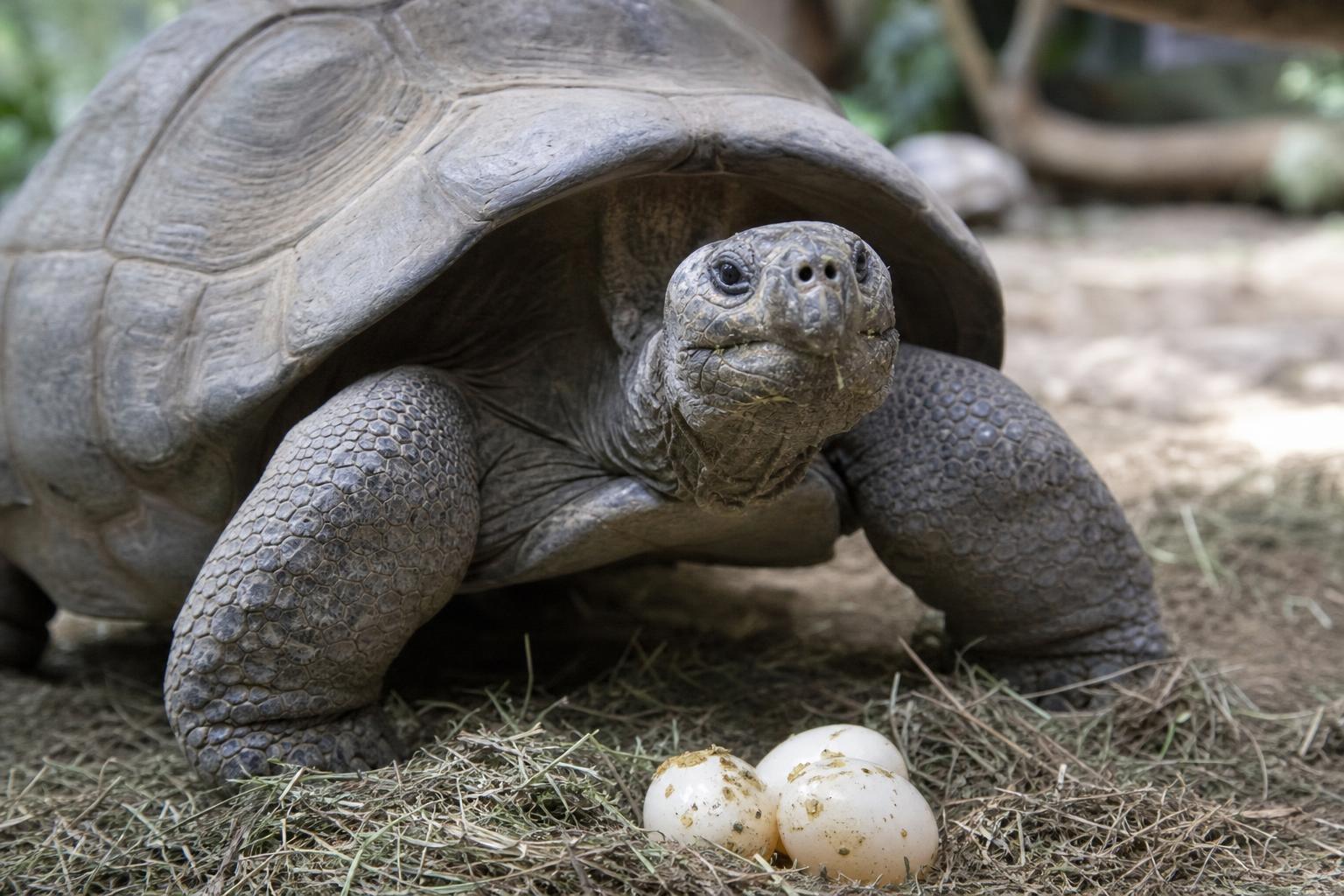
A hush fell over the Reptile and Amphibian House as keepers realized something quietly extraordinary had happened. After decades of slow, sun-warmed days, a venerable shelled resident finally surprised everyone: he’d become a first-time dad. “Some stories just ripen slowly,” a Houston Zoo keeper said with a grin, “and this one is worth the wait.”
A Late Bloom for a Long Life
In the world of tortoises, time moves with deliberate grace, and milestones can arrive astonishingly late. The Houston Zoo’s elderly male—an endangered radiated tortoise—logged nearly nine decades before his first set of offspring appeared, a milestone that felt both improbable and somehow inevitable. Radiated tortoises can live well past a century, so a first-time father at this age is unusual but not unheard-of.
His longtime companion, a mature female in her early fifties, laid the clutch that would change the narrative. Staff had hoped for years, tending to diet, habitat, and health with obsessive care, but nature works on its own careful clock.
The Night the Eggs Were Spotted
The breakthrough came at closing time, when a keeper’s routine sweep turned into a joyful alert. The eggs—small, pale, and perfectly ovoid—were discovered beneath a thin layer of substrate, positioned with quiet, ancient instinct. Because Houston’s soil isn’t ideal for incubating this species’ eggs, the team gently transferred them to a temperature- and humidity-controlled nursery.
“We acted quickly, but with precision,” said a Houston Zoo herpetology manager. “With endangered tortoises, every egg is a chance, and every chance deserves meticulous care.”
Why This Birth Matters
Radiated tortoises are critically endangered in their native Madagascar, threatened by habitat loss and illegal trade. That makes each successful hatching a small but profound victory for genetic diversity and long-term resilience. “Every hatchling is a vote for survival,” another keeper explained, “and a reminder that conservation is a marathon, not a sprint.”
The zoo participates in accredited breeding efforts that match bloodlines and temperaments, strengthening the broader assurance population. These babies carry the promise that careful husbandry can bend the arc of decline toward measured recovery.
Meet the Tiny Newcomers
The hatchlings arrived the size of macarons, with geometric shells already tracing delicate yellow bursts on dark scutes. Staff gave them whimsical names—Dill, Gherkin, and Jalapeño—a nod to a long-standing inside joke and the family’s flavorful story. For now, they’re kept behind the scenes, basking under warm lights, nibbling carefully curated greens and calcium-rich boosts for sturdy growth.
Their days are a choreography of short explorations, long rests, and supervised feedings. Each measured gain on the scale feels like a triumph, each unhurried step a vote for the future’s quiet tenacity.
Patience, Care, and a Pinch of Luck
This moment didn’t arrive by accident; it was coaxed along by patience, husbandry, and a spark of serendipity. Tortoise breeding hinges on subtle environmental cues—a narrow band of temperature, light, and seasonal rhythm—and on expert teams who notice tiny changes before they become missed opportunities.
- Key ingredients behind the scenes: carefully balanced nutrition, well-matched adult companions, precise incubation controls, and keepers with exceptional observational habits.
What Visitors Can Do
Conservation isn’t only the work of keepers behind glass; it’s a shared project that stretches from the zoo to living rooms and classrooms. Visitors can support species survival through responsible donations, repeat visits that fund daily care, and amplifying science-based stories that foster empathy and awareness.
They can also reject the illegal pet trade, ask where wildlife products come from, and choose ecotourism or community projects that protect habitats at the source. Small choices, repeated often, become the gravity that pulls a species back from the edge.
A Rare First for an Old Soul
Seeing a tortoise begin fatherhood so late in life reframes how we think about time. It suggests that care, constancy, and a willingness to wait can meet nature halfway, even when the odds feel stubborn. “He’s proof that you never age out of impact,” a keeper joked, adjusting a heat lamp with practiced hands.
There’s poetry in these hatchlings’ diminutive footprints, tracking arcs across warm substrate while their parents bask with ageless patience. The elder’s new role isn’t loud or showy; it’s steady, understated, and as enduring as the shell he’s carried for a lifetime.
Looking Ahead
In the coming months, the youngsters will graduate from fragile newcomers to sturdy juveniles, their shells thickening like tiny shields against chance. Health checks, weigh-ins, and incremental habitat expansions will follow, each stage mapped by staff who know when to hold back and when to gently nudge.
The father, meanwhile, will do what tortoises do best: eat, bask, roam, and embody a kind of deliberate wisdom we too often rush past. In a world that measures progress in clicks and minutes, his family’s story measures it in seasons, sunlight, and the soft tick of ancient, steadfast time.
