
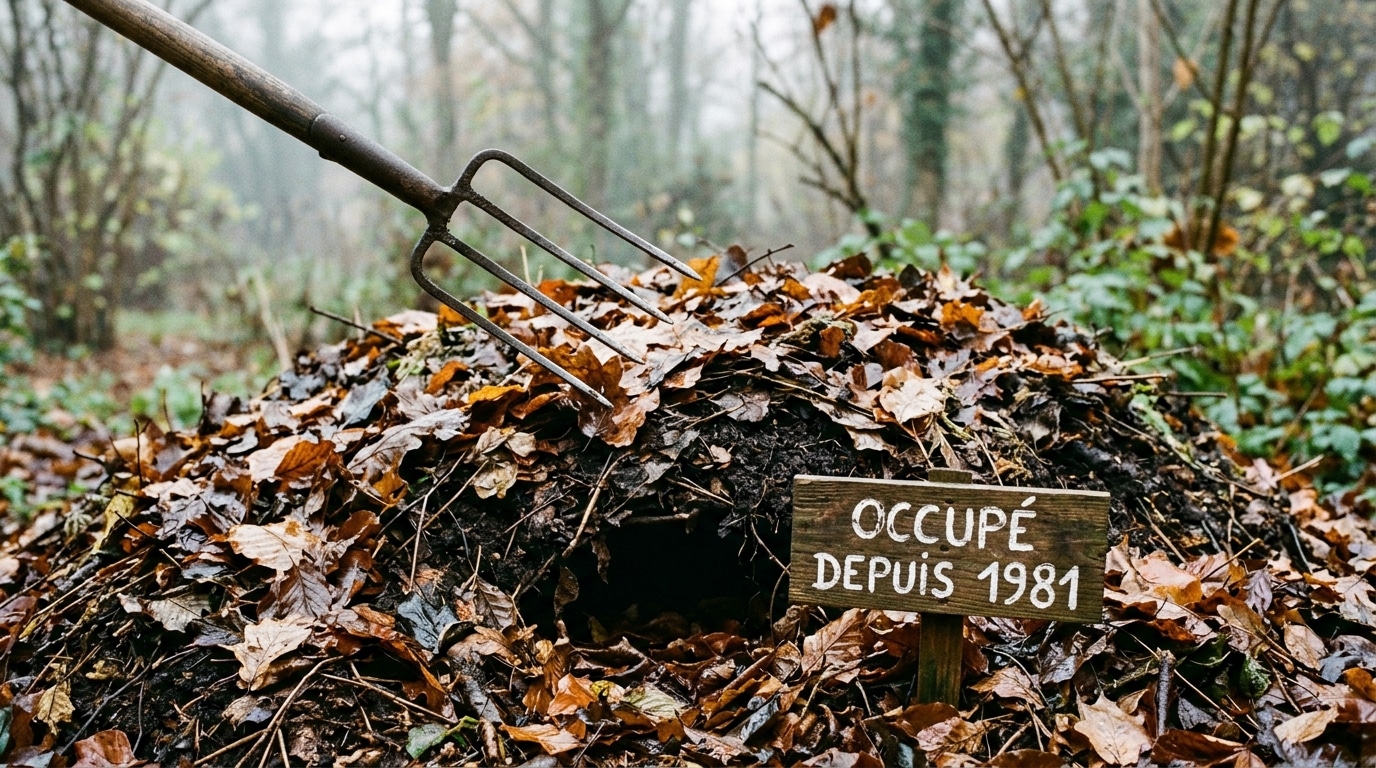
The careful gesture of a gardener can turn into a silent tragedy. Each autumn, thousands head out with their pitchfork to aerate their compost before winter, convinced they are doing right. The pile puffs, it smells of damp earth, and it seems to shelter only worms and a few woodlice. Yet, beneath this layer of dead leaves and decaying peels, a small occupant may already have settled in for several months. It does not move, makes no sound, and that is precisely the problem. This deceptive silence hides a reality that many still ignore, even though it concerns a species protected for decades. Before driving any tool into the compost pile, there is a question to ask, and the answer could well change your gardening habits.
- The European hedgehog hibernates from November to March in compost piles, slipping into a torpor that makes it unable to flee or defend itself.
- The hedgehog has been a protected species since a 1981 decree, reinforced in 2007, prohibiting its destruction or capture.
- To protect it, aerate the compost before November or after March, visually inspect the pile before intervening, and favor surface work.
- The compost, a winter refuge for the European hedgehog
- Why turning the pile in November puts the animal in danger
- What the law says since the 1981 protection decree
- The right steps to maintain your compost without harming wildlife
The compost, a winter refuge for the European hedgehog
The European hedgehog has a surprisingly keen sense of real estate when it comes to choosing its winter quarters. And the compost checks all the boxes: heat generated by the fermentation of organic matter, natural insulation thanks to leaves and stems, and guaranteed quiet in a corner of the garden that is often neglected. It’s a five‑star cocoon for an animal that must endure several months without food.
For hedgehogs, hibernation is real, and this period generally runs from November to March. During this phase, its metabolism slows dramatically: body temperature drops, heart rate falls to a few beats per minute, and the animal enters a deep torpor. It becomes unable to flee at the slightest danger, unlike its usual behavior where it curls up and bristles its quills as soon as it feels threatened. A pile of compost thus represents a providential shelter, but also a risky bet if its owner turns it over without precautions.
Why turning the pile in November puts the animal in danger
Aeration of the compost is a common and quite recommended practice to promote decomposition and avoid unpleasant odors. The problem lies in timing. Turning the pile with a fork in the heart of autumn, at the exact moment when hedgehogs seek a refuge to hibernate, is like playing Russian roulette with local wildlife.
An animal plunged into its winter torpor does not perceive vibrations, nor the approach of a tool, nor even pain in the same way as when awake. It will not flee, will not curl up, and will show no defense. The fork, penetrating deep into the organic material to stir it, can literally pierce the animal without the gardener noticing until it is too late. This risk is not incidental: it concerns a species whose populations are already strained by hedgerow loss, pesticide use, and the increasing number of roads.
What the law says since the 1981 protection decree
The European hedgehog is not protected by chance. It has official status since a decree from 1981, which prohibits its destruction, capture, transport, or domestication. This foundational text was later strengthened by a decree published on April 23, 2007, which specifies and broadens the protection measures applicable to many species of ground-dwelling mammals, including the hedgehog.
Concretely, this protection means that it is forbidden to deliberately harm the animal, but it also implies a form of vigilance on the part of amateur gardeners. Accidentally injuring a hedgehog while turning the compost obviously isn’t intentional, but it illustrates the importance of understanding the biological cycle of this species to adapt gardening practices. The law thus promotes respectful cohabitation rather than punitive sanctions, with the aim first and foremost to preserve a useful and threatened species.
The right steps to maintain your compost without harming wildlife
Good news: it isn’t about renouncing compost maintenance altogether, but simply adjusting the calendar and methods. A few simple adjustments allow you to keep taking care of your pile while protecting the small wildlife that might have taken up residence.
- Prefer aerating the compost before November or after March, outside of the hibernation period
- Visually inspect the pile and listen before intervening, a sniff or a light movement may betray a presence
- Use a wide-toothed fork and work on the surface rather than deep during autumn and winter
- Set up a hedgehog-specific compost pile, separate from the regularly used compost bin, to offer them a stable shelter
- Leave a corner of the garden fallow with dead leaves and wood, a less disturbed alternative for hibernation
These steps require little extra effort, but they make a real difference for the survival of these small insect-eating mammals, valuable helpers of the natural garden since they feed on slugs, insects, and larvae that are harmful to crops.
Responsible gardening is not limited to the choice of fertilizers or the reduction of green waste. It also involves this discreet attention paid to the invisible inhabitants of the garden, those who sleep while we till the soil. A simple glance before sticking in the fork can be enough to prevent a tragedy and to preserve a valuable ally of the vegetable garden.
