
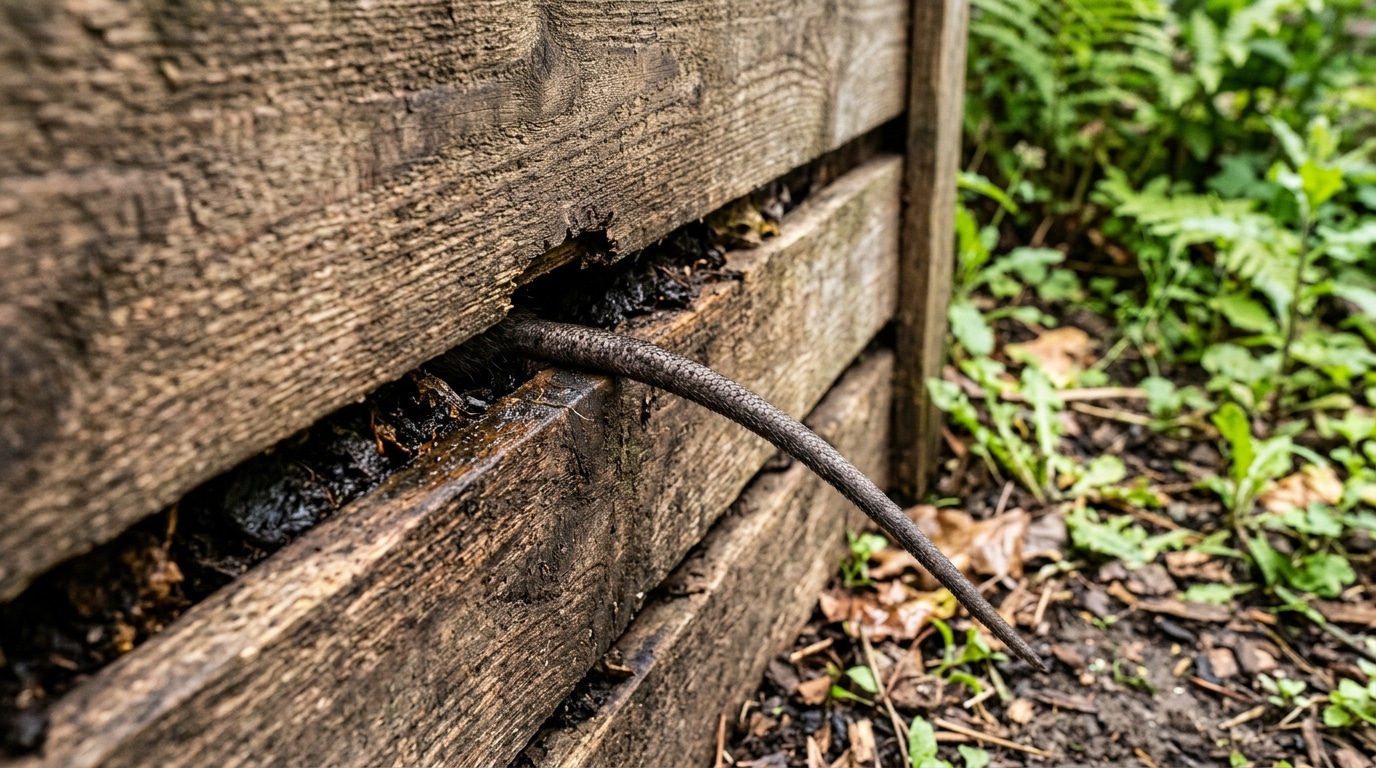
A leftover piece of meat, fish, or cheese: the instinct is often to toss it straight onto the compost heap, just like any other kitchen waste. Yet this seemingly harmless gesture can turn your garden corner into a real pantry for rodents. In less than a day, the odor spreads and attracts unwelcome visitors bent on settling in for good. A problem that many amateur gardeners discover too late, once the damage is done. Here’s why certain foods have absolutely no place in your compost bin, and how to avoid this trap that awaits all composting beginners.
- Leftovers of meat, fish or cheese release strong odors that attract rodents in less than a day.
- A healthy compost relies on a balance between green and brown materials, which animal waste disrupts.
- For an efficient and pest-free compost, it’s best to limit yourself to peels, coffee grounds, eggshells, and fallen leaves, while regularly aerating.
- Why Some Foods Don’t Belong in the Compost
- Meat, Fish, and Cheese: Foods That Attract Rats in Record Time
- Concrete Risks of a Compost Invaded by Pests
- The Right Practices for a Healthy, Rodent-Free Compost
Why Some Foods Don’t Belong in the Compost
Compost relies on a precise balance between “green” materials, rich in nitrogen, such as vegetable peels, and “brown” materials, rich in carbon, like fallen leaves or cardboard. This ratio allows microorganisms and decomposer insects to do their job without producing unpleasant odors. However, not all organic wastes react the same to this natural process. Some break down slowly, emit strong odors, and become true lures for the surrounding fauna.
This is precisely the case for products of animal origin. Unlike peels or coffee grounds, these foods release odors quickly as they decompose. A compost pile or bin is not designed to manage these wastes well under ordinary conditions, unless there are special, tightly closed and adapted devices.
Meat, Fish, and Cheese: Foods That Attract Rats in Record Time
If there were one type of waste to ban from your compost bin without discussion, this would be it: a leftover piece of meat, fish, or cheese. These foods emit an odor that is particularly attractive to rodents, which have an astonishingly keen sense of smell. They may not need more than a single day to locate the source and come to settle nearby.
The reason is simple: these animal proteins decompose differently from plant matter. They produce odorants that are far more intense. A rat or a mouse only needs to follow this olfactory trail to find an easy meal, without any effort of search. The compost becomes, against its will, a readily accessible and regular source of food.
Concrete Risks of a Compost Invaded by Pests
Once a rodent has located a reliable food source, it usually does more than make a single pass. It returns, explores the surroundings, and may end up settling there. What began as a simple act of domestic recycling thus becomes a much larger problem, potentially affecting the entire garden, or even the surroundings of the home.
Beyond the unpleasant presence of these animals, a pest-infested compost also loses its efficiency. The balance needed for proper decomposition is disrupted, odors intensify, and the natural process of transforming waste into fertile soil slows down. What could have been an environmentally virtuous effort ends up compromised by a seemingly ordinary oversight.
The Right Practices for a Healthy, Rodent-Free Compost
Fortunately, a few simple precautions are enough to prevent these annoyances. Domestic composting, whether in a heap or in a bin, should be reserved for plant-based waste and certain non-meat kitchen scraps. Fruit and vegetable peels, coffee grounds, eggshells, and fallen leaves form a safe and effective foundation.
- Avoid depositing meat, fish, or cheese, regardless of quantity
- Prefer a balanced mix between green and brown materials
- Aerate the compost regularly to promote healthy decomposition
- Watch for unusual odors, often a sign of imbalance
By adopting these simple habits, the compost remains what it should be: a valuable ally for reducing waste and enriching the garden, without becoming inadvertently a sky-high buffet for neighborhood rodents. A quick at-source sorting, and the problem hardly arises at all.
