
The early 1960s were an age of audacious ideas, when scientists and generals believed technology could reshape the planet. In that spirit, U.S. planners asked a startling question: could nuclear blasts become tools for civil engineering?
They called the concept “peaceful nuclear explosions,” a phrase that stitched optimism to the most fearsome device humans had ever made. The plan promised speed and colossal savings, with one internal slogan boiling it down to “bigger, faster, cheaper.”
The Cold War dream of moving mountains
Under the banner of Operation Plowshare, federal scientists explored ways to use nuclear devices to carve canals, cut mountain passes, and gouge instant harbors. The ambition wasn’t small; it was planetary, a project to draft the bomb into peacetime work.
Advocates argued that a single detonation could do what months of bulldozers and blasting could not match. Skeptics warned that “the dirt doesn’t stay put,” and neither would the fallout.
The Sedan shot: an experiment in earth-sculpting
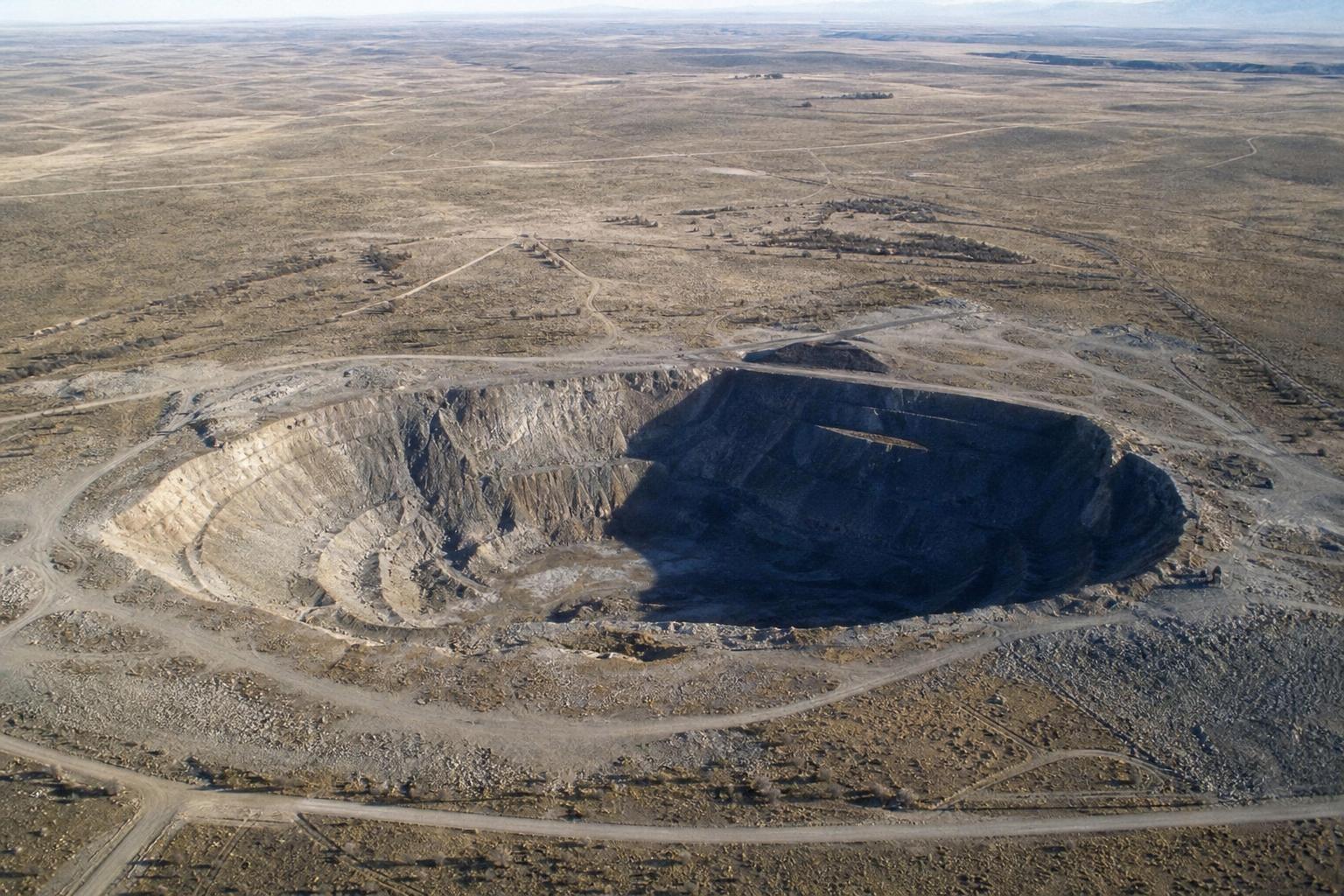
On July 6, 1962, the U.S. conducted the Sedan test, burying a 104‑kiloton device roughly 194 metres underground at the Nevada Test Site. The aim was brutally simple: prove that a nuclear blast could excavate at scale.
When the charge fired, the desert heaved, and a massive dome of earth rose before collapsing into a yawning crater. In a few seconds, the explosion displaced about 11 million tonnes of soil, an instant act of geology.
The crater that numbers can barely hold
The result became the largest man‑made crater in the United States, roughly 390 meters wide and about 100 meters deep. From the rim, the scene looked like “a bowl the size of a stadium,” scarred with blasted ridges and glassy, fused grains.
Engineers stood on the edge and said, “This is what earthmoving at nuclear scale looks like.” Even they seemed stunned by the raw force on display.
What the blast actually proved
Sedan offered three powerful lessons, which engineers and policymakers would wrestle with for years:
- The technique could move unfathomable volumes of earth at incredible speed.
- The blast geometry was partly predictable, yet riddled with stubborn unknowns.
- Radiological fallout turned promise into persistent risk, with downwind exposure a public‑health reality.
In the official telling, PNEs were a tool, not a weapon. In the real world, the fallout plume didn’t honor that distinction, drifting across distances that models had underestimated.
Harbors, canals, and the cost of optimism
Planners floated concepts for nuclear‑dug harbors, ship channels, and cuts through stubborn terrain from Alaska to the American Southwest. One proposal imagined a new seaport chiseled into the Arctic coast. Another mapped canal alignments where “excavation by blast” would leapfrog conventional dredging.
On paper, the math seemed enticing; in practice, the side effects were punishing. As one reviewer wrote, “You can’t separate the hole you want from the radioactivity you get.”
The fallout that reshaped the debate
Even as the Limited Test Ban Treaty pushed tests underground, Sedan showed that buried shots could still spread contamination. Dust rose, winds shifted, and worries traveled fast—from ranchlands to classrooms to congressional hearings.
Public patience thinned as “acceptable dose” collided with parental fear. What began as a showcase of ingenuity became a teachable moment in uncertainty.
Engineering vs. ecology
Cost‑benefit tables tried to balance time saved against clean‑up, monitoring, and reputational harm. But the earth remembers, and so do communities. Long after the cameras left, regulators tallied isotopes, and field teams logged hotspots in dust and sediments.
“Nature has a long memory,” one scientist noted, “and radiological ledgers always come due.”
From triumphal rhetoric to tempered judgment
By the mid‑1970s, the grand civil‑engineering vision had faded, undercut by environmental law, public opinion, and shifting priorities. The promise of nuclear digging gave way to the practicality of safer, slower methods.
Sedan remained, a monumental hole in the ground and a permanent footnote in policy debates. Tour buses would later idle at its rim, where guides described a blast that moved a mountain’s worth of earth—and moved public attitudes even more.
The legacy in the dust
Today, the site reads like a paradox: a triumph of controlled force, and a warning about what “control” really means. It is both a monument to problem‑solving ambition and a caution against oversimplifying nature.
“The bomb can dig a harbor,” one observer once quipped, “but the harbor keeps the bomb.” That stark tradeoff, etched in dirt and data, is the project’s most durable lesson—an echo from a desert crater that still speaks, long after the shockwave went silent.
