
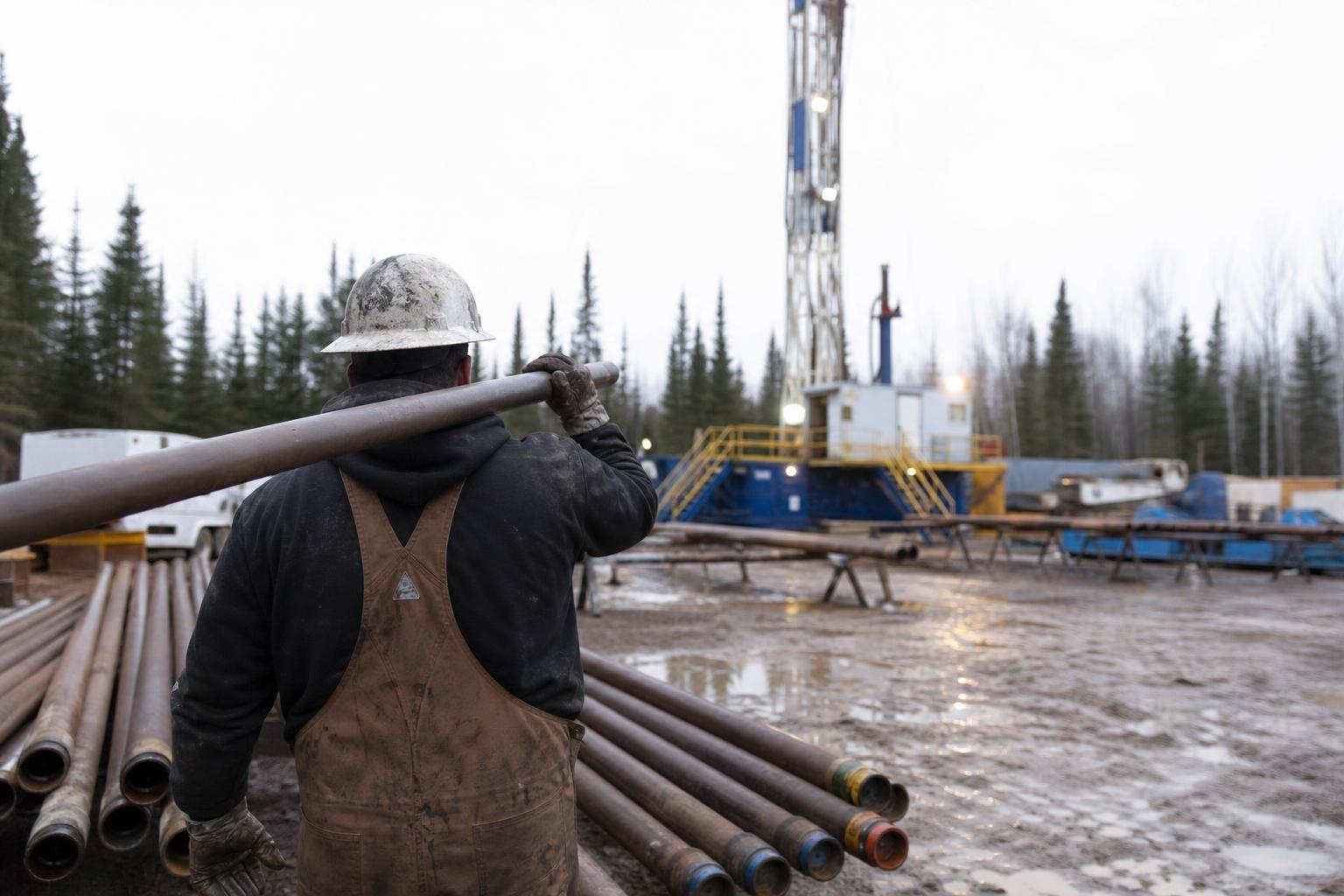
A winter drill crew in northern Minnesota pierced ancient rock and found something extraordinary. A pocket of gas, startlingly clean, rose from a borehole on the Iron Range and sent instruments jumping. The sample, tested onsite and in lab benches, carried a helium signature so pristine that even seasoned geochemists paused.
"On paper, it looked promising. In the field, it’s genuinely astonishing," said a project geologist who watched the readouts swing into rare territory. For a commodity famed for elusiveness, the pocket’s purity tells a story of deep time, slow decay, and a fortunate trap that kept lighter-than-air atoms from drifting away.
Why this element matters right now
Helium is not just for balloons; it is a critical coolant for MRI machines, a shield for precision welding, and a lifeline for semiconductor and space fabrication. Its unique inertness and ultra-low boiling point make it irreplaceable in cryogenic and quantum systems.
After years of supply whiplash, the discovery lands in a market that craves stability. "Every percent of new, reliable supply helps smooth a very bumpy road," noted a medical-imaging buyer whose hospital has rationed helium during tight periods.
- Potential impacts include steadier hospital operations, reduced dependence on overseas sources, and more predictable costs for chip and spaceflight programs.
The geology beneath the spruce and snow
Northern Minnesota’s ancient craton—hard, billion-year-old rock—is a near-ideal factory for helium generation: uranium and thorium slowly decay, releasing alpha particles that capture electrons and become helium atoms. Those atoms percolate into fractures, rising until a tight seal stops the climb. In rare cases, the trap holds long enough to create an unusually pure cache.
Field technicians describe a nitrogen-rich carrier gas with remarkably high helium content and hardly any hydrocarbons. That’s good news: less methane simplifies processing, decreases greenhouse concerns, and trims operational hazards. "It’s the sort of composition you hope for but rarely see," said the drilling supervisor, still grinning through chapped lips in subzero wind.
From flare to flow: turning a pocket into supply
Finding a pristine pocket is the thrilling part; proving a durable resource is the hard part. The team must map extent, test pressure support, and design separation systems that can isolate helium efficiently and at scale. Modular membrane and cryogenic trains are likely candidates, chosen to minimize energy consumption and maintain purity standards.
Regulatory frameworks in Minnesota will shape the timeline. Baseline water-quality tests, air-monitoring plans, and community consultations come first. "We’re proceeding deliberately," a company executive said. "The geology looks special, and so does the social license to operate here."
If flow tests confirm continuity, a small pilot plant could follow within a cautious window. Offtake agreements with MRI service providers, research labs, and chipmakers could underwrite early volumes, allowing gradual ramp while the subsurface model matures.
Local voices, global echoes
On the Range, excitement blends with pragmatism. Mining towns know booms and busts, and residents want a future that outlasts a single well. "We’re proud of our rocks, but we’ve learned to ask smart questions," said a city councilor near the project site. Those questions include truck traffic, noise patterns, and groundwater protections, all surfacing at early meetings.
Nationally, a domestically sourced stream of high-purity helium hits a strategic note. The world’s supply chain has been fragile, buffeted by plant outages, geopolitical tensions, and the long unwind of the federal reserve. A reliable Midwestern node won’t end volatility, but it adds a resilient anchor at a time of accelerating demand.
Scientists, too, see an opportunity. Ultra-clean helium can feed experiments that push magnetic fields lower and quantum coherence longer. "The purer the input, the quieter the noise floor," said a university physicist, eyeing superconducting circuits and subtle cryogenic tests that depend on exceptionally clean coolant.
What to watch over the next year
Expect a cascade of data: pressure-transient analyses, geochemical fingerprints, and careful mapping of the trap’s geometry and seals. Each result will refine models, sharpen economic forecasts, and determine whether the pocket becomes a project or remains a shining anomaly.
Teams will likely expand seismic work, step-out wells, and core sampling to quantify continuity and quality. If the curve stays favorable, equipment orders, offtake talks, and workforce training could quicken, translating subsurface promise into tangible regional benefit.
For now, the winter air over the Range carries a hint of warm possibility. Deep in old stone, a rare element waited patiently, and a careful drill bit finally asked the right question. The answer, measured in precise percentages and grateful breaths in MRI suites miles away, feels both profoundly local and unmistakably global.
