
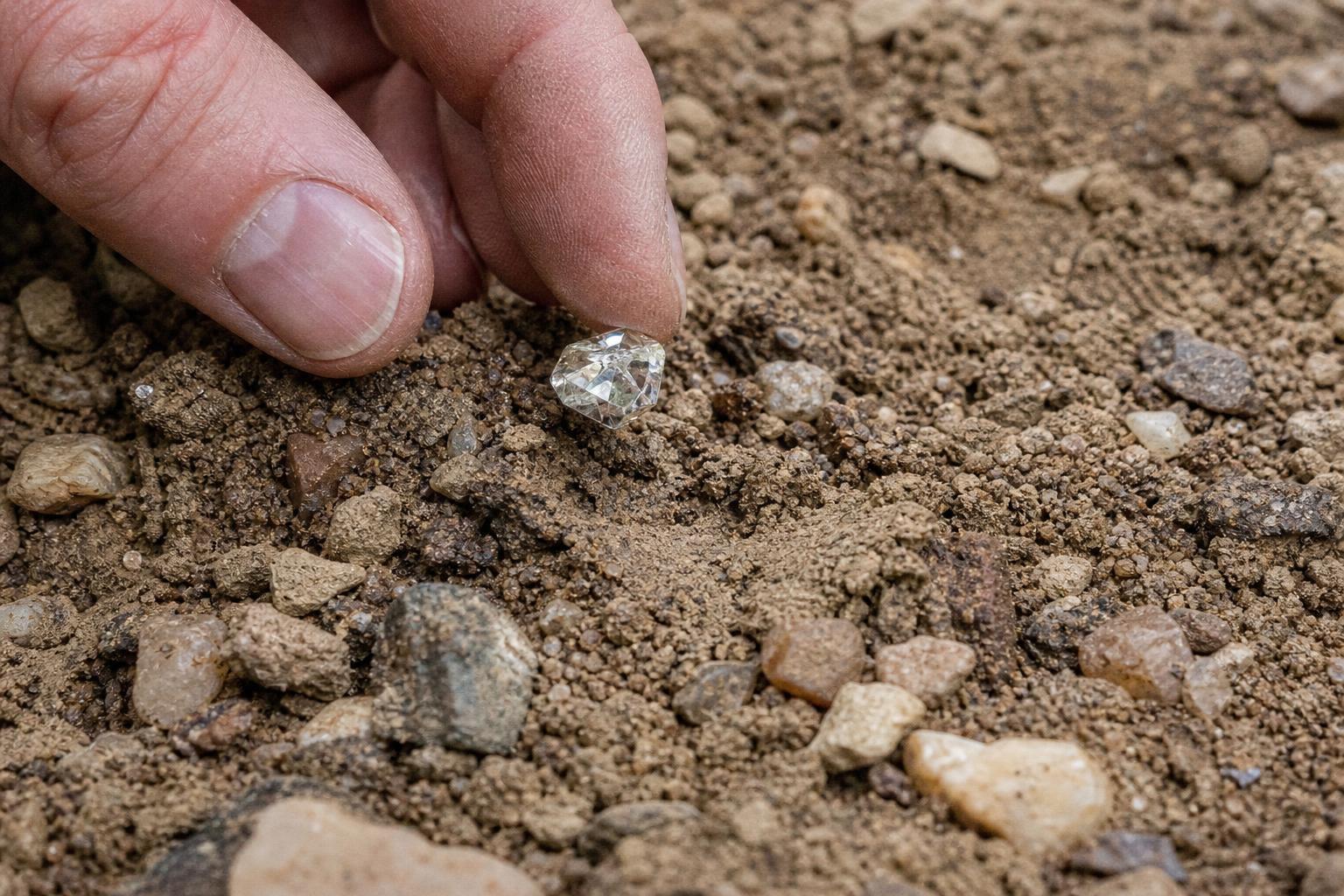
A streak of luck crossed an Arkansas sky the moment a park visitor bent down, brushed aside dirt, and felt the unmistakable heft of a rough, 7.46‑carat diamond. In a place where discovery is not just allowed but invited, the find was authenticated, recorded, and handed back to the finder—because at this unusual state park, “finders keepers” is more than a saying. It’s a simple, thrilling promise: what you unearth, you can take home.
The rare find in plain sight
On a broad, plowed field of ancient volcanic ground, the gem lay almost casual, catching light with a muted, glassy gleam. Many visitors expect precious stones to look perfect and polished, but rough diamonds often appear subtle, angular, and slightly oily in luster. This one hid in “plain sight,” looking more like a weathered pebble than a precious treasure.
Park staff see hundreds of hopefuls arrive with buckets, sieves, and raw curiosity, and they never tire of the moment a guest says, “I think I’ve found something.” The air fills with “is it real?” and you can feel the anticipation ripple across the field. Some days yield tiny chips; other days deliver stones that stop conversations cold.
Why this stone stands out
At 7.46 carats, the rough is already significant, even before any expert cutting. Color, clarity, and crystal shape will determine the stone’s potential, including whether a cutter can unlock a fiery, faceted centerpiece or several smaller, lively gems. In the world of rough diamonds, mass is only the beginning; geometry and growth patterns decide the final brilliance.
A rough like this might carry a warm hue, from champagne to rich cognac, or it may polish to a soft, near‑colorless spark. Expert hands will map inclusions, test the grain, and predict yield—a process that blends science with “artful nerve.” It’s not unusual for a large rough to finish as a stone half its original weight, trading carats for cleaner light.
How the “finders keepers” rule works
This Arkansas destination is one of the few places in the world where ordinary visitors can search for natural diamonds and keep what they discover. You pay a modest entry fee, walk into a 37‑acre search area, and start scanning the soil for the tell‑tale glint. The rule is as clear as it is magical: “You keep what you find.”
Staff provide identification help, friendly pointers, and a logbook of daily discoveries. The atmosphere feels equal parts science and play, a hands‑on chorus of “what’s this stone?” whispered and shouted across the field. On rainy days, stones wash loose; on sunny days, they flash a discreet wink.
Tips for spotting a real diamond in the field
- Look for an adamantine, slightly “oily” luster, sharper than ordinary quartz but not mirror‑bright.
- Watch for well‑defined edges, often with rounded triangular or octahedral faces.
- Check translucence: many rough diamonds look waxy, not perfectly clear.
- Move the stone gently under light—diamonds often sparkle in quick, tight flashes.
- Trust weight and feel: real diamonds can seem surprisingly dense for their size.
From dirt to brilliance: what comes next
Once identified, the owner faces a delicious dilemma: keep it rough as a natural specimen, or send it to a master cutter for a polished future. Certification through a reputable laboratory documents identity and key characteristics, protecting value and clarifying the stone’s potential story.
Cutting is measured, patient, and “irreversible art.” The goal is to balance weight with fire, preserving what nature built while chasing human‑made symmetry. A successful cut can transform an earthy, matte crystal into a living engine of light, the kind of sparkle that stops a room without saying a word.
The human heartbeat of the hunt
What pulls people to this field isn’t just the whisper of value, but the democracy of the search. You don’t need a geologist’s degree to feel that jolt of “maybe this is it,” only patience, curiosity, and comfortable shoes. Every shovel turn carries the same chance, whether you’re a seasoned regular or a first‑time dreamer.
Visitors share tips, swap hopeful stories, and trade that look of “did you see that?” as clouds pass and light shifts. The field becomes a living tapestry of small gambles and big grins, bound by a simple ethic: respect the ground, respect each other, and celebrate the rare moments when the earth says “yes, take this home.”
A place where wonder is policy
There’s a special kind of hospitality in a park that tells you, plainly, “go look.” It affirms that wonder is not just for experts or polished showrooms, but for anyone willing to get a little muddy. Sometimes the best museum is the open sky, and the best curator is rain.
Call it “luck,” call it “persistence,” or call it a pact between curiosity and time. A rough diamond waits under foot, quiet for a million years, until someone kneels and feels its edge. And in this corner of Arkansas, that simple kneel can end with two perfect words: “It’s yours.”
