
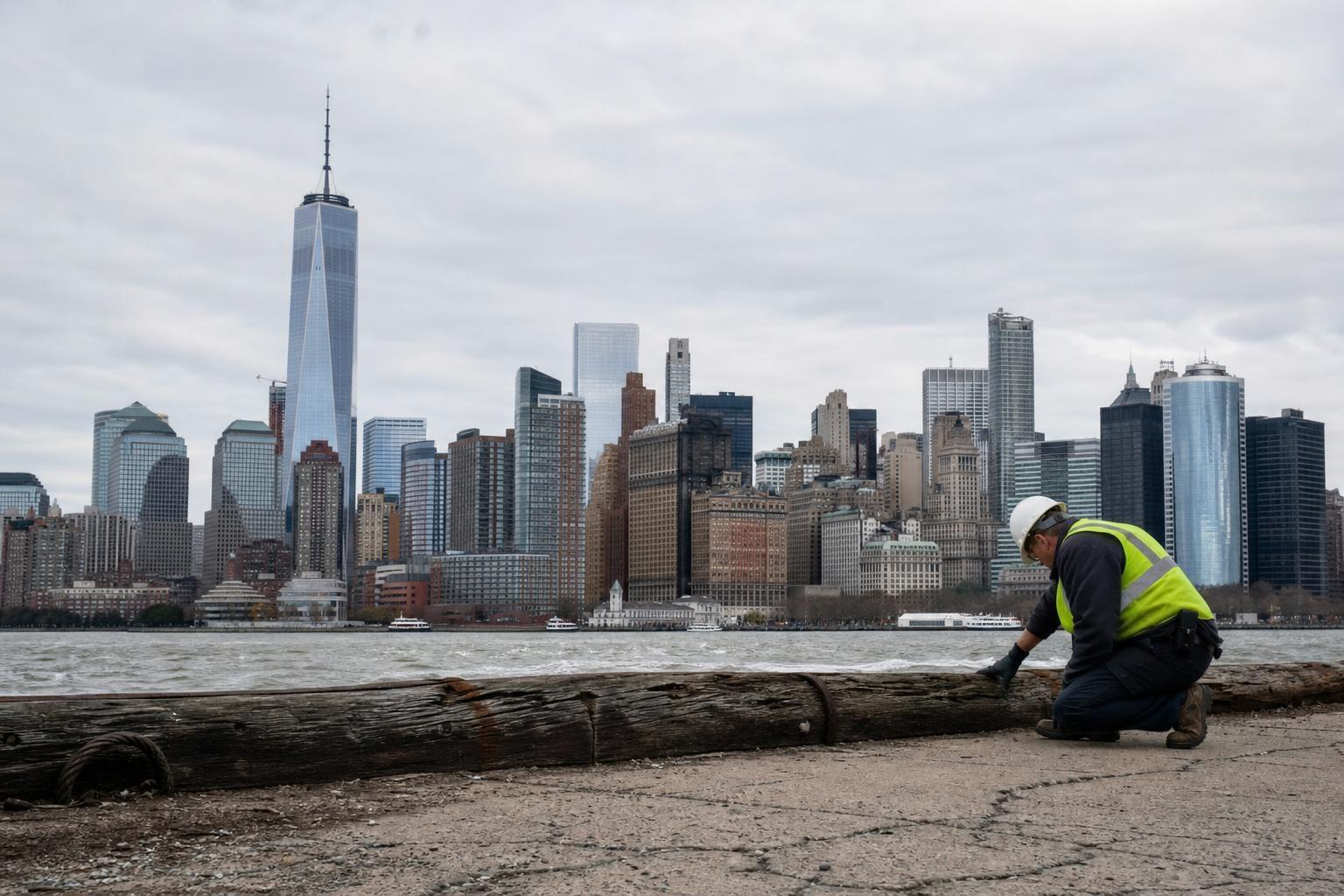
The sheer mass of the city hums beneath your feet. Every tower, brownstone, and stadium stacks onto the crust like a permanent crowd leaning against the harbor. Scientists estimate that the built environment adds roughly 762 million tonnes of load to the ground — a weight that helps press the land down by about 1 to 2 millimetres each year. It’s not a cinematic sink; it’s a slow, cumulative slide.
The city is heavy — and the ground is complicated
Beneath the glass and steel, the subsurface is a patchwork: hard bedrock uptown, softer sediments downtown, and water-laced clays along the edges. Buildings transfer their weight through foundations into this layered mix, and the soil gently compacts.
Researchers call this “subsidence,” a long-term settling from natural and human causes. As one study framed it, “the load of urban construction is a persistent force,” not a sudden shove.
Not all towers, not all at once
Skyscrapers on deep piles or anchored into resilient bedrock barely budge. The bigger concerns lie where fill and soft soils prevail — coastal neighborhoods, river margins, and reclaimed land. There, even mid-rise structures and decades of utility trenches can nudge the ground downward.
“Think less collapse, more compression,” notes one geoscientist. The result is uneven: a block that stays steady, a block that subtly sinks.
Why the ground is easing downward
Multiple forces converge, and they add up:
- Long-term crustal response to past ice sheets tilts the region downward.
- The mass of buildings and infrastructure increases soil consolidation.
- Historic groundwater use and natural dewatering can compact sediments.
- Added fill, buried utilities, and vibrations promote gradual settlement.
Each factor is modest alone; together, they create a measurable trend.
How we know: satellites, sensors, street clues
Modern tools watch the city like a metronome. Radar satellites (InSAR) map surface motion to the millimetre, and GPS stations track vertical drift over years. The pattern shows a broad, slow subsidence with hotspots at the shorelines and select industrial tracts.
You can see hints at the curb: re-shimmed doorsteps, patched asphalt lips at manholes, and drains that sit a fraction too high after resurfacing.
Sea level rise makes the math unforgiving
Relative sea level is the ocean going up plus the land going down. A few millimetres a year can turn a “rare flood” into a routine nuisance. The weight of buildings doesn’t drive coastal storms, but it lowers the baseline from which surge and tides start.
“Water finds the lowest path,” engineers remind us. Lower the land, and water finds you sooner.
What’s at risk: quiet, chronic, cumulative
The story is less about dramatic cracks and more about infrastructure and equity. Low-lying homes that already face damp basements, neighborhoods depending on old sewers, and transit lines crossing saturated soils all feel the pinch first.
A millimetre doesn’t headline the news, but it shortens the lifespan of pipes, piers, and pavements. Add more extreme rainfall, and the hidden inches become costly feet.
What can be done now
New construction can push load into competent layers, use lighter structural systems, and spread forces with wider footprints. Retrofitting can include under-building grouting, better drainage to reduce pore pressures, and smarter monitoring that flags movement early.
Citywide, the most effective steps are often boring: raise critical equipment, redesign curbs and inlets to steer water, and time street resurfacing to keep drainage true. “Resilience is a thousand small acts,” as one planner says.
Planning with millimetres in mind
The pace is slow, but the horizon is long. Bond cycles, insurance models, and zoning should assume a persistent downward drift plus higher seas. Maps that blend InSAR, elevation, and storm models help decide where to adapt, where to fortify, and where to step back.
This isn’t a problem to solve once; it’s a condition to manage. Monitoring, iterating, and funding maintenance become as crucial as shiny new projects.
A city still standing, wisely
The skyline isn’t about to slump, and bedrock still bears its spires. The danger is complacency, not collapse. Accept the quiet, downward tug, design for it, and the city can keep its rhythm — brick by brick, tide by tide.
“Slow forces win in the end,” a coastal scientist likes to say. That’s not a warning to fear; it’s a cue to prepare.
